Calls Answered 24/7📍 Serving 150 Cities In 3 States❄️ Freeze Season — Protect Your Pipes⭐ 20+ Years Of Experience
Calls Answered 24/7📍 Serving 150 Cities In 3 States❄️ Freeze Season — Protect Your Pipes⭐ 20+ Years Of ExperienceCalls Answered 24/7📍 Serving 150 Cities In 3 States❄️ Freeze Season — Protect Your Pipes⭐ 20+ Years Of Experience
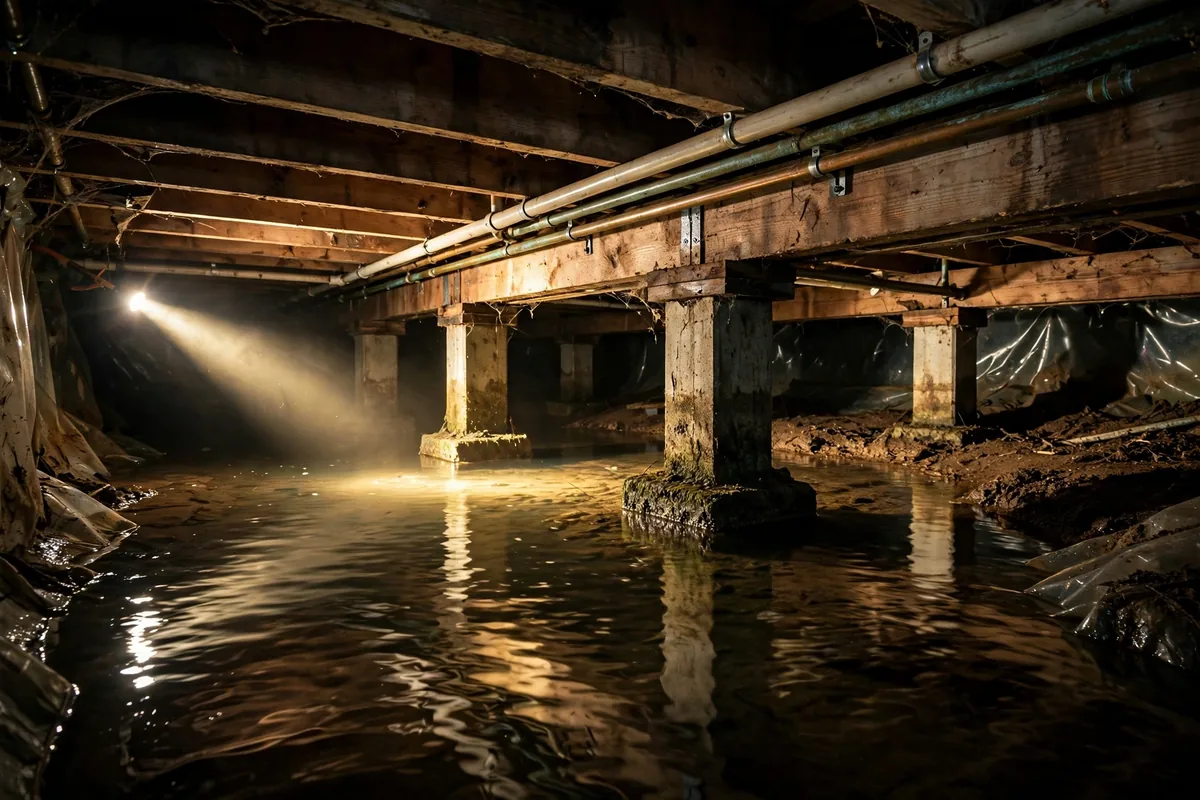
A burst pipe in crawl space plumbing floods the one room nobody enters. The water pools on the ground under the house — soaking piers, joists and the soil itself — while the rooms above show nothing but a falling pressure, a creeping meter or a musty smell arriving weeks later. Crawl space bursts are rarely the biggest; they are the longest-running, because discovery waits for a symptom instead of a sighting.
Basements announce their floods by getting your feet wet. Crawl spaces keep secrets. The pipes under a pier-and-beam or crawl-space home run through a low, dark, rarely visited void, and a burst there can pour the house's water into the ground for days while life continues normally one floor above it. This is the hidden-flood playbook: what the water does down there, how it is found without eyes, and how the space gets defended afterwards.
Why Is The Crawl Space A Blind Spot?
Design and habit conspire: the access hatch is small, the clearance is measured in inches, and nothing down there needs weekly attention, so nothing gets it. The plumbing, meanwhile, is fully present — supply lines to every fixture run through the space, often along its coldest edges. Compare the concrete slab, the crawl space's rival foundation: a slab hides leaks inside concrete, while a crawl space hides them in plain sight that nobody looks at. Accessible in theory, unvisited in practice.
Temperature adds the risk: a vented crawl space tracks outdoor cold, so its pipes are freeze candidates in winter and its standing water is a humidity engine in summer. In Athens, OH, where so much housing is older rentals, the crawl space is the room that neither tenant nor landlord visits — the perfect blind spot, jointly maintained.
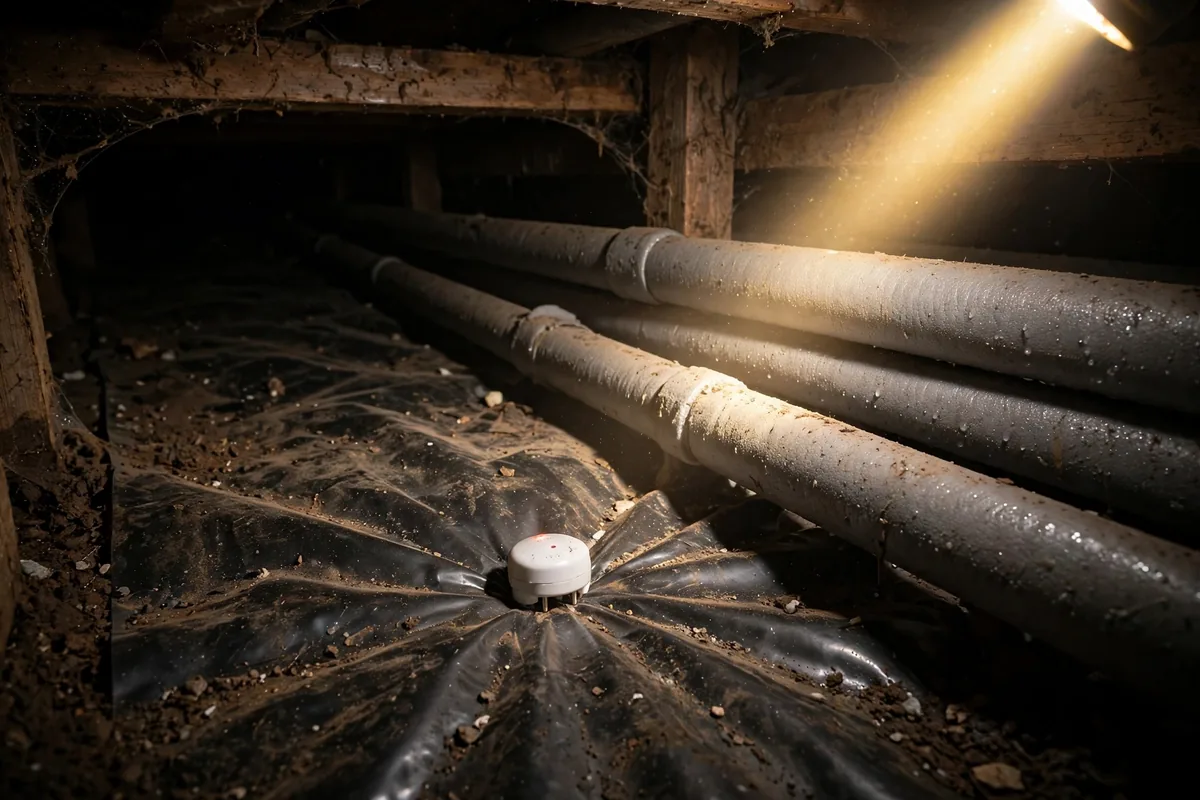
Burst Pipe In Crawl Space — A Water Alarm Sensor Sitting At The Low Point Under A House
What Does A Crawl Space Flood Actually Damage?
The water pools on the soil or the vapour barrier and rises against the structure: piers and their footings sit in it, floor joists and the subfloor soak from beneath, and insulation batts between joists sag heavy with water until they fall. Sustained damp under a house is also a mould farm and a pest invitation, and in expansive clay soil country the cycle of soaking and drying works the foundation's supports unevenly. None of this is visible from the living room; all of it is structural, which is why the hidden flood's bill arrives as a condition report rather than a puddle.
The plumbing itself suffers twice: the burst, and then the corrosion environment — pipes lying in damp air and occasional standing water age faster than pipes in dry voids. A crawl space that has flooded once deserves a full pipe-condition look while the crew is under there, because the next failure is already being prepared by the same moisture.
Which Indirect Signs Betray It?
The same detective kit as the slab, tuned lower: a water meter that creeps or spins with the house quiet; pressure sagging at taps; a water bill stepping up without explanation; a musty, earthy smell inside the house that cleaning does not cure; floors that feel soft or newly uneven; skirting or baseboards showing damp at floor level. Any two together earn a look through the hatch with a strong torch — standing water glints back unmistakably.
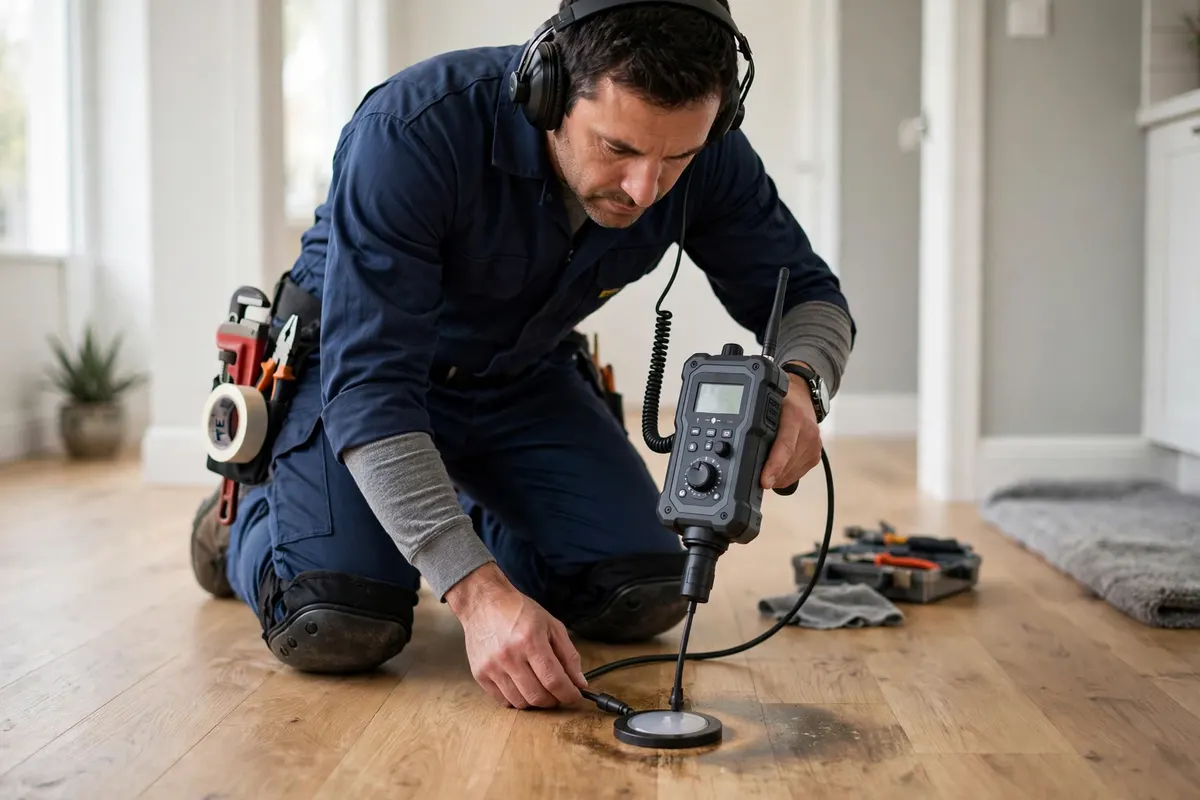
Pros confirm without crawling first: acoustic leak detection hears the escape through the floor, a thermal imaging camera maps the cold wet field, and a pipe camera inspection through a cleanout views the drain side. In Anna, IL, where crawl spaces serve much of the older housing, the meter test on a quiet morning is the homeowner's version of the same science — one glance, monthly, and the blind spot gets a watchdog.
Under a house, there is no small leak — there are only leaks that have not been running long. Discovery time is the entire damage equation.
Water Moving Where It Shouldn't?
One free call connects you with a local pro who can arrive in 30–60 minutes and find the burst without tearing the house apart first.
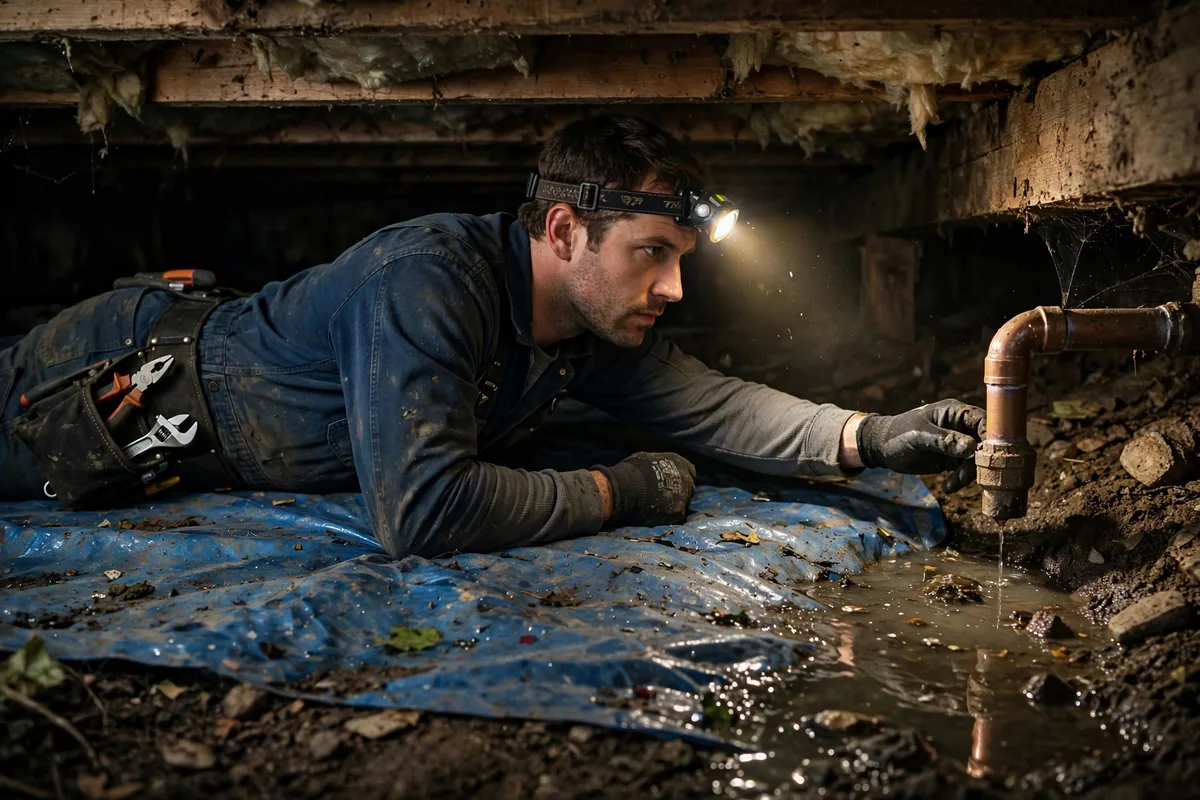
Slowly, and on their backs. The pro confirms the shut-off at the main shut-off valve, pumps or drains the standing water, and works the run section by section with light, mirrors and patience. Repairs mirror the rest of the house — section replacement for a local split, pipe rerouting along a better-supported, better-insulated path where the old line hugged the cold vent wall — but every task costs extra effort at eighteen inches of clearance, which is why crawl-space quotes carry their access honestly.
Safety shapes the work: electrical runs share the space, air quality is poor, and after a flood the ground is slick clay. A crew that rushes under a house misses things; the visit's pace is set by the space, and a good pro says so rather than promising basement speed in a crawl-space world.
What Does Recovery Under The House Involve?
Recovery is drying a space that does not want to dry: standing water extracted, saturated soil given time and air movement, vents or temporary fans arranged, and moisture meter readings taken on joists and subfloor until they reach dry targets — structural drying principles applied horizontally. Fallen, soaked insulation is removed and replaced after drying verifies; anything mould-established is treated as its own remediation conversation.
The foundation gets a look too: piers checked for scour or settling where water ran, footings for undermining where a jet from the burst dug at the soil. In Austin, TX pier-and-beam homes, this under-house recovery is the difference between a plumbing invoice and a structural one — the burst is the cheap part of a crawl-space flood, and the recovery, done promptly, is what keeps it that way.
How Do You Stop The Next One Hiding?
Give the space instruments and a routine. A water alarm at the low point costs little and shouts early. The monthly meter check catches what ears cannot. Pipe insulation on the crawl space runs — especially near vents — plus sealed vent strategies for deep winter in cold states cut the freeze risk that starts most of these stories. And an annual torch-lit look through the hatch, sixty seconds of it, converts the blind spot into a monitored one.
Across Ohio and Illinois, the pattern is identical: crawl spaces do not need to be visited often, they need to be visited on a schedule — because the flood that hides is the flood that compounds.
In any bursts-by-location roundup, crawl space bursts are the hidden ones: out of sight, out of earshot, and usually found by the water bill or the smell rather than by a puddle.
Burst Pipe Help In These Cities
Reading from somewhere else? These city pages carry the same checks, local freeze data and first steps for your own streets.
Start with the meter: with every tap closed and no appliance running, a moving leak indicator means water is leaving the system somewhere — and the crawl space is a prime somewhere. Follow with the smell test (persistent mustiness indoors), the floor test (new softness or bounce), and a torch through the hatch. Two positive signs justify the pro's detection visit; the glint of standing water through the hatch justifies skipping straight to the call.
No — groundwater after heavy rain, a leaking drain line, a sweating water heater pan overflowing, or plumbing dripping slowly from a joint can all wet the space. The meter test separates them: supply-side losses move the meter with the house quiet; groundwater and drain issues do not. The distinction matters because the fix differs entirely, and a pro's first job under the house is identifying which water it is.
The safe homeowner scope under a house is observation and the water shut-off — beyond that, the space argues against DIY: low clearance, poor light, shared electrical runs, and repairs that need pressure testing to trust. A joint made badly in a crawl space fails in the dark, at length, exactly as the original did. The crawl space is where the pro's fee buys the most certainty per dollar in the house.
Days to weeks depending on how long the water stood, the soil, and the season — saturated clay releases moisture slowly. The honest measure is readings, not dates: joists and subfloor checked with a moisture meter until they reach dry targets. Rushing the insulation replacement over damp joists re-buries the problem; pros sequence extraction, air movement, verification, then restoration, and the verification step is the one that protects you.
It can: a burst jet scours soil from pier footings, standing water softens bearing ground, and wet-dry cycling in expansive soils moves supports unevenly — which is why the recovery visit includes a pier and footing check, not just plumbing. Prompt handling keeps the foundation a bystander; a months-long hidden flood is how a pipe problem becomes a levelling conversation.
Closing or insulating vents for the coldest weeks is a long-standing freeze defence for the pipes inside, balanced against the space's need to dry in other seasons — which is why many homes use covers seasonally rather than sealing permanently. Local practice and your foundation type decide; a pro can look at your space and say which side of the trade your house sits on. Either way, pipe insulation on the runs is the constant.
Because the house breathes from below: air rises from the crawl space into the living areas, carrying the smell of wet soil, damp joists and any mould established on them. The smell is a useful alarm but a slow one — it arrives after the space has been wet a while and lingers until drying is complete and verified. Treat a new musty smell as a meter-check trigger, not a cleaning problem.
In vented spaces, yes — the pipes live in air that tracks outdoor temperature, often with runs placed along the coldest perimeter. Their freeze profile resembles the attic's, mirrored: first to freeze on the coldest nights, especially the sections nearest vents. Insulation, vent management in deep cold, and a dripping tap on the worst nights are the defences — and a burst there is the attic story with worse discovery.
The monthly quiet-meter check, backed by a water alarm at the space's low point. The meter catches supply losses anywhere in the system; the alarm catches the crawl space specifically, including drain and groundwater events the meter cannot see. Together they cost less than one hour of the damage they prevent, and they convert the house's blindest spot into its most honest one.
H
Reviewed By Hamza
Lead Plumbing & Emergency Pipe Repair Specialist
Hamza is a certified plumbing and pipe restoration specialist with extensive field experience diagnosing sub-zero pipe splits, thermal stress fractures, and slab leaks across harsh winter climates. He specializes in non-destructive leak localization, copper-to-PEX conversions, and preventative freeze-proofing to safeguard residential and commercial plumbing systems against catastrophic water loss.
Updated October 30, 2026
Think You Have A Hidden Burst Pipe? Call Free
Meter creeping, floors softening, or a musty smell that cleaning will not cure in a crawl-space home? One free call connects you with a local pro who can arrive in 30–60 minutes and look where the damage hides.