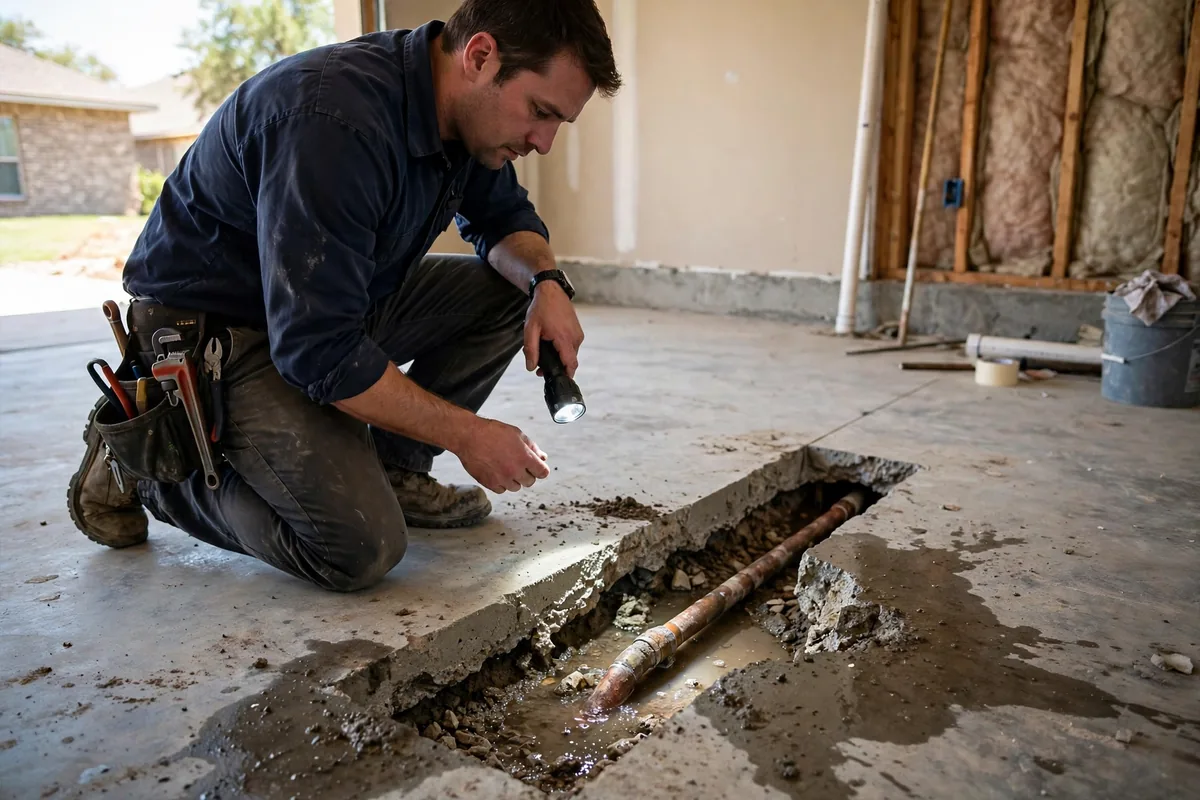
Slab Leak Repair
Slab Leak Or Burst Pipe Under The Slab? Telling Them Apart
Not sure how slab leak repair works or what it involves exactly? One free call connects you with a local pro who can arrive in 30–60 minutes. Call now.

Answered 24/7 · Free To Call · No Obligation
Free Call · Answered 24/7 · Local Pros Near You
Pros find a hidden burst pipe with three signals: sound, heat and pressure. Acoustic listening equipment follows the hiss of escaping water to its loudest point, a thermal imaging camera maps where water is travelling, and a pressure test proves which section of line is leaking — all before any wall is opened.
A burst pipe is easy to spot when it is spraying across the basement. The hard ones hide: a split inside a wall, a line leaking under a concrete slab, a slow break behind the water heater that only shows as a damp patch two rooms away. Guessing wrong means opening the wrong wall — so pros do not guess. They use leak detection: a set of listening, imaging and pressure tools that pinpoints exactly where the water is escaping before a single hole is cut.
Leak detection is how a pro finds a hidden leak without tearing the house apart. Pressurized water escaping from a pipe makes sound, changes surface temperatures, and drops pressure in a measurable way. Detection equipment reads those three signals — sound, heat and pressure — and triangulates the spot, often to within a few inches.
The alternative is the old way: open the wall where the stain is and hope. Stains mislead, because water travels along joists and pipes before it shows. A homeowner in Addison, IL might see a wet ceiling in the kitchen while the actual split sits above the bathroom. Detection exists to close that gap between where water appears and where it escapes.
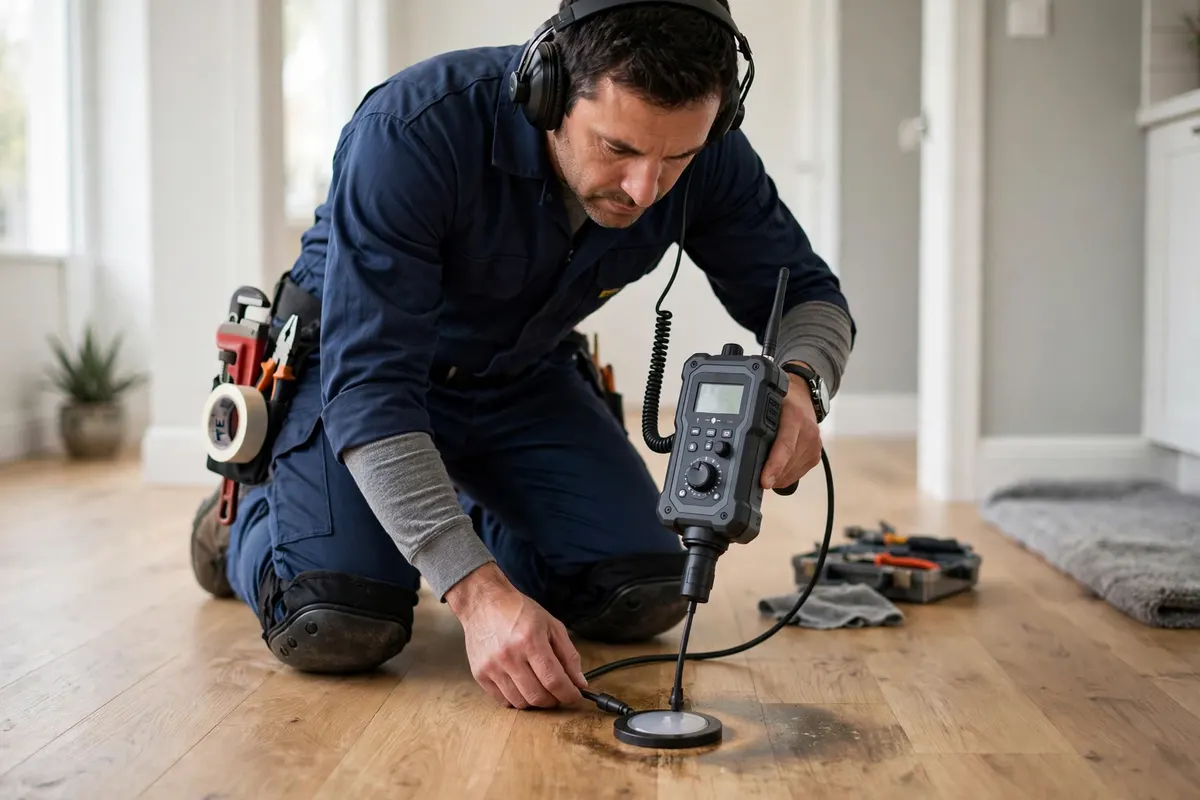
They listen with acoustic leak detection equipment — sensitive ground microphones and listening discs that amplify the hiss and vibration of water escaping under pressure. Moving the sensor along a wall, floor or pipe run, the pro follows the sound to its loudest point. That peak is where the water is leaving the pipe.
Acoustic listening works most reliably on pressurized supply lines, which is exactly what bursts. It is weaker on drain lines, which are not under pressure — one reason a pro will first confirm, with the water meter and a pressure test, that the leak is on the supply side at all. In Akron, OH and other older-housing cities, where copper pipe runs through plaster and lath, acoustic detection saves walls that would otherwise be opened on a hunch.
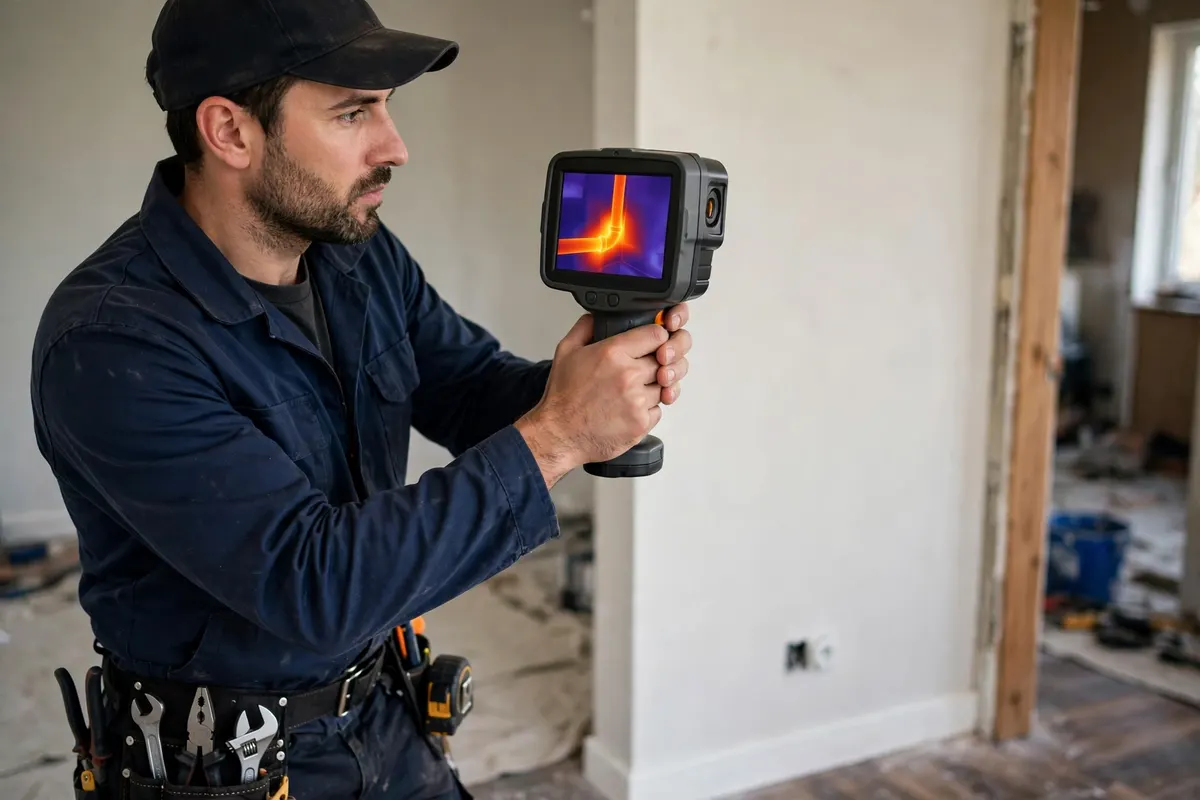
A thermal imaging camera shows temperature differences across a surface as a colour map. Escaping hot water warms the wall or floor around a leak; cold supply water cools it. Either way, the wet path glows against the dry material around it, and the pro can trace where the water is travelling and where it starts.
Thermal imaging does not see through walls — it reads the surface. Its real value is mapping: it shows the full spread of the damp area, which spots are merely wet from travelling water, and which single spot stays coldest or warmest, where the pipe itself is leaking. Combined with a moisture meter, which measures dampness inside drywall and wood, it turns a vague stain into a marked, measured repair opening.
Water Moving Where It Shouldn't?
One free call connects you with a local pro who can arrive in 30–60 minutes and find the burst without tearing the house apart first.
Call (800) 555-0100A pressure test seals a section of line, pressurizes it, and watches the gauge. If the pressure holds, the line is sound. If it falls, water is escaping somewhere in that section — and by isolating sections one at a time, the pro narrows the search from the whole house to a single run.
The same test comes back at the end of the job. After the damaged section is cut out and replaced, the pro pressure-tests the repair before the wall is closed. A repair that holds full pressure is a repair you can drywall over with confidence. Skipping that re-test is how faulty past repairs end up bursting later.
A pipe camera inspection feeds a small waterproof camera through the line itself. It suits underground and drain-side problems: tree root intrusion in a yard line, a cracked main, or debris showing where a pipe has failed. For a pressurized burst inside a wall, acoustic and thermal tools lead; the camera earns its place on the water line repair and sewer-side jobs, where seeing the crack beats digging on a guess.
Once the spot is marked, the repair is usually smaller than people fear. The pro opens the smallest practical access, cuts out the damaged length, and fits a new section — soldered copper, or PEX pipe joined with crimp or press fittings. For a line under a concrete slab, the choice is different: open the slab at that one point, or use pipe rerouting to run a new line overhead and abandon the buried section.
From there it is drying and making good: water extraction for standing water, structural drying with air movers if walls or floors soaked through, and a final moisture check. Homeowners in Austin, TX meet the slab version of this problem most often, while Illinois and Ohio calls are usually wall, basement and crawl-space lines — the detection steps stay the same either way.
There is no honest flat answer, because the work varies: how hidden the line is, how many sections need isolating, whether the leak is under a slab, and whether detection is part of a full emergency repair or a standalone visit. What you should always get is the price in writing before work starts, and a clear explanation of what the detection found. Our Texas and Aurora, IL pages carry the same promise: the pro prices the job before the job, not after it.
If your meter keeps moving with everything off, you hear water when nothing is running, or a stain is spreading, do not wait for the wall to tell you the answer. One free call connects you with a local pro who can find the leak properly — and only open what actually needs opening.
More straight answers about finding hidden bursts and what happens after you find one.
Still Have Questions? Call Free
A real person answers, day or night, and connects you with a local pro who can check the problem in person.
(800) 555-0100Yes, in most cases. Acoustic listening, thermal imaging and pressure testing locate a hidden leak from the surface, so the only opening made is the small one needed for the repair itself. A wall may still need a modest access hole where the pipe sits — but it is cut in the right place, at repairing size, not opened on a guess.
On a pressurized supply line, a skilled pro with good equipment can usually narrow the spot to a few inches. Accuracy drops with background noise, very deep pipes or thick concrete, which is why pros confirm with a second method — a thermal scan or a sectional pressure test — before opening anything.
No. A thermal imaging camera reads surface temperatures, not the inside of the wall. Water escaping from a pipe changes the surface temperature along its path, and that pattern is what the pro reads. It is excellent for mapping damp and tracing a leak's route, and it pairs with a moisture meter to confirm how wet the material really is.
It tells them whether a sealed section of line holds pressure or loses it. A falling gauge proves water is escaping in that section; a steady gauge clears it. Testing section by section narrows a whole-house mystery to one pipe run, and the same test afterwards proves the finished repair holds before walls are closed.
That is the classic hidden-leak sign: with every tap and appliance off, a moving meter or leak indicator means water is escaping somewhere. Turn the main shut-off valve off to stop the loss, then call. A pro will run detection to find the spot — common hiding places are slab lines, crawl spaces and the run behind the water heater.
Yes — slab leaks are one of its main jobs. Acoustic equipment hears the escape through the concrete, and thermal imaging often shows a warm path on the floor above it. Finding the exact point matters even more here, because the choices are opening the slab at one spot or rerouting the line overhead.
A straightforward wall or floor leak is often located within the first visit, sometimes in under an hour. Deep slab lines, large homes with several bathrooms, or leaks that only appear under certain pressure can take longer. The pro should explain what they are testing and why as they go — detection is a process, not a single gadget reading.
Safe checks are fine: look for stains, listen for running water, and watch the meter with everything off. What not to do is open walls, cut pipes or switch off and drain systems you are unsure about. If the meter moves or a stain is growing, the money-saving move is an early call — hidden leaks charge by the hour in water damage.
It can be either. In an emergency call-out, detection is usually the first stage of the repair itself. As a standalone visit, it answers one question — where is the water escaping — and ends with a written price for the repair. Either way, ask for the findings and the price in writing before repair work begins.
Reviewed By Hamza
Lead Plumbing & Emergency Pipe Repair Specialist
Hamza is a certified plumbing and pipe restoration specialist with extensive field experience diagnosing sub-zero pipe splits, thermal stress fractures, and slab leaks across harsh winter climates. He specializes in non-destructive leak localization, copper-to-PEX conversions, and preventative freeze-proofing to safeguard residential and commercial plumbing systems against catastrophic water loss.
Updated October 30, 2026
A hidden leak does not get cheaper while you guess where it is. One free call connects you with a local pro who will find it with the right equipment — and only open what needs opening.
Free Call · Answered 24/7 · Local Pros Near You
Not sure how slab leak repair works or what it involves exactly? One free call connects you with a local pro who can arrive in 30–60 minutes. Call now.
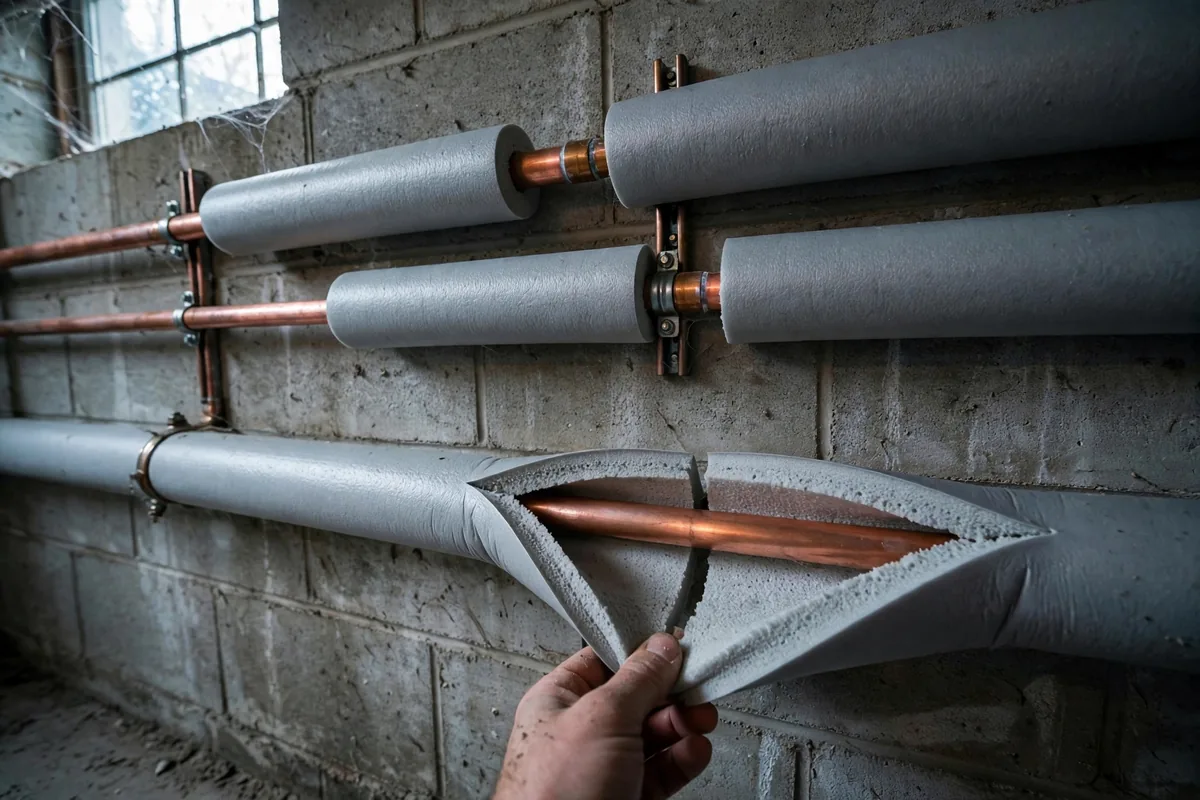
Not sure how pipe insulation works or what it involves exactly? One free call connects you with a local pro who can arrive in 30–60 minutes. Call now.