Frozen Pipe Burst
A line froze during a cold snap, split along its length, and lets go as it thaws. Common in basement, crawl-space and exterior-wall lines across Illinois and Ohio, and in attic lines in Texas.

Answered 24/7 · Free To Call · No Obligation
A pipe has burst and water is moving through your home right now. Shut the main valve off, keep everyone clear of water near electrics, then make one free call — a local pro can arrive in 30–60 minutes, anywhere in the 3 states we serve.
Free Call · Answered 24/7 · Local Pros Near You
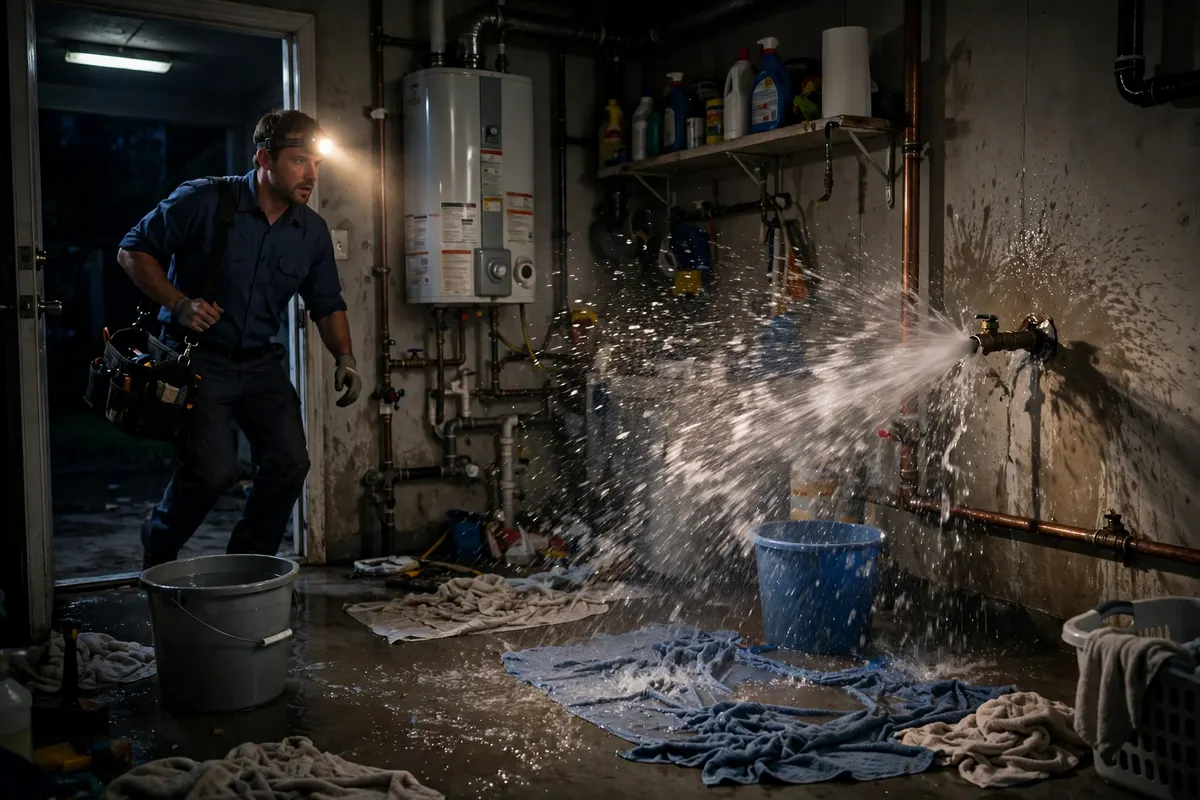
Water from a burst pipe can soak floors, walls and ceilings within minutes, and it becomes dangerous the moment it reaches sockets, appliances or your breaker panel. Before anything else: turn the main water valve off, keep children and pets out of the wet rooms, and never touch electrical fittings with wet hands or while standing in water. If you cannot stop the water or cannot reach the valve safely, leave the water, get everyone clear, and call — a local pro can arrive in 30–60 minutes and will shut it down safely on arrival.
Tick each step as you finish it. If anything feels unsafe — water near electrics, a sagging ceiling, a smell of gas — leave the area and call from outside.
Call the free number and tell us your city and what is happening — water running, a split you can see, or a meter that will not stop. The line is answered 24/7 by a real person, not a machine.
We connect you with an independent local pro who covers your area. You are not passed around a call centre queue — your details go straight to the pro who can attend.
The pro calls you back or visits to check the problem, shuts the water down safely if it is still running, finds the break, and explains the repair and its price before any work begins.
Every burst is different. These are the emergencies homeowners call about most — each one needs the water off first and a pro to check it in person.
A line froze during a cold snap, split along its length, and lets go as it thaws. Common in basement, crawl-space and exterior-wall lines across Illinois and Ohio, and in attic lines in Texas.
An old copper or galvanized line thinned by decades of corrosion finally gives way, often with no warning. Homes built before 1980 carry the highest share of this risk.
A pressurized line splits under a concrete slab foundation. Warm spots on the floor, the sound of running water and a moving meter are the classic signs before damage shows.
The main line from the street meter to the house cracks or splits, flooding the yard and cutting pressure indoors. The street side belongs to the utility; the house side is yours.
A water line in the attic splits and water comes down through ceilings and light fittings. Turn the water off first — ceilings weakened by water can sag or fall.
A soldered joint, crimp fitting or old repair lets go under pressure and sprays water inside a wall or cabinet. The shut-off stops the damage; the section then needs proper replacement.
Pick your state, then your city, to open its emergency page — or call now and we will connect you with a local pro right away.
Illinois emergencies are driven by deep freezes: 121.3 freeze days a year and January lows averaging 18°F across the cities we serve, in a state where 63.5% of homes were built before 1980. Pick your city for its own emergency page.
Ohio homes face the same freeze pattern — long sub-zero stretches, older housing stock and basement lines. Every Ohio city below has its own emergency page with local risks, first steps and the same free call.
Texas bursts often start in attic and exterior-wall lines during rare but sharp freezes, and under slab foundations all year. Pick your Texas city for its emergency page and first-hour steps.
Fast answers for a flooding house — what to do in the first minutes, what to avoid, and how the free call works.
Still Have Questions? Call Free
A real person answers, day or night, and connects you with a local pro who can check the problem in person.
(800) 555-0100Turn the main water valve off first — that single step stops most of the damage. Keep children and pets out of the wet rooms, stay away from water near sockets or appliances, and open faucets to drain the lines once the main is off. Then call free: a local pro can arrive in 30–60 minutes, find the break and make the line safe.
A local pro can typically arrive in 30–60 minutes in the cities we serve. The call itself is answered 24/7, and the pro who covers your area calls you back to confirm they are on the way. While you wait, keep the main valve off and move anything valuable out of the water's path.
Treat it as one. A frozen pipe is already under pressure from expanding ice, and many splits only show when the thaw starts. If one tap runs dry on a cold morning, or you see frost or a bulge on a pipe, keep the water off at the main and call — a pro can thaw it safely with gentle heat before it lets go.
If water is touching sockets, appliances or your breaker panel, keep away from it and do not touch switches with wet hands. If you can reach the breaker panel with dry hands while standing on a dry floor, switching off the affected circuits is safer. If you cannot do it dry and safe, leave it and tell the pro when you call.
Call anyway — the pro will shut the water down on arrival, and many homes also have a meter-side shut-off at the street. Common indoor spots are the wall facing the street in the basement, near the water heater, or where the main line enters the house. Knowing yours before an emergency is the single most useful preparation there is.
Usually, yes — once the water is off and any electrical risk is isolated, most homes are safe to stay in while the repair happens. Leave the affected rooms if a ceiling is sagging, if water is in the electrics, or if you smell gas. The pro will tell you plainly if any room should stay closed until it dries.
First, they make the home safe: confirm the water is fully off, check for electrical risks, and stop any remaining flow. Then they find the exact break — by sight where possible, or with acoustic and thermal detection for hidden lines — cut out the damaged section, fit the replacement, and pressure-test the repair before turning the water back on.
Homeowners policies usually cover sudden and accidental bursts — a pipe that split tonight — and the water damage that follows. Gradual leaks that ran for weeks are often excluded, and rules vary by policy and state. Take photos, keep the cut-out section of pipe, and call your insurer early; your state department of insurance publishes guidance if a claim is disputed.
A break on the street side of the meter belongs to the city water utility, not to you. Indoor pressure dropping, a flooded yard or a meter spinning with everything off are the classic signs. Call the utility for street-side failures — and call us for the lines inside your home, which are the homeowner's responsibility.
Insulate exposed lines in attics, crawl spaces and exterior walls, keep the heating at or above 55°F in a cold snap, let faucets drip on the coldest nights, and open cabinet doors so warm air reaches the pipes. If one line has burst twice, ask the pro about replacing the run or checking your pressure regulator — repeat bursts usually have a cause.
Last Updated: October 30, 2026
Water does not wait, and neither should you. One free call, answered 24/7, connects you with an independent local pro who can arrive in 30–60 minutes, shut the damage down and start the repair.
Free Call · Answered 24/7 · Local Pros Near You