Safe steps for the wait, what the pro will do first, and how to protect the claim and the house.
What Should You Do While You Wait For The Pro?
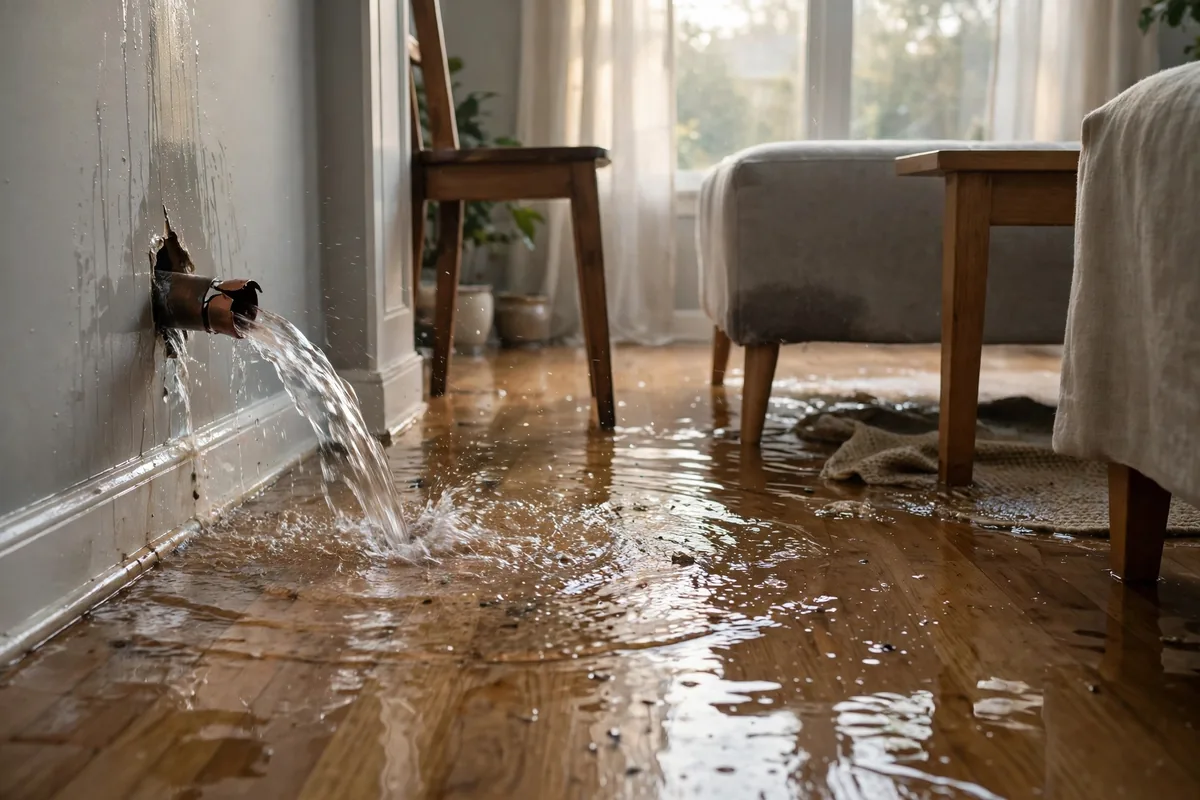
While you wait, do only what is safe from dry ground. Confirm the shut-off held: on a well system, that means the pump has stopped and pressure is falling; on a house valve, that the flow at the break is easing. Look — without wading in — at where the water is: inside the house, under the floor, in the yard or in the well house, because the pro will ask. Keep children and pets in a dry room, move dry belongings out of rooms the water is heading for, and photograph the damage as it develops. If a ceiling is bulging with water, stay out from under it. Do not start thawing a frozen line with anything hotter than a hair dryer, and do not use a torch at all.
What Does The Pro Do In The First Minutes On Site?
The first check is the shut-off: if the pump is still cycling or the pressure gauge is still falling, water is still feeding the break, and stopping it comes before everything. Then the search starts where your description points — well house, underfloor, yard line — with the pressure gauge and listening equipment narrowing the stretch of pipe that is losing water. On an Aiken property that can mean walking a long yard run in the cold before anyone opens a floor. Once the break is found, you hear plainly what failed, what the repair involves and what affects the cost, before any pipe is cut.
How Is The Burst Repaired During An Emergency Visit?
The repair is a section replacement, not a surface patch: the damaged length is cut out and new pipe fitted in its place. A clamp or epoxy putty can slow a spray while the work is set up, but neither is the finished fix, especially on a line that must survive the rest of an Aiken winter. After the new section is in, the line is pressure-tested, neighbouring joints are checked for the same freeze damage, and water is restored slowly — on a well system, through several pump cycles — while the repair is watched. Only when the line holds at full working pressure is the job treated as done.
Which Burst Pipe Emergencies Happen Most In Aiken?
Aiken's emergencies follow its winters and its rural layout: cold first, outbuildings and underfloors second.
What Does A Well House Freeze Split Look Like?
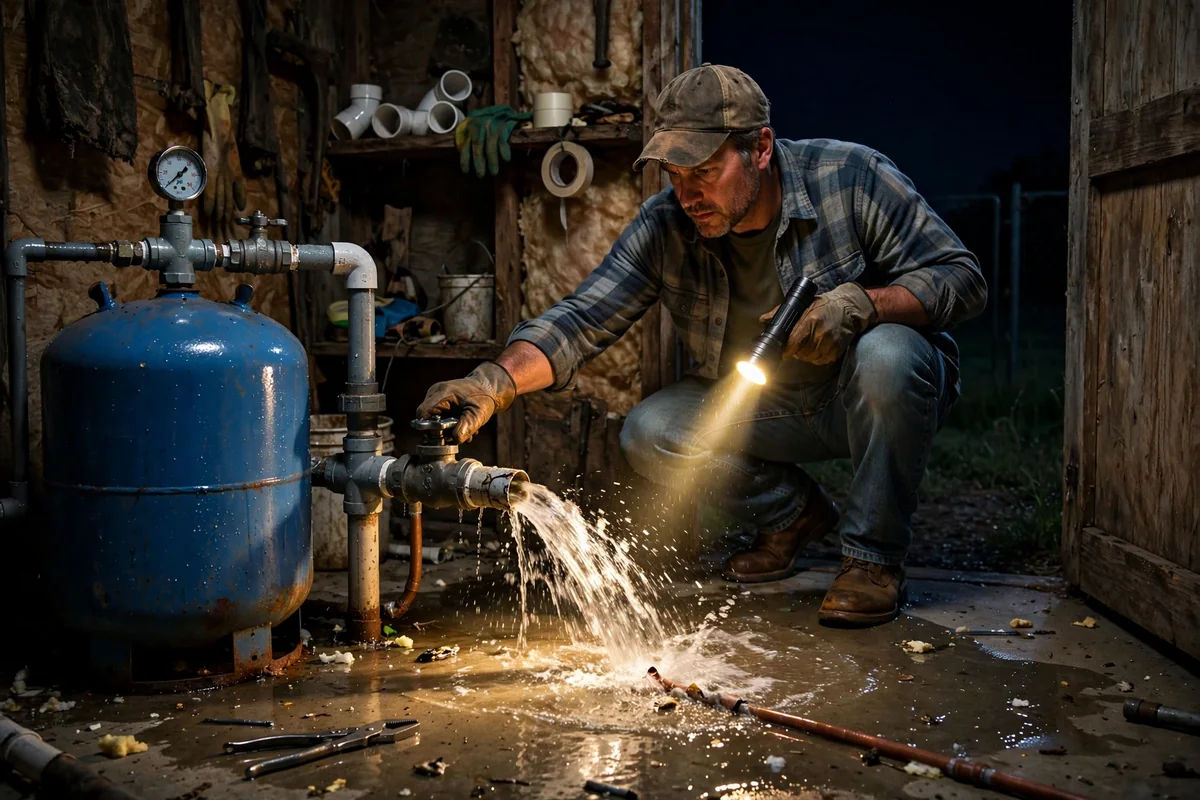
It looks like a building full of water and a house with none: the short exposed runs around the pump and pressure tank split on the hardest night, the tank drains through the crack, and the pump runs on against an open line. The giveaway from the house is fading pressure followed by silence from the taps.
What Happens When An Underfloor Line Lets Go?
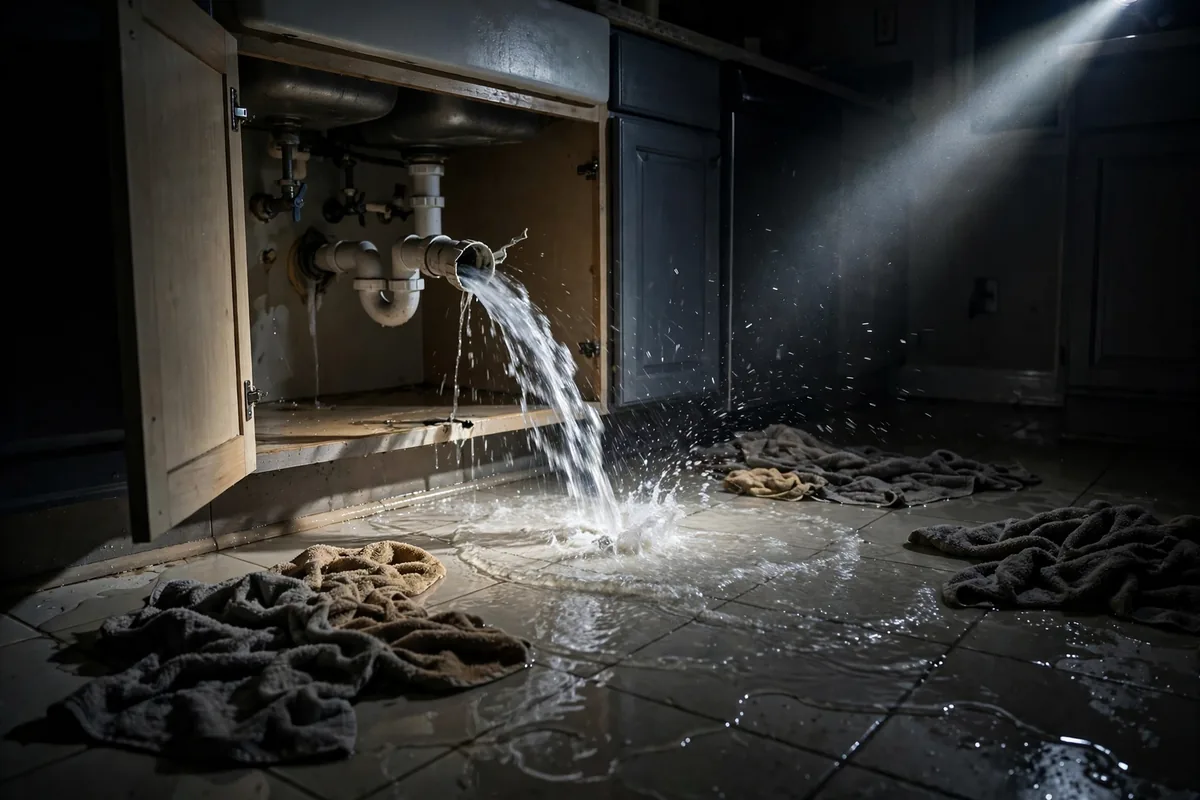
Beneath a manufactured or pier-and-beam home, a split line sprays into insulation and belly wrap while the sound of running water echoes under the floor. Inside, the floor may feel soft near the break. Discovery is often fast because the sound carries, but so is the damage, which is why these calls jump the queue.
What Does A Yard Line Break Do To A Well System?
A cracked yard line empties the pressure tank into the ground and keeps the pump running to replace water nobody is using. The signs are a pump that will not rest, a soft or icy patch along the run's path, and pressure that never recovers. The fix is excavation at the break, a new section, and a check of the line's depth against the frost.
What Happens In A Farmhouse Nobody Is Watching?
The worst Aiken emergencies are the ones discovered late: a split in an empty farmhouse can run for days, soaking floors, walls and belongings before a neighbour or a returning owner finds it. The repair is the same section replacement; the damage bill is not. A drain-down before winter, or a watcher after hard freezes, is the whole difference.
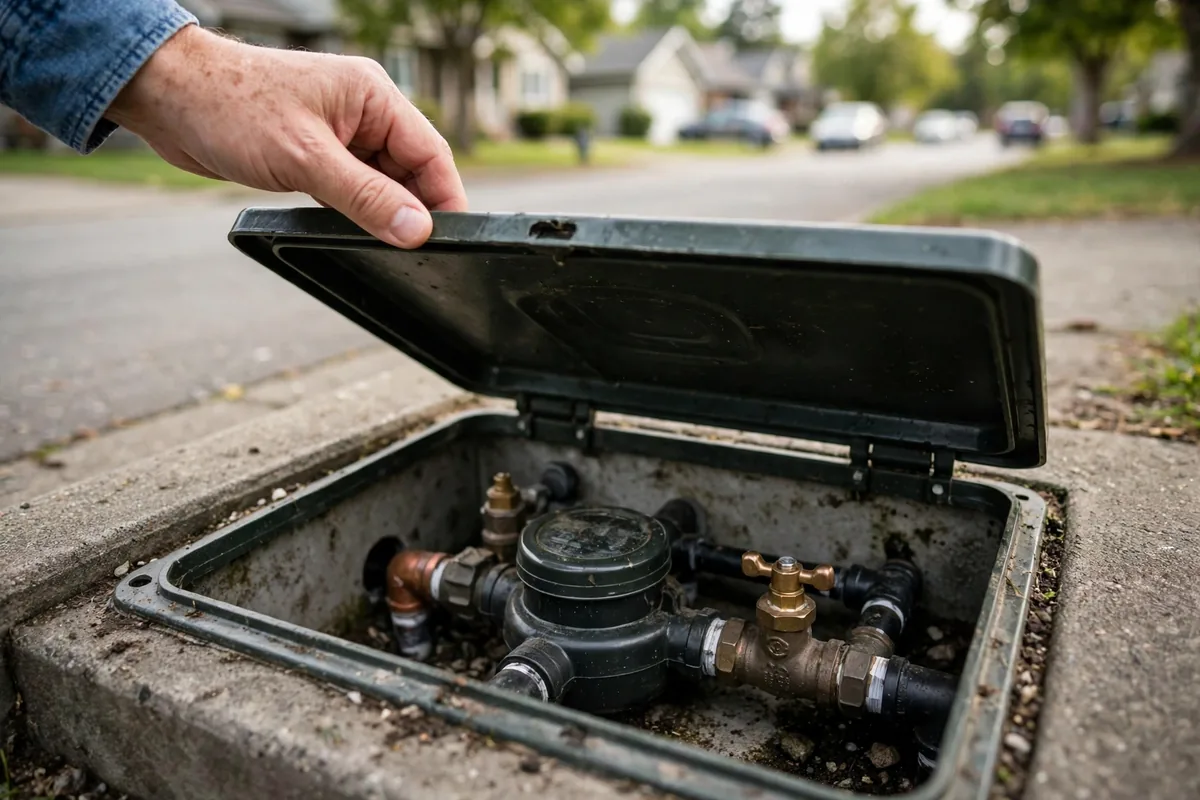
The first minutes follow a drill: the main shut-off valve gets closed, the water meter is checked to confirm the flow has stopped, breakers near standing water are left alone, and a moisture meter starts mapping how far the water has already travelled through Aiken floors and walls.
Finding the split is instrument work, not guesswork: a thermal imaging camera traces the wet path behind drywall, an acoustic leak detection check follows the hiss along the run, and the crawl space, attic and basement all get inspected, because the visible stain is rarely where the pipe actually opened.
Drying starts the same hour: water extraction pulls the standing water out, structural drying equipment goes in before mould can organise, and any section of drywall or flooring that traps moisture against an exterior wall is opened up to dry.
Before the water goes back on in Aiken, expect copper pipe, PEX pipe, CPVC pipe and concrete slab to feature — standard parts of the job, not extras.