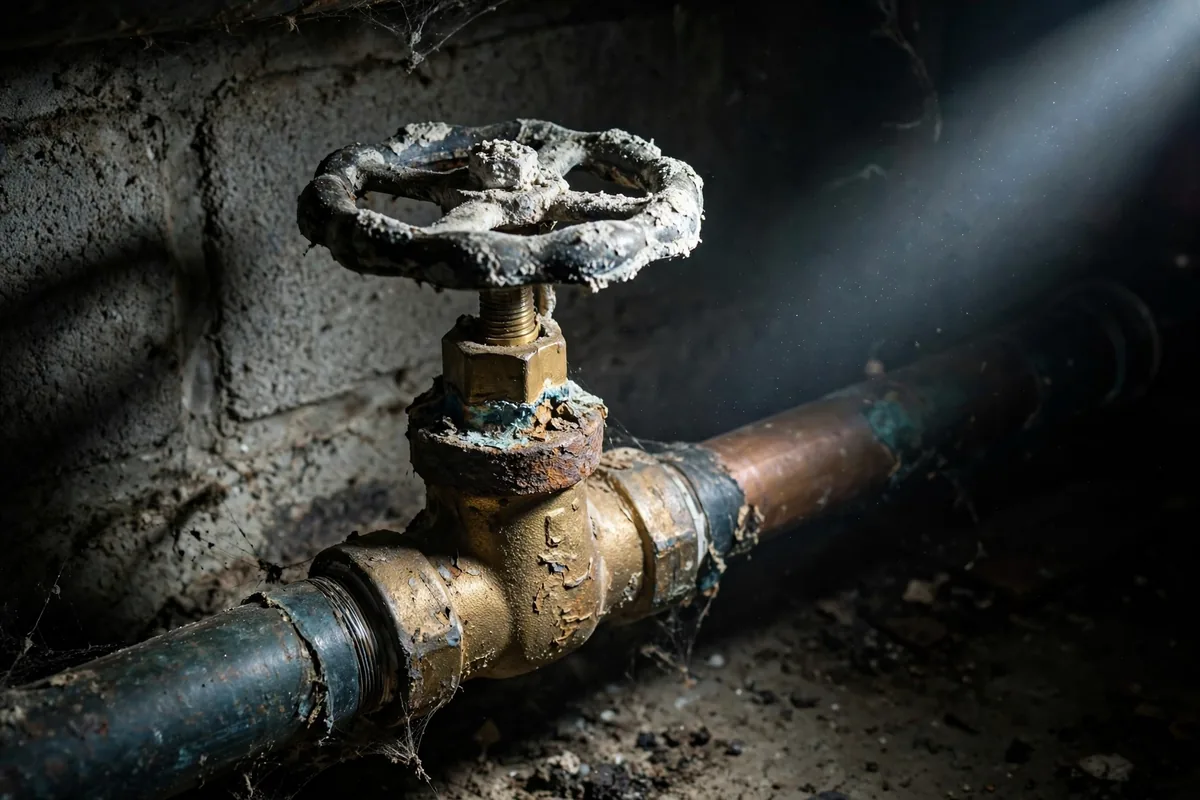
Water Shut Off Valve Replacement
Water Shut-Off Valve Replacement: When The Valve Itself Will Not Close
Questions on water shut off valve replacement? One free call connects you with a local pro who can arrive in 30–60 minutes. Call now for help.

Answered 24/7 · Free To Call · No Obligation
Free Call · Answered 24/7 · Local Pros Near You
Knowing how to turn off water if pipes burst means knowing two stops, not one. The house valve — inside, where the main line enters — stops water to everything in the home and is your move. The meter valve — at the street — stops water before it reaches your line, for when the house valve fails or the burst is in the yard. Learn both on a calm day; a flood is no time for a treasure hunt.
Every burst-pipe guide says "turn the water off fast" as if the valve were a standard household landmark like the front door. It is not. It hides in basements, behind panels, under meter lids crusted with years of soil — and the house usually has two different stops that solve two different problems. This is the complete map: both valves, which burst each one answers, and the order of everything around them.
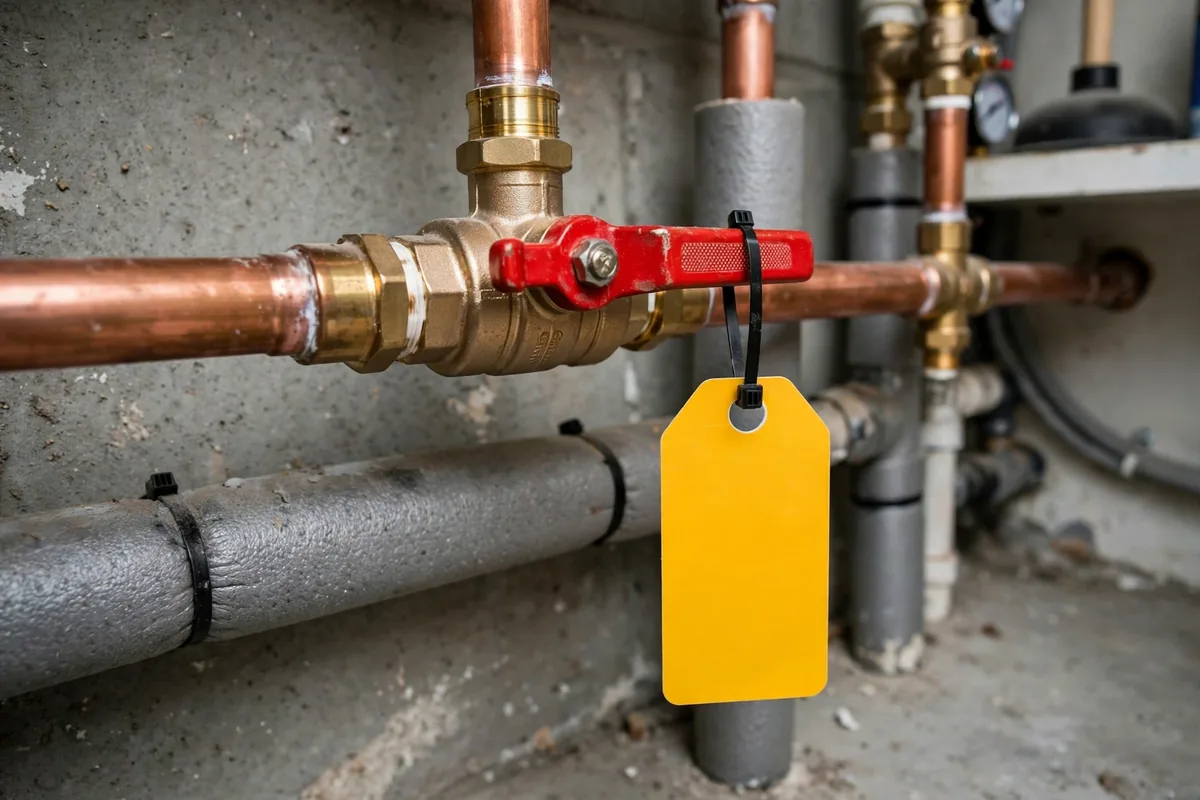
The house main shut-off valve sits where the main line enters the home — most often on a basement wall facing the street, in a utility area, or near the water heater; in homes on a concrete slab, sometimes in a garage or an access panel, where the line passes the foundation. It is either a gate valve (a round wheel, many turns) or a ball valve (a lever, one quarter turn — lever in line with the pipe means open, across it means closed). Closing it stops all water into the house's plumbing.
This is your first move for every indoor burst, because it is close, it is yours, and it is fast. In Addison, IL, most homes have it within steps of the water heater. If you have never located yours, the rest of this page is your homework — it takes ten minutes on a dry day and saves the house on a wet one.
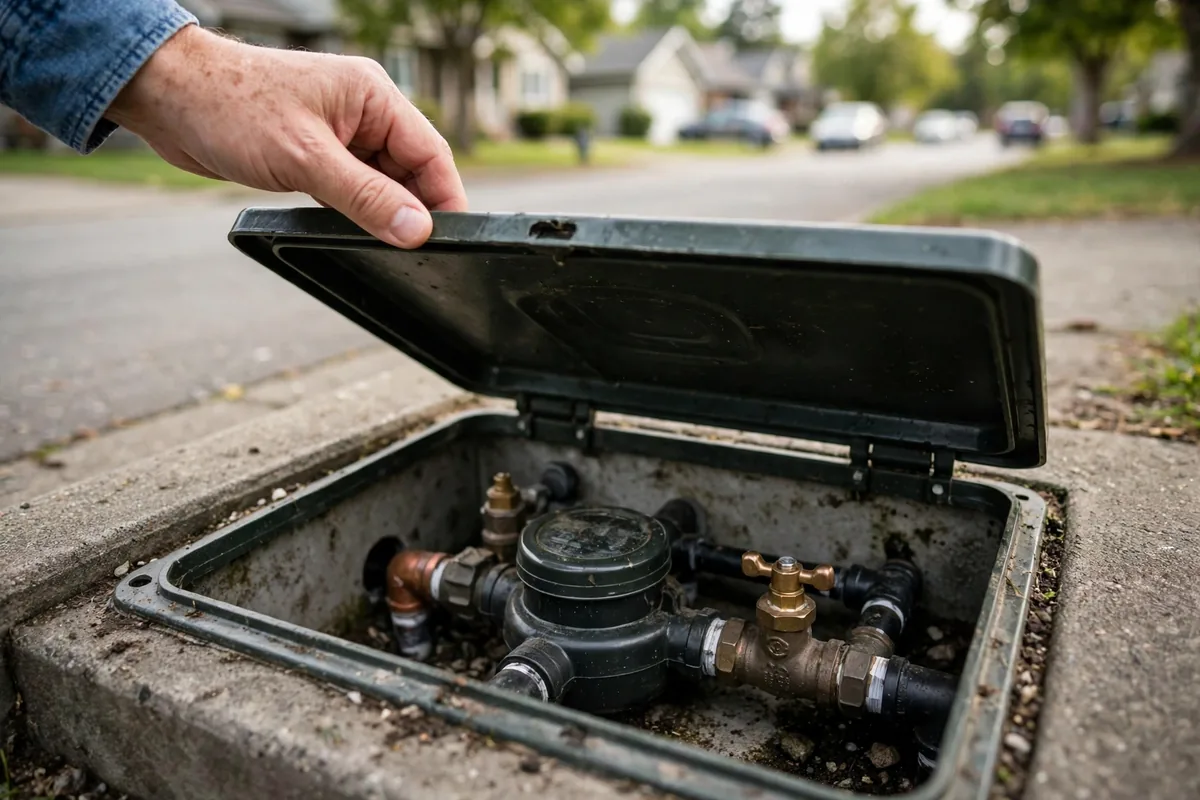
The meter sits between the street main and your line — in a pit or box near the curb in most areas, sometimes inside. Its street-side valve belongs to the utility; there is often a second, customer-side valve you are free to use, and many meters can be shut with a meter key kept at home. Rules differ by city, so check your city water utility guidance now, not mid-flood.
The meter stop is the right answer in three situations: your house valve has failed or cannot be found; the burst is in the buried line between meter and house, where the house valve cannot help because the break is upstream of it; and any moment when the house valve reduces the flow but the meter still spins. It is the master switch for the whole property, and knowing it exists is half of this page's value.
Indoor burst — burst pipe in an exterior wall, ceiling, attic, basement or crawl space: house valve first. Yard or main line burst — wet lawn, meter spinning with the house valve already closed: meter valve (or the utility to close it). House valve broken, seized or missing: meter valve, then a planned replacement of the house valve on a calm day. Water heater or appliance flood — the laundry hookup has its own pair of valves: the fixture's own valve if it has one, house valve if it does not or does not hold.
When in doubt, close both — there is no prize for using the fewest valves, and the meter check afterwards (still, with everything closed) is how you prove the loss has actually stopped. Homeowners across Austin, TX with slab lines learn the meter stop by heart, because their most likely burst lives upstream of every indoor valve.
House valve for the house's pipes. Meter valve for everything upstream of it — and whenever the house valve lies to you.
Water Moving Where It Shouldn't?
One free call connects you with a local pro who can arrive in 30–60 minutes and find the burst without tearing the house apart first.
Call (800) 555-0100Do not force it. A seized gate valve can shear its stem and turn a controllable moment into an uncontrolled one. If gentle, reasonable hand pressure fails, go straight to the meter stop or call the utility to shut the meter, and call the pro. A valve that closes but lets the meter creep has a worn seal — usable tonight as a flow-reducer while the meter stop does the real work, then booked for replacement.
Afterwards, that valve goes on the planned-replacement list while the memory is fresh. The full story of valve failure signs and the replacement job is in our shut-off valve guide; the short version is that a valve which failed its audition tonight does not get trusted with the sequel.
Water first, then electricity to the wet area (breaker off if water is near electrics, dry hands, dry floor), then a low tap opened to drain the line's pressure, then belongings moved out of the water's path, then photographs before cleanup, then the call — water extraction and structural drying belong after the repair, not instead of it. That order is deliberate: the tap-drain step relieves the system so the burst stops dripping sooner, and photos precede mops because the evidence is perishable.
Keep the house heated in winter while you wait — a second pipe lost to freezing joining the first is a documented misery in Akron, OH winters. And if the burst came at thaw from a frozen line, remember other runs in the same cold wall may be plugged with ice and pending — the pro's visit should include a look at the neighbours of the failure, not just the failure.
Do the dry-day drill: find both valves, operate each one (gently) to prove it works, tag the house valve so anyone can find it in the dark, keep a meter key where you can reach it if your meter needs one, and save the pro's number and the utility's emergency line in your phone. Show every adult in the house — the person home alone with the burst is the person this drill is for.
Ten minutes, twice a year, tied to the clock changes. Across Texas and the Midwest alike, burst outcomes correlate less with the house's age than with whether somebody had done this drill. Speed is not a talent; it is a rehearsal.
Finding the split is a kit job: an acoustic leak detection check along the run, a thermal imaging camera for the wet path behind drywall, a moisture meter to map how far the water travelled, and a pipe camera inspection where the line runs under the slab.
More straight answers about finding hidden bursts and what happens after you find one.
Still Have Questions? Call Free
A real person answers, day or night, and connects you with a local pro who can check the problem in person.
(800) 555-0100Clockwise — right to tighten, as with most threaded closures — and a gate valve needs many full turns before it seats. Keep turning until it stops firmly, then verify at a tap and at the meter rather than trusting the feel. When reopening, go counterclockwise slowly. If the wheel spins without resistance or effect, the stem has failed: that is a meter-stop situation and a valve replacement conversation.
Trust the meter, not the handle. Open a tap: flow should fade to nothing as the line drains. Then, with every tap closed again, watch the water meter or its leak indicator for a full minute — complete stillness is the proof. A creeping meter after closing the house valve means either the valve is not sealing or the loss is between the meter and the house; both answers lead to the meter stop.
It depends on your utility. Many allow homeowners or their plumbers to operate the meter-side valve, especially in an emergency, and sell or lend the meter key; others require their own crew to attend. Check your utility's published guidance in advance and keep their emergency number saved. In a genuine flooding emergency, call them — shutting the meter is a routine request for their crews.
Yes — opening a low tap after closing the main valve drains the pressurised lines, so the burst stops dripping sooner and less water sits in damaged sections. Open a hot tap too, briefly, to relieve the water heater side. Leave one low tap open while you wait for the pro; it is also the tap that will tell you, by its silence or its hiss, how the repressurisation is going later.
Your unit usually has its own shut-off (often near the water heater or under the kitchen sink), and the building has mains controlled by management or the utility. In a burst: close your unit valve if you can find it, call building management or the emergency maintenance line immediately — they own the bigger valves — and then protect your belongings. Learn your unit valve's location from the lease paperwork or the management office before you need it.
For the length of a repair visit, a full heater simply sits — no action needed. If the system will be drained or off for an extended period, the heater should be switched off (and drained only as part of a full winterise), because heating an emptying tank can damage it. Never drain a hot heater casually; if the pro needs it drained, that is sequenced work with the water safely cool or controlled.
At the burst itself, flow should dwindle within moments to a drip as line pressure falls, then stop — the pipes hold a little water that drains to the lowest openings. A flow that continues strongly means the valve is not sealing or you have closed the wrong valve (it happens; houses accumulate mystery valves). Go to the meter stop, and let the pro sort out which valve was which during the visit.
Common places: the garage wall where the line enters, a utility or laundry room, near the water heater, or in an access panel in a closet or hallway. If the house truly hides it, the meter stop becomes your primary — which is fine, provided you know it and can operate it. A pro visit for any reason is a good moment to ask for help locating and tagging the house valve for the future.
The pro normally repressurises as part of the job — slowly, while inspecting the new joints and pressure-testing. If you ever do it yourself after a minor isolation, the method matters: taps closed except one, valve opened gradually, air purged, then a meter watch and a walk of every run. Slamming full pressure into an empty system invites water hammer — the exact shock you are trying to spare them.
Reviewed By Hamza
Lead Plumbing & Emergency Pipe Repair Specialist
Hamza is a certified plumbing and pipe restoration specialist with extensive field experience diagnosing sub-zero pipe splits, thermal stress fractures, and slab leaks across harsh winter climates. He specializes in non-destructive leak localization, copper-to-PEX conversions, and preventative freeze-proofing to safeguard residential and commercial plumbing systems against catastrophic water loss.
Updated October 30, 2026
Water running and the valve hunt is not going well? One free call connects you with a local pro who can arrive in 30–60 minutes — and while they are there, have them tag the valve so tonight is the last treasure hunt.
Free Call · Answered 24/7 · Local Pros Near You
Questions on water shut off valve replacement? One free call connects you with a local pro who can arrive in 30–60 minutes. Call now for help.
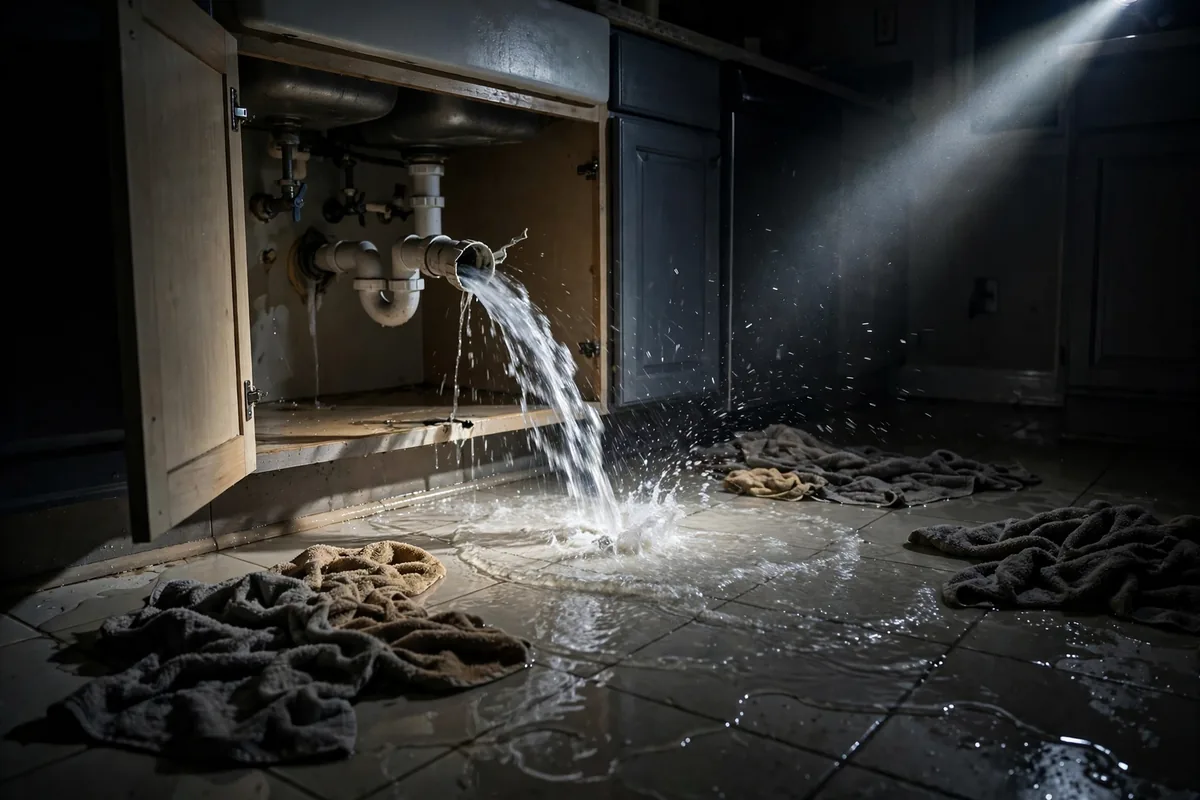
Wondering about emergency pipe repair and what to do first of all? One free call connects you with a local pro who can arrive in 30–60 minutes. Call now.