How To Turn Off Water If Pipes Burst
How To Turn Off Water Fast: House Valve Vs Street Meter
Questions on how to turn off water if pipes burst? One free call connects you with a local pro who can arrive in 30–60 minutes. Call now for help.

Answered 24/7 · Free To Call · No Obligation
Free Call · Answered 24/7 · Local Pros Near You
Your main shut-off valve has one job — stopping all water into the house — and it only proves itself in an emergency. Signs it is failing: the handle spins or will not turn, water keeps flowing after you close it, or it weeps around the stem. Water shut off valve replacement is a planned, pro-level job because it requires shutting the water off at the meter first; test your valve now, on a calm day, not during a burst.
Every burst-pipe story has a moment where someone runs for the shut-off valve. Whether that moment saves the house depends on a valve that may not have moved in twenty years. The main shut-off is the most important valve you own and the least exercised — and like everything mechanical, it has failure modes. Here is how to find it, test it, read its warning signs, and understand what replacing it actually involves.
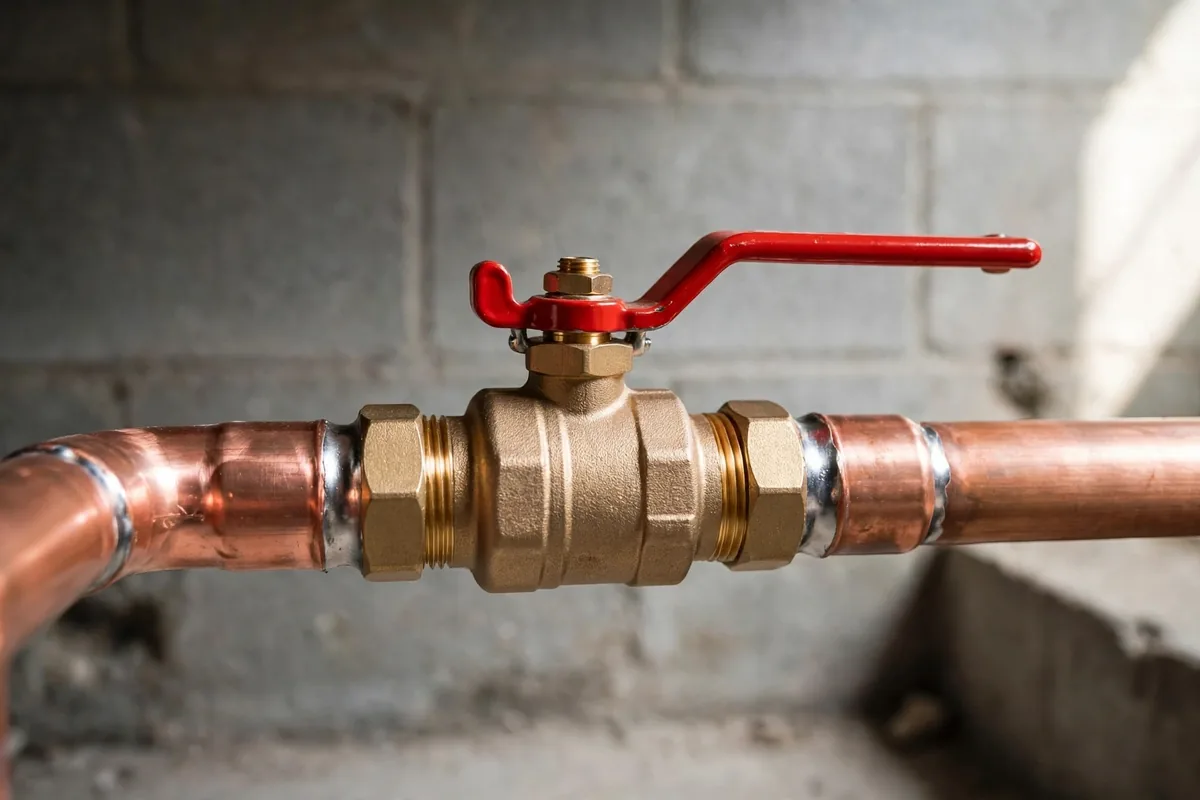
Start by locating it: typically where the main line enters the house — a basement wall, a utility area, near the water heater — or by the meter. Most homes have two relevant stops: the house valve (yours) and the meter-side valve (often the utility's). The house valve comes in two common types: a gate valve (round wheel handle, rises as it opens) and a ball valve (a lever that turns a quarter turn). You will find it on the copper pipe entry line in most older homes, on PEX pipe in newer ones, and the entry may pass through a basement, a crawl space, or a concrete slab edge. Ball valves are the modern favourite: the lever's position shows open or closed at a glance, and they seize far less often.
Find yours today and make sure everyone in the house can find it in the dark. In Addison, IL, where 68.7% of homes predate 1980 (US Census Bureau ACS 2024), many original gate valves are still in service — which is precisely why testing matters there.
Test it gently, on a quiet day, with time to spare. Pick a tap to watch, then close the main valve slowly — never force a stuck handle — and check whether flow stops completely and the water meter stops moving. Then reopen slowly, run a tap to purge air, and confirm normal pressure returns. Note how the handle felt: smooth, stiff, or spinning uselessly.
If the valve will not turn, turns without effect, or the meter keeps creeping after closure, you have your answer before it costs you anything. Book the replacement conversation while it is still a choice. Testing twice a year — many people tie it to clock changes — keeps both the valve and your knowledge of it fresh.
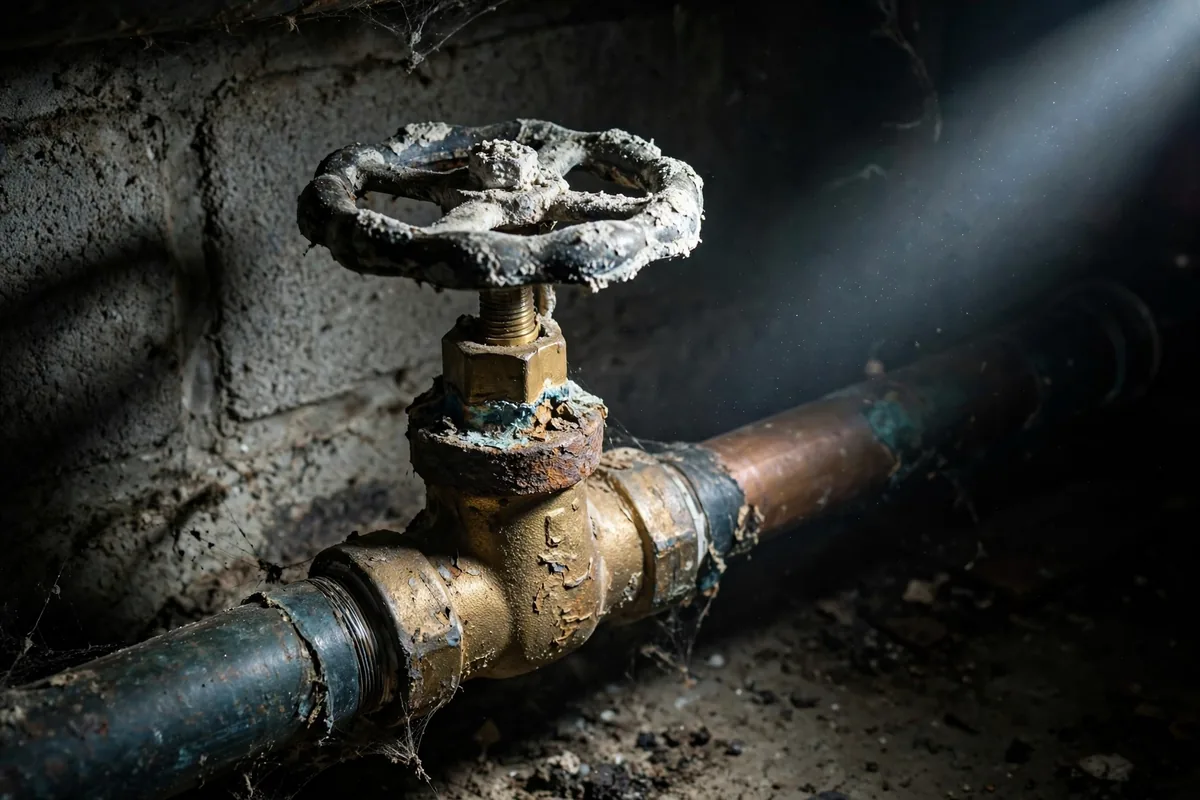
The failure signs are mechanical and visible: a handle that spins freely (stripped stem), a valve that closes most of the way but lets a tap keep dribbling (worn seat or gate), green corrosion crusting the body, a slow weep around the stem when the valve is operated, or a handle so seized that tools would be needed — force being exactly what an old valve does not survive.
Any one of these means the valve cannot be trusted in the one moment it exists for. In Berwyn, IL, where the median home was built in 1938 and the original galvanized steel pipe is still common, main valves have often been painted over, corroded by hard water scale and pipe corrosion, or both — a shut-off that is part of the wall's decoration rather than its defences. Age alone is not proof of failure, but age plus any symptom is a verdict.
A shut-off valve is like a fire extinguisher: the day you need it is the worst day to discover it does not work.
Water Moving Where It Shouldn't?
One free call connects you with a local pro who can arrive in 30–60 minutes and find the burst without tearing the house apart first.
Call (800) 555-0100Because to replace the valve that stops your water, you must first stop your water — upstream. That means the meter-side shut-off: in many areas the utility's valve, sometimes requiring the utility to attend or authorise, and a special meter key. The line is then drained, the old valve cut out, and the new one fitted — commonly a ball valve — joined by soldering or with a press fitting into the line, after which a pressure test of the entry section proves the joints before the house is put back on water.
There is also no partial credit: while the system is open, a seized or corroded section of the entry line sometimes reveals itself, and the pro deals with the whole picture. This is planned work with the water off for a defined window — a very different appointment from an emergency call, and priced accordingly calmer.
Sequence: the utility-side stop is arranged and the meter shut; the house line is drained from its lowest tap; the old valve comes out; the new ball valve is fitted and the line inspected either side; water is restored slowly from the meter; the new valve is exercised open-closed-open and checked for weeps; and the system is purged of air tap by tap.
Before the pro leaves, you should know three things: the new valve's location and operation (try it yourself), what condition the entry line was in, and whether the meter-side valve worked smoothly or needs the utility's attention. Homeowners in Akron, OH often combine the job with a pressure check — a failing pressure regulator and a failing shut-off are both discovered the same way: by finally being tested.
Exercise it: open and close it fully twice a year so the mechanism never gets the chance to seize, and keep the area around it clear and dry so corrosion shows early if it starts. Label it — a tag on the valve saves the whole household a search in the dark, and guests or housesitters benefit most of all.
Finally, widen the drill: fixture valves under sinks and behind toilets deserve the same twice-yearly twist, and the meter location belongs on the same mental map. Across Illinois, the homes that handle bursts most smoothly are not the newest — they are the ones where somebody tested the valve in October.
More straight answers about finding hidden bursts and what happens after you find one.
Still Have Questions? Call Free
A real person answers, day or night, and connects you with a local pro who can check the problem in person.
(800) 555-0100A quality ball valve can serve for decades; older gate valves often become unreliable after twenty to thirty years as their stems corrode and seats wear — sooner in hard-water areas where mineral scale builds on every moving part. Lifespan matters less than function: a valve of any age that turns smoothly and stops the meter completely is doing its job; one that fails the test needs replacing regardless of age.
It is one of the less DIY-friendly jobs in the house, because it starts with shutting water off at the meter — frequently the utility's valve, sometimes requiring their involvement — and involves cutting and joining the main line where a mistake leaves the whole house without water. Most homeowners wisely hand this one to a pro; your high-value role is discovering the failure early through testing, while replacement is still a planned appointment.
A gate valve lowers a wedge-shaped gate into the flow with many turns of a wheel; its stem and seat corrode and scale over years of stillness, which is why old ones seize or fail to seal. A ball valve turns a drilled ball a quarter turn with a lever — the handle shows the state at a glance, and the simple mechanism resists seizing. That is why replacements almost always fit a ball valve.
No — forcing a seized old valve can shear the stem or crack the body, converting a lazy valve into an active leak with no way to stop it short of the meter. Penetrating oil, patience and gentle rocking sometimes free a stiff valve, but if it resists reasonable hand pressure, stop. A stuck valve is already a failed test: note it, and let the pro deal with it while the meter shut-off is under their control.
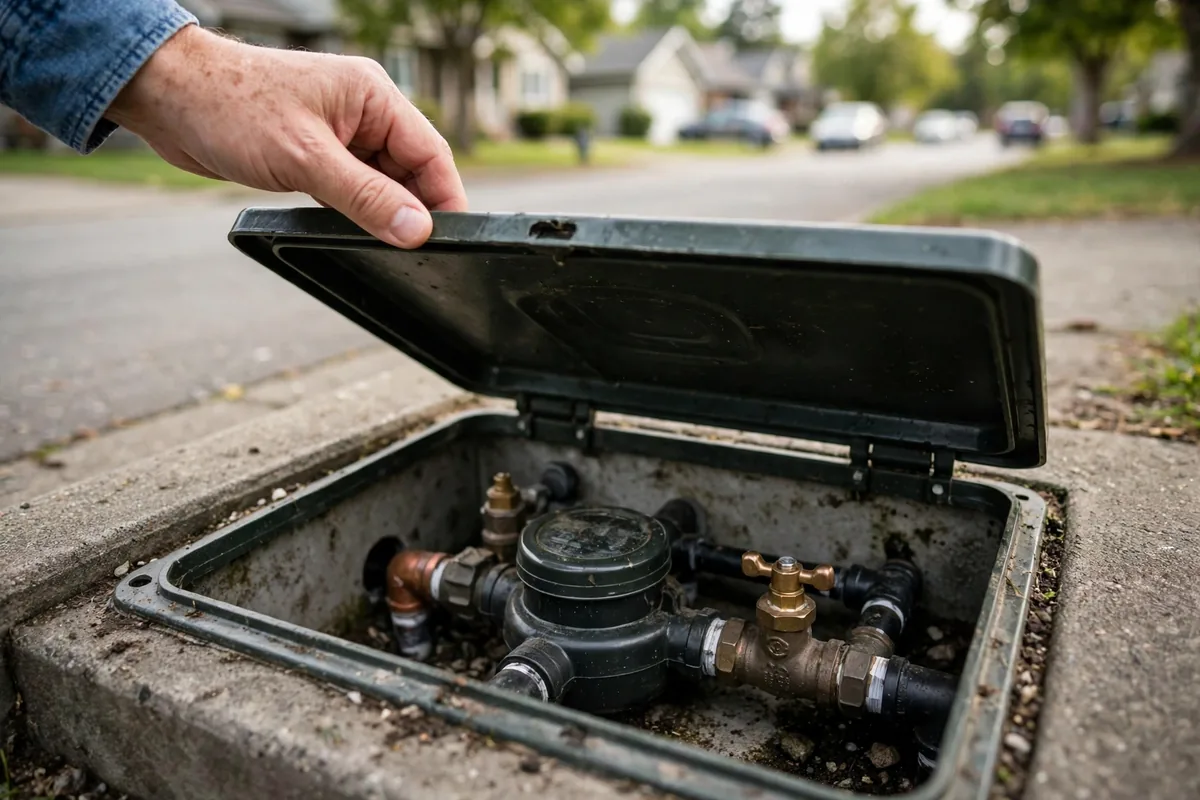
The meter usually sits in a pit or box near the street or in the home, with a valve on the street side of it. Rules vary: many utilities allow homeowners or their plumbers to operate it in an emergency or with a meter key, others ask you to call them. Your utility's website or a quick call settles what applies at your address — ask before you need it, not during the flood.
Yes — a healthy shut-off stops flow completely, confirmed by a still water meter. A valve that reduces flow to a dribble has a worn seat, a damaged gate, or debris preventing closure, and it will perform no better in an emergency when you need a hard stop. It belongs on the replacement list while the failure is a dribble and the appointment can be calm.
They deserve testing on the same schedule: the valves under sinks and behind toilets let you isolate one fixture instead of the whole house, and they seize from the same stillness. Pros often replace tired fixture valves opportunistically during other work, since the system is already drained. At minimum, exercise each one twice a year when you test the main, and note any that resist or weep.
Typically a matter of hours: the shut-off at the meter, the swap itself, and a slow, careful restoration and air purge. Complications — a corroded entry line needing a section replaced, a meter valve that also misbehaves — extend it, which is why the pro arranges the utility side first. Fill kettles and buckets beforehand, and expect the appointment to be measured and unhurried rather than fast.
Then the utility becomes part of the job: their crew repairs or operates their side, sometimes shutting the street main briefly for the work. It is less common but not rare with old infrastructure, and it is another reason valve replacement is scheduled work rather than an impulse job — the pro coordinates the sequence so your house is never left in limbo between two broken valves.
Reviewed By Hamza
Lead Plumbing & Emergency Pipe Repair Specialist
Hamza is a certified plumbing and pipe restoration specialist with extensive field experience diagnosing sub-zero pipe splits, thermal stress fractures, and slab leaks across harsh winter climates. He specializes in non-destructive leak localization, copper-to-PEX conversions, and preventative freeze-proofing to safeguard residential and commercial plumbing systems against catastrophic water loss.
Updated October 30, 2026
Valve stiff, spinning, or letting the meter creep? Do not wait for a burst to grade it. One free call connects you with a local pro who can replace the shut-off on a planned visit — and leave you with a valve the whole house can trust.
Free Call · Answered 24/7 · Local Pros Near You
Questions on how to turn off water if pipes burst? One free call connects you with a local pro who can arrive in 30–60 minutes. Call now for help.

Not sure how burst pipe plumber works or what it involves exactly? One free call connects you with a local pro who can arrive in 30–60 minutes. Call now.