Whole House Repiping
Whole-House Repiping: What The Job Involves, Step By Step
Not sure how whole house repiping works or what it involves exactly? One free call connects you with a local pro who can arrive in 30–60 minutes. Call now.

Answered 24/7 · Free To Call · No Obligation
Free Call · Answered 24/7 · Local Pros Near You
Repiping replaces some or all of a home's water pipes instead of patching the latest failure. It becomes the right call when bursts repeat, when the pipe material itself is at end of life — galvanized steel, polybutylene, or copper thinned by corrosion — or when one repair keeps revealing the next weak spot. One clean failure in sound pipe deserves a repair; a pattern deserves repiping.
Every homeowner with an older house eventually faces the same fork in the road: fix this burst, or stop fixing bursts one at a time. Repairs are right — until the pattern says otherwise. This guide lays out the signals pros use to make the repiping call, so you can recognise which side of the line your house is on before the next failure makes the decision for you.
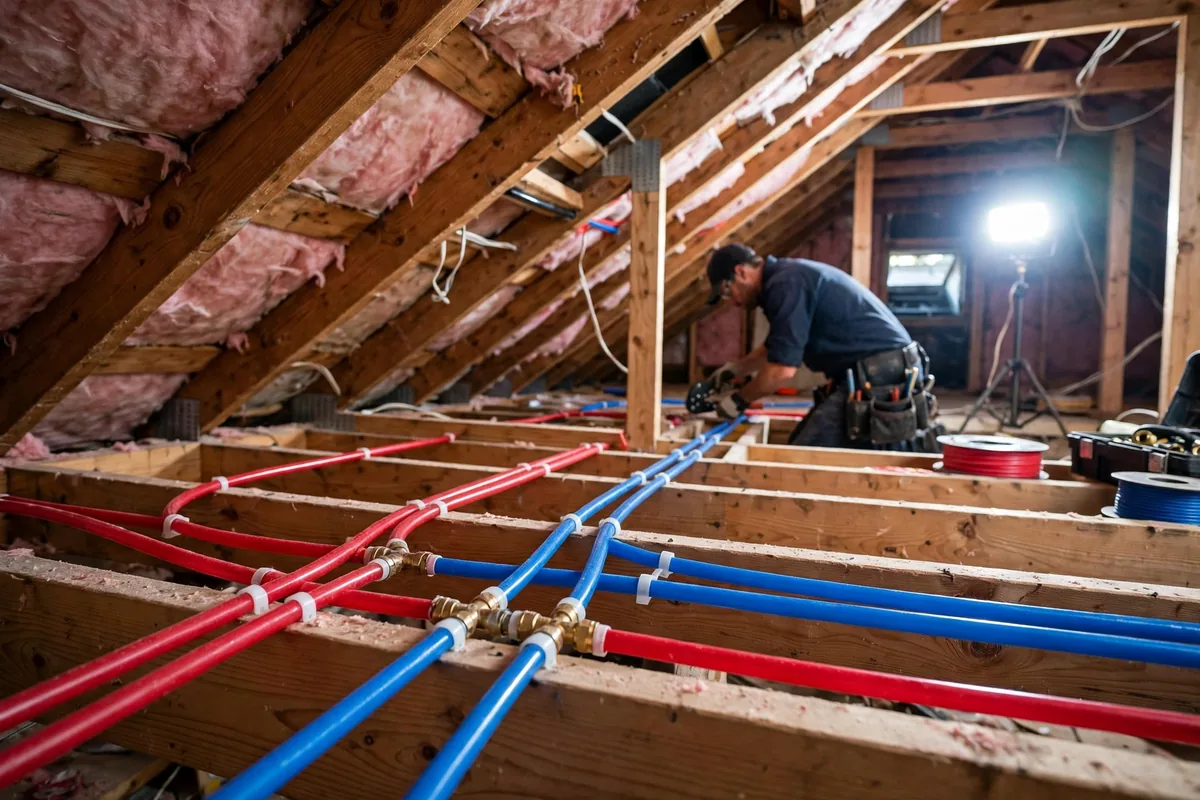
Repiping means replacing water supply pipes — a single run, one floor, or the whole house — with new pipe, usually PEX pipe or copper pipe, instead of repairing the failed section. The old line is abandoned or removed, new lines are routed through walls, ceilings or the attic, and every fixture is reconnected and pressure-tested.
It is a bigger job than a repair, and that is exactly why the decision matters. Nobody should sell you a whole-house repipe for one pinhole in healthy copper. Equally, nobody should keep selling you section repairs on a system whose material expired a decade ago. The sections below are the honest middle: the evidence that separates those two houses.
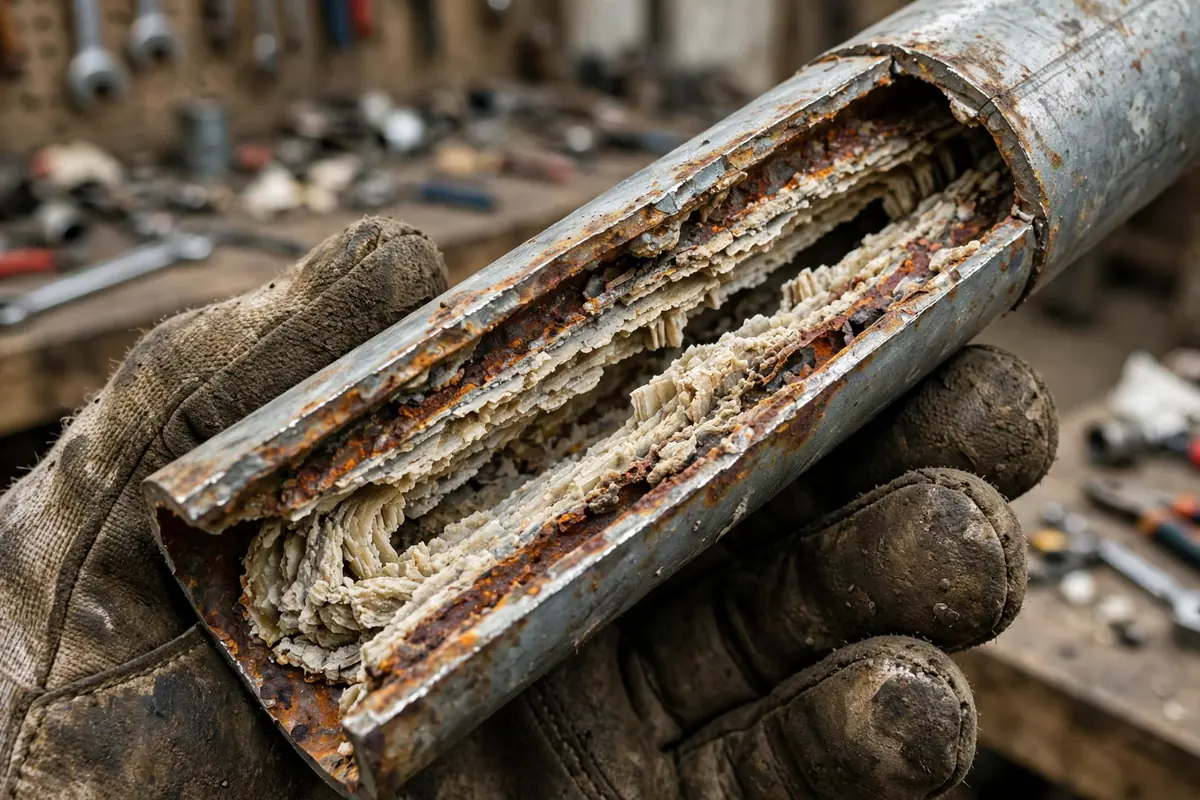
Repetition is the loudest sign. Two bursts in the same run within a few years, or leaks appearing in different rooms on the same ageing system, say the pipe stock — not one unlucky joint — is failing. Water quality joins in: rusty discolouration at taps, pressure that has faded year over year as scale narrows the lines, and pinholes arriving in clusters.
In Berwyn, IL, 93.4% of homes were built before 1980 with a median build year of 1938 (US Census Bureau ACS 2024) — streets where the original galvanized pipe is simply at the end of its design life. A burst there is rarely an isolated event; it is a status report on the whole system, and repiping is priced against the repairs that would otherwise keep coming.
One burst is an accident. The second burst in the same system is information. The third is a bill you have already decided to pay in instalments.
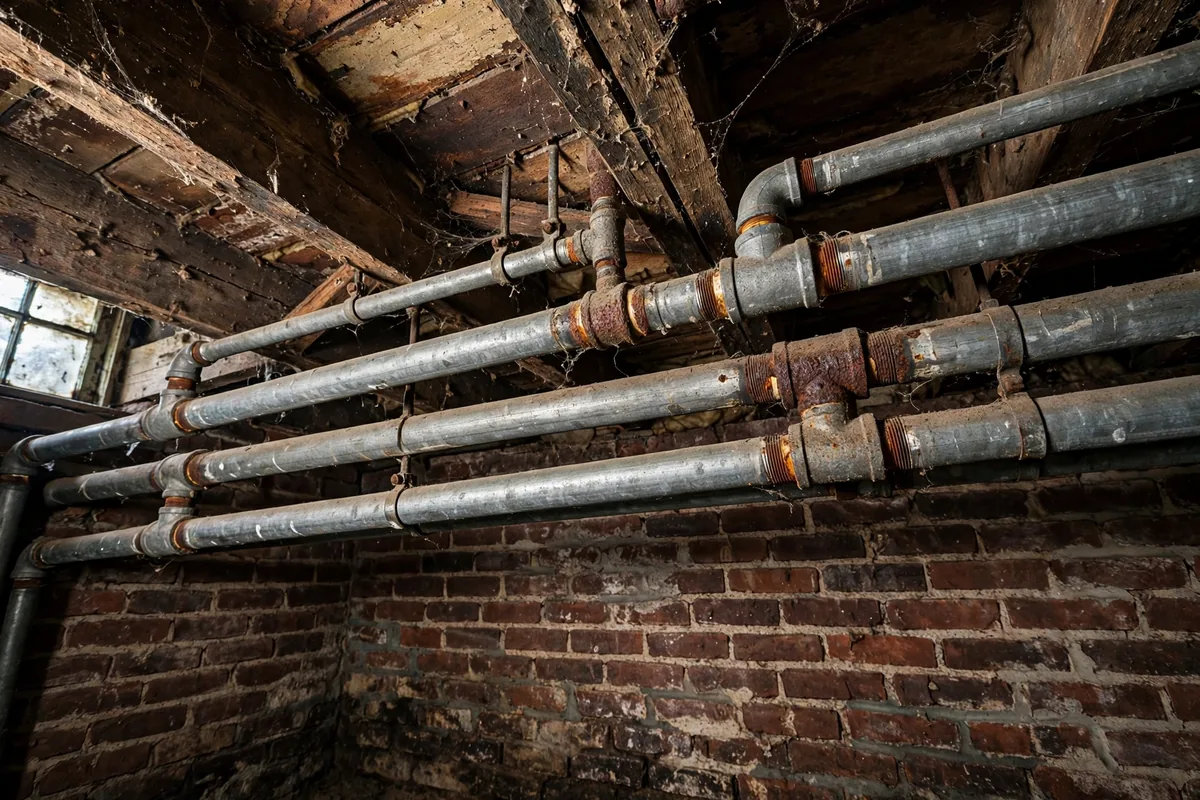
Material is destiny. Galvanized steel pipe rusts and narrows from inside over decades; by the time bursts start, the whole run is compromised and section replacement just moves the failure point. Polybutylene pipe, fitted in many 1978–1995 homes, degrades from inside and is known for sudden failures — pros recommend replacing it rather than repairing it. Copper pipe thinned by pinhole corrosion across a run tells the same story in a different metal.
By contrast, a single freeze split in otherwise sound copper, or a failed fitting on healthy PEX, argues for repair. In Akron, OH — median home built in 1954, 83.2% of homes pre-1980 — both patterns show up street by street, which is why the pro's material inspection, not the home's age alone, makes the call.
Water Moving Where It Shouldn't?
One free call connects you with a local pro who can arrive in 30–60 minutes and find the burst without tearing the house apart first.
Call (800) 555-0100The decision follows the failure map. If failures cluster in one run — the line to an addition, the pipes in one exterior wall — repiping that run can end the problem. If failures scatter across floors and materials, or the whole house still carries its original galvanized or polybutylene stock, partial work leaves live risk everywhere else.
Access matters too: runs reachable through an attic, basement or crawl space are cheaper to replace, and lines buried in a concrete slab are the most expensive to touch — sometimes pipe rerouting of the worst run beats opening the floor than lines buried in finished walls, and pros sequence work to open as little as possible. Homeowners in Illinois and Ohio weighing this should ask for both quotes — the partial and the whole — with the reasoning attached to each. The numbers differ; the logic should be visible.
A repipe resets the clock on the whole system at once: full pressure restored where scale had choked it, no more weak spots waiting their turn, and one pressure test at the end proving every new joint. New runs also get pipe insulation wherever they pass through cold spaces, and copper sections are joined by soldering while PEX runs use press fittings — the details that decide how the new system ages. It also ends the secondary damage cycle — the repeated small floods, wall openings and drying jobs that quietly cost more than plumbing over the years.
What it does not do is fix drain lines, water quality from the street, or pressure problems caused by a failing pressure regulator — a good pro separates those before quoting. Repiping is the answer to one specific diagnosis: supply pipe material that can no longer be trusted. Given that diagnosis, it is usually the cheapest way to buy the next few decades.
Ask the pro to show you the evidence: the cut-out section from your last repair, the material and its condition along the run, and where the previous failures sit on the map of the house. A recommendation you can inspect is worth more than one you are asked to trust, and a pro confident in the call will walk you through the pipe itself.
Get the repair quote and the repipe quote in writing, side by side, with what each includes. In Ashtabula, OH — 85.9% of homes built before 1980 — that comparison is a routine conversation, and it should feel like one: no pressure, just the pipe's condition and the arithmetic of repeated repairs.
More straight answers about finding hidden bursts and what happens after you find one.
Still Have Questions? Call Free
A real person answers, day or night, and connects you with a local pro who can check the problem in person.
(800) 555-0100There is no magic number, but the pattern pros watch for is repetition in a system, not a single event: a second burst in the same run, leaks appearing in different rooms on the same original pipe stock, or one repair revealing thinned pipe on either side of the break. At that point each new repair buys less time, and repiping starts winning the arithmetic.
No. Repiping refers to the pressurised supply lines — the pipes that burst. Drain and waste lines are a separate system with separate problems (blockages, root intrusion, corrosion in old cast iron) and are quoted separately when they need work. If a quote bundles drains into a supply repipe without explaining why, ask for the reasoning in writing.
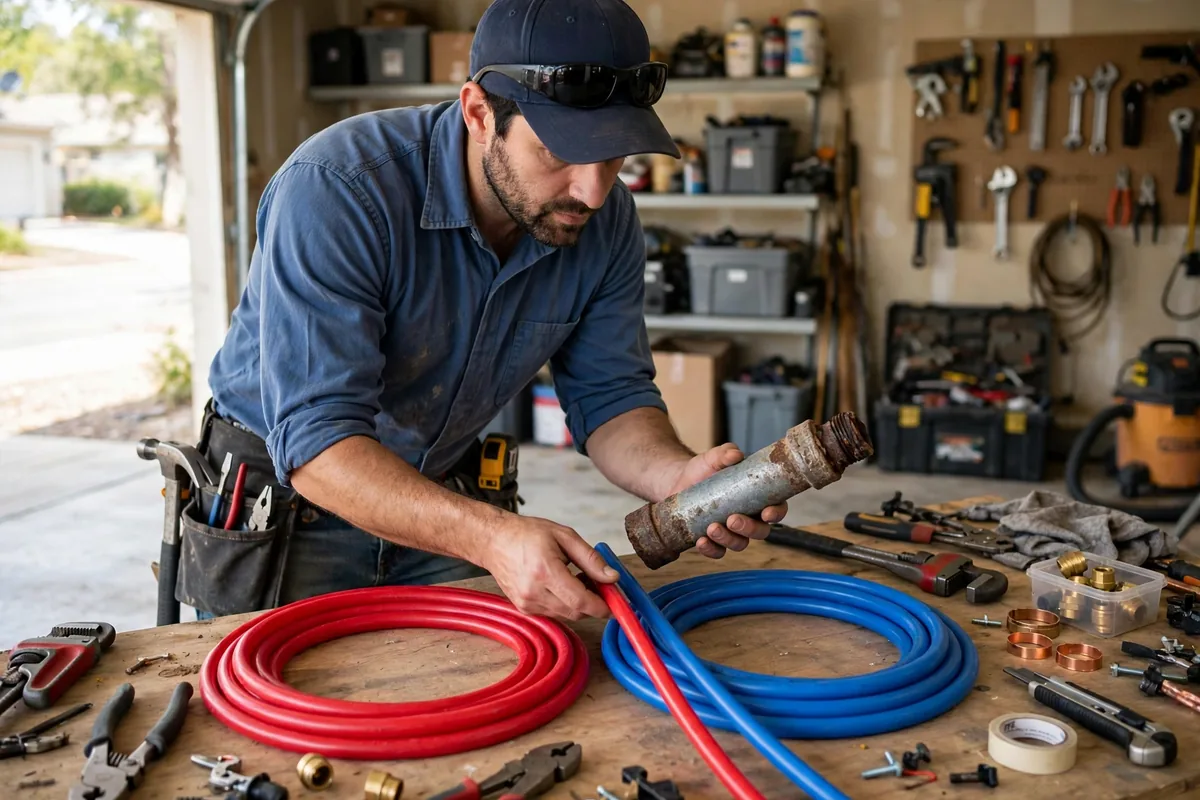
Most residential repipes use PEX pipe or copper pipe. PEX is flexible, resists freeze damage better because it can expand slightly, and routes through walls with fewer joints. Copper is rigid, long-lived and familiar to every pro. The right choice depends on your water chemistry, local practice and budget — a good pro explains the trade-off for your house rather than pushing one material.
If the low pressure comes from scale and rust narrowing your old lines — common with galvanized pipe — yes, a repipe usually restores noticeably stronger flow. If the cause is the street supply, a failing pressure regulator, or a partly closed valve, repiping alone will not fix it. That is why diagnosis comes first: the pro should confirm where the pressure is being lost.
Yes — partial repipes are common and often the right call. If failures cluster in one run or one part of the house and the remaining pipe stock is sound, replacing that section ends the pattern without the whole-house project. The pro should still inspect the boundary where new pipe meets old, since that joint becomes the system's next oldest point.
Most single-family repipes run from a couple of days to the better part of a week depending on house size, access and how much wall opening is needed. Water is typically off in stretches rather than the whole time, and many crews restore service each evening. Wall patching and painting afterwards are usually separate from the plumbing scope — confirm what your quote includes.
It can be: a home with documented new supply lines removes a known objection for buyers, and a house with active repeat leaks has a problem that will surface in inspection anyway. The honest calculation compares the repipe quote against the repair history and the likelihood of another burst before sale. Disclose whichever route you take; hidden leak damage is the expensive discovery.
Accessible old lines are usually removed; lines trapped in walls or slabs are typically capped, drained and abandoned in place, which is standard practice and avoids unnecessary demolition. The new lines take the easiest modern route — often through the attic or along basement ceilings. Ask the pro to walk you through the planned route before work starts.
Polybutylene is the material exception to the one-burst rule. Because it degrades from the inside and fails suddenly — often at fittings — many pros recommend planning a replacement of polybutylene supply lines even after a single failure, prioritising the runs whose failure would do most damage. At minimum, have the whole system's material confirmed and a replacement plan priced.
Reviewed By Hamza
Lead Plumbing & Emergency Pipe Repair Specialist
Hamza is a certified plumbing and pipe restoration specialist with extensive field experience diagnosing sub-zero pipe splits, thermal stress fractures, and slab leaks across harsh winter climates. He specializes in non-destructive leak localization, copper-to-PEX conversions, and preventative freeze-proofing to safeguard residential and commercial plumbing systems against catastrophic water loss.
Updated October 30, 2026
Facing the repair-or-repipe decision? One free call connects you with a local pro who will inspect the pipe material, show you its condition, and price both routes in writing — so the call is made on evidence, not on a sales pitch.
Free Call · Answered 24/7 · Local Pros Near You
Not sure how whole house repiping works or what it involves exactly? One free call connects you with a local pro who can arrive in 30–60 minutes. Call now.
Not sure how galvanized pipe replacement works or what it involves? One free call connects you with a local pro who can arrive in 30–60 minutes. Call now.