Repiping
When To Repipe A House Instead Of Repairing Another Burst
Not sure how repiping works or what it involves exactly? One free call connects you with a local pro who can arrive in 30–60 minutes. Call now.

Answered 24/7 · Free To Call · No Obligation
Free Call · Answered 24/7 · Local Pros Near You
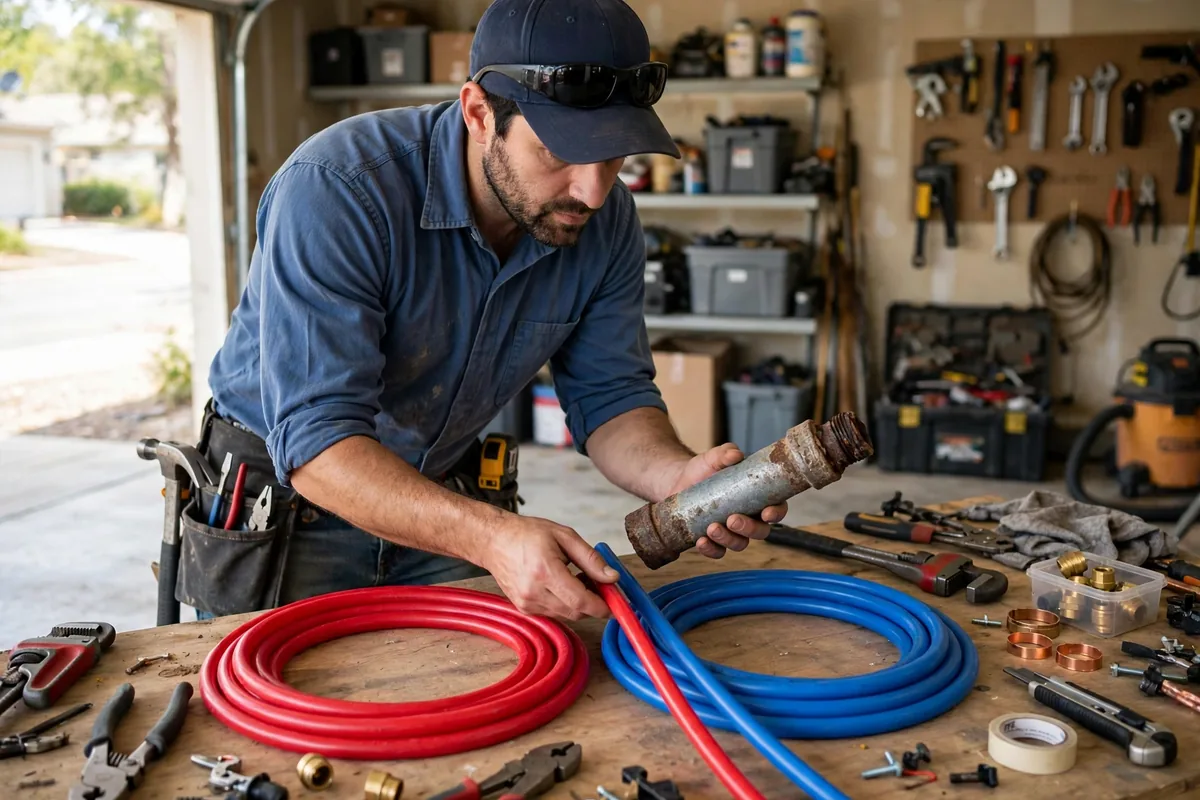
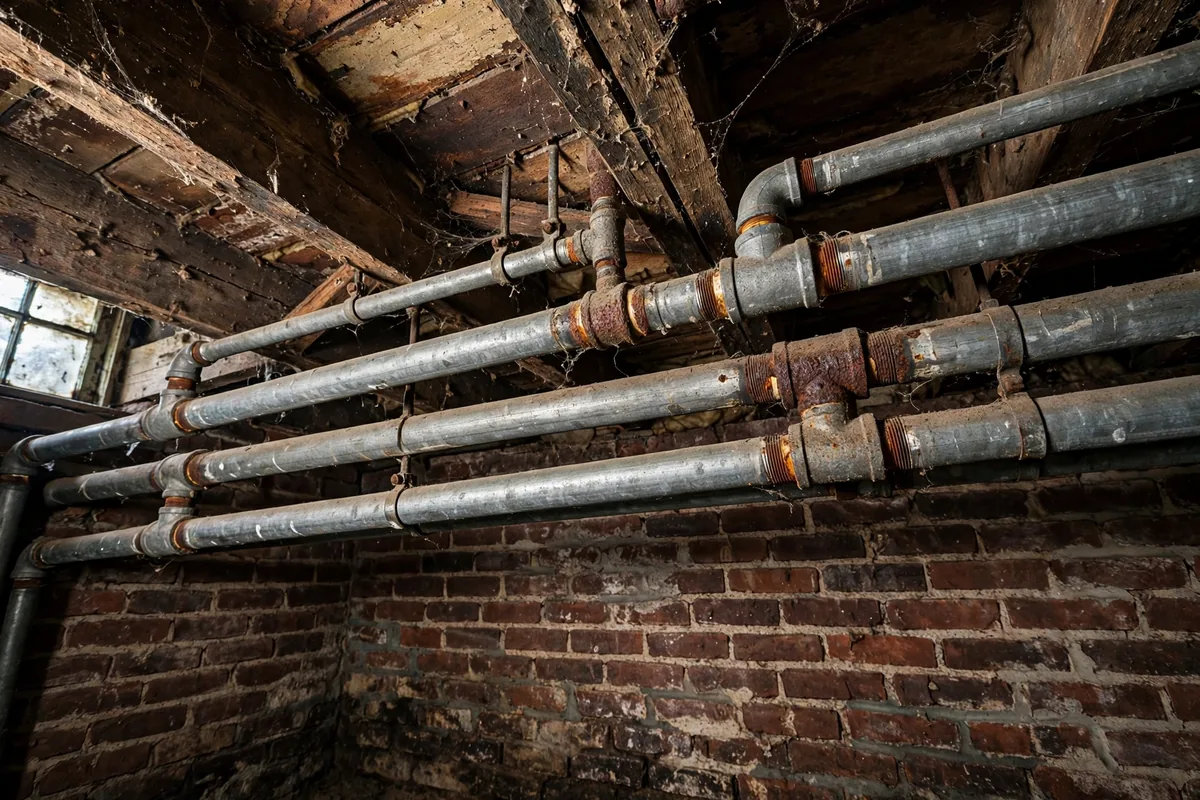
Galvanized pipe replacement becomes the right conversation when the pipe's interior makes the decision: galvanized steel corrodes from the inside out, its zinc coat gone, scale narrowing the bore while the walls thin — so an old galvanized system does not burst because of one bad winter, it bursts because its margin ran out. The signs arrive years early: rust-tinted water, falling pressure, leaks that choose new addresses. Polybutylene pipe, its successor in some eras, carries a parallel risk.
Some pipes fail by accident. Galvanized pipe fails by biography. Installed by the mile in homes built before the 1960s and common into the decades after, it was a good material with a finite design: a steel core protected by a zinc coating, threaded at every joint. The coating was always temporary. What follows — the slow interior rusting that defines the material's old age — is the subject of this page, because hundreds of thousands of homes are living in that old age now.
From the inside, invisibly. Once the zinc layer is consumed — a matter of decades, hastened by hard water and aggressive chemistry — the exposed steel rusts, and the rust does two things at once: it builds inward as scale, narrowing the pipe's bore (which is why old galvanized homes lose pressure year by year), and it pits outward through the wall, thinning it. Pipe corrosion in galvanized systems is therefore a pincer: less room for water inside, less metal holding it in.
The burst, when it comes, is the pitting winning: a wall thinned to foil lets go at a pit, often at a threaded joint where the cutting already removed metal. Freezing accelerates the ending — ice pressure finds the thinnest pit — but plenty of galvanized bursts happen in mild weather, at ordinary pressure, on an ordinary Tuesday. The material's age was the emergency; the season just chose the date.
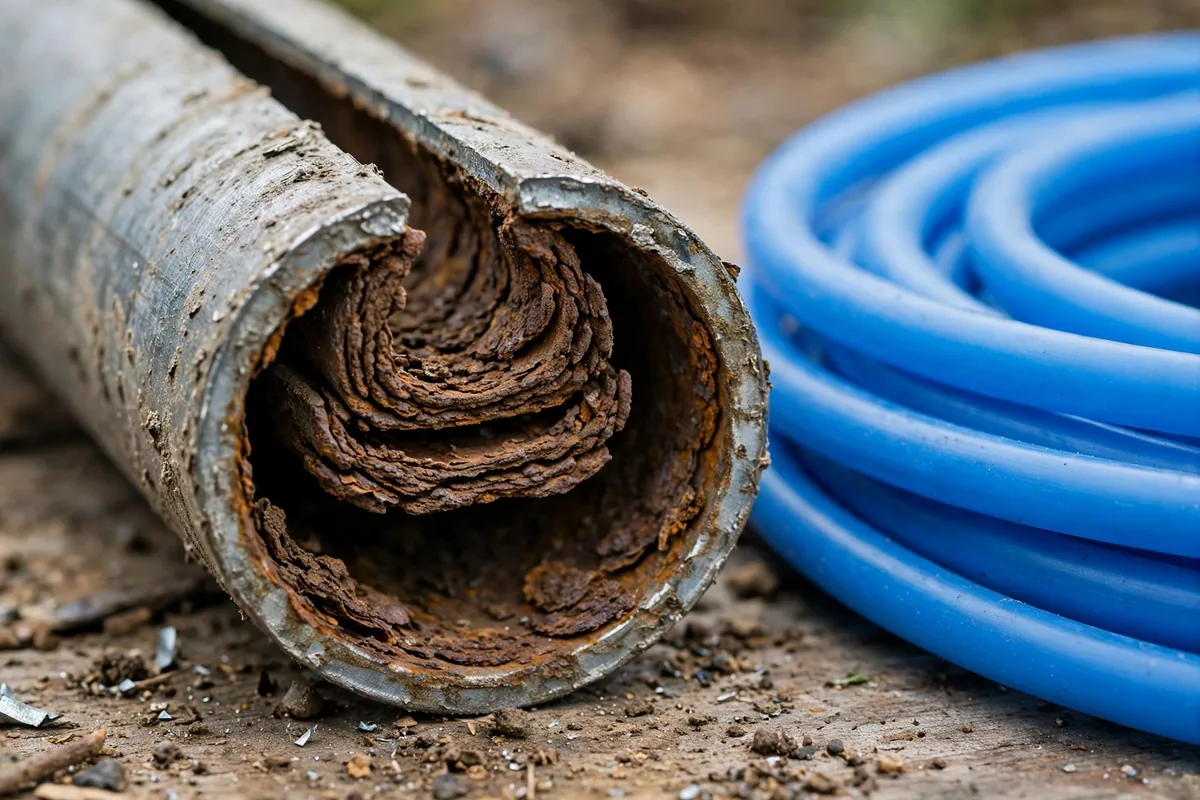
The classic triad: rust-tinted or brown water on the first draw after standing (the overnight rust washing out), especially from the hot side; steadily falling pressure and flow over the years as scale narrows the runs; and leaks that recur — a joint weeping here, a pinhole there, each repaired, none surprising. Add visible rust blooms and crust at exposed threaded joints in the basement, and the system has published its condition report.
Any single sign can have other causes, which is why the cut-out section rules: one removed length, sliced and shown, settles what the interior looks like. In Berwyn, IL — median home built 1938, 93.4% of homes pre-1980 (US Census Bureau ACS 2024) — pros read galvanized interiors the way tree rings are read, and the reading is rarely ambiguous by the time a burst brings them there.
Because the material and the housing stock aged together. Illinois counts 63.5% of homes built before 1980 and Ohio 63.4% (ACS 2024); within those, the pre-1960 stock is where galvanized was the default — in Akron, OH, 83.2% of homes predate 1980, and streets of bungalows share not just an era but a plumbing biography, which is why galvanized bursts cluster by neighbourhood as surely as by material.
Older homes add accomplices: runs threaded through exterior walls and unheated voids by the standards of their day, additions tied into tired lines, and decades of small repairs in mixed metals — copper joined straight to galvanized without dielectric care corrodes at the meeting point faster than either metal alone. The burst risk of an older home is a system property, and galvanized is usually its headline.
A galvanized system does not hide its condition. It publishes it — in the colour of the morning water, in the pressure that is not what it was, in the leaks that keep moving house.
Water Moving Where It Shouldn't?
One free call connects you with a local pro who can arrive in 30–60 minutes and find the burst without tearing the house apart first.
Call (800) 555-0100Parallel, not identical. Polybutylene pipe, installed widely from the late 1970s into the mid-1990s as a cheap, flexible alternative, ages toward brittleness: the material itself degrades, fittings and walls alike, until cracks arrive without corrosion's long warning campaign. Where galvanized announces itself for years in rust and pressure loss, polybutylene can look innocent until it splits — which is why pros treat its presence as a replacement conversation on its own evidence, not on the burst's.
Both materials share the ending of the analysis, though: when the pipe material is itself the diagnosis, section repairs are instalments on a replacement. Barberton, OH, at 84.1% pre-1980 homes, and Ashtabula, OH at 85.9%, hold both materials in quantity — galvanized in the older streets, polybutylene in the later additions — and the assessment visit reads them with the same question: is the material the story?
The ladder is the familiar one, climbed by evidence. A single burst in a galvanized run whose cut-out shows modest scaling and sound walls elsewhere: repair, and take the reading as a first warning logged. A run whose interior is heavily scaled or pitted, or a second failure in the same system: replace the run — pipe rerouting or in-place renewal in PEX pipe or copper pipe — and schedule the system's remaining galvanized by priority. Failures across multiple branches, pressure already poor house-wide: the full repiping conversation, planned and priced calmly, is the honest top of the ladder.
What the ladder forbids is standing still between warnings. Galvanized gives its warnings in years rather than minutes; spending them one emergency at a time is the most expensive way to buy the replacement that was always coming. In Anson, TX — 89.1% of homes pre-1980 — the pattern repeats verbatim in a warmer accent: the material does not care which state it ages in.
Worst first, wet walls before dry ones: the runs showing active leaks and worst pressure loss, then the exterior wall and attic runs where a burst does the most damage, then the protected interior branches. Mixed-metal junctions get dielectric fittings so the new copper or PEX does not inherit a corrosion cell where it meets remaining galvanized. A pressure test after each stage proves the new work before walls close, and the main shut-off valve is renewed in passing if it is of the same vintage — it usually is.
Ask for the sequence in writing, with each stage's scope and the evidence that ordered it. Across Illinois and Ohio, that written ladder — repair now, runs in order, dates attached — is what converts an old home's biggest plumbing liability into a managed project with an end.
Finding the split is a kit job: an acoustic leak detection check along the run, a thermal imaging camera for the wet path behind drywall, a moisture meter to map how far the water travelled, and a pipe camera inspection where the line runs under the slab.
More straight answers about finding hidden bursts and what happens after you find one.
Still Have Questions? Call Free
A real person answers, day or night, and connects you with a local pro who can check the problem in person.
(800) 555-0100The zinc protection is measured in decades — commonly a working life in the region of 40–70 years depending heavily on water chemistry, with hard or aggressive water shortening it. The honest answer for a specific house is not the calendar but the interior: a cut section shows whether the bore is merely furred or nearly closed and the walls pitted. Homes plumbed before 1960 are, by any arithmetic, deep into the material's endgame.
Discoloured water from internal rust is primarily an aesthetic and laundry-staining problem, and the rust itself is iron oxide; the more significant issue is what the corrosion means for the pipe's integrity. Any concern about your specific water belongs with your city water utility, which publishes water quality reports, and a water test if you want your own numbers. Treat the tint as the pipe's condition report — that is certainly how a plumber reads it.
A pipe repair clamp can pause a galvanized leak, but the material argues against trusting it: the wall around any galvanized failure is usually thinned and scaled, so clamping one pit stresses its neighbours, and the 'repair' becomes a tour of the run's weak points. Section replacement to bright metal — where bright metal still exists — is the minimum honest fix, and the cut-out tells you whether even that is a repair or an instalment.
Usually noticeably, yes — because a large part of an old system's pressure loss is the scale narrowing its own pipes. New full-bore runs restore the flow the street pressure always offered. Homeowners frequently describe the change as the surprise benefit of repiping. It is also diagnostic in reverse: if pressure stays poor after renewal, the cause sits elsewhere — a failing regulator or the service line — and the pro looks there next.
If the signs are publishing — tint, pressure loss, a first leak — planned replacement beats the emergency version on every axis: daylight pricing, chosen materials, sequenced stages, no water damage travelling with the job. The burst version buys the same pipes plus an emergency call-out plus whatever the water reached. The material gives years of warning specifically so the decision can be made calmly; using the warning is the whole game.
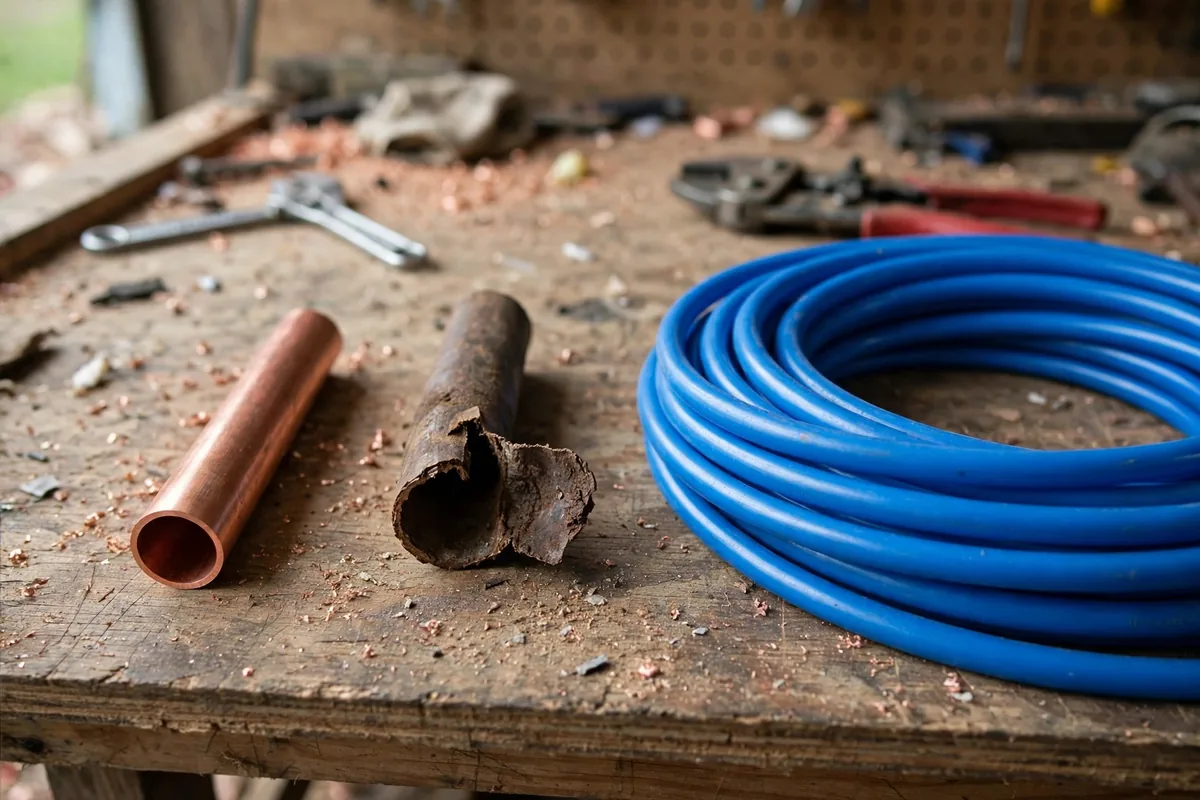
Look at exposed runs in the basement: galvanized is dull grey steel, magnetic (a magnet sticks), with threaded joints and a slightly rough, sometimes rust-bloomed surface. Copper is its familiar colour and non-magnetic; polybutylene is a flexible grey plastic, often stamped PB. Scratch a galvanized surface gently and bright silver shows under the dull coat — when the coat was new. A pro confirms in seconds during any visit.
Cast iron pipe serves drains rather than pressurised supply in most older homes, and it ages by rusting through from inside too — but a drain failure leaks waste water at low pressure, a different event from a supply burst. It belongs in the same older-home assessment, since the crew is already reading the system's biography; just do not confuse the two risk profiles when sequencing the work. Supply first: it is the side under pressure.
Insurers distinguish sudden events from long-term deterioration, and a galvanized failure sits closer to the deterioration end of that conversation than a freeze split in sound copper — which makes the documentation more important, not less: the pro's written finding, photos, and the kept section define the event honestly. Your state department of insurance publishes the general guidance; the specifics live in your policy's wording.
Yes — staged replacement ordered by evidence is the standard approach: worst and wettest runs first, protected branches last, each stage pressure-tested and recorded. The discipline is in the ordering and the paperwork, not the speed. What staging should not become is indefinite deferral of a system already failing monthly; the ladder has a top, and the pro's written sequence should say roughly when your house reaches it.
Reviewed By Hamza
Lead Plumbing & Emergency Pipe Repair Specialist
Hamza is a certified plumbing and pipe restoration specialist with extensive field experience diagnosing sub-zero pipe splits, thermal stress fractures, and slab leaks across harsh winter climates. He specializes in non-destructive leak localization, copper-to-PEX conversions, and preventative freeze-proofing to safeguard residential and commercial plumbing systems against catastrophic water loss.
Updated October 30, 2026
Rust in the morning water, pressure that fades year by year, or a first galvanized leak already repaired? One free call connects you with a local pro who can read your system's interior and lay out the replacement ladder in writing.
Free Call · Answered 24/7 · Local Pros Near You
Not sure how repiping works or what it involves exactly? One free call connects you with a local pro who can arrive in 30–60 minutes. Call now.
Wondering about burst pipe replacement and what to do first of all? One free call connects you with a local pro who can arrive in 30–60 minutes. Call now.