Everything a Texas homeowner needs to know about burst pipes — causes, fixes, permits and paperwork, with Texas's own housing and freeze data.
Texas bursts follow a different pattern from the northern states: the housing is younger, the winters milder, and the pipes hide in attics and under slabs instead of basements. This guide walks through the Texas causes, the insurance and payment rules, and the state routes that protect you if a repair goes wrong, with links to city pages like burst pipe repair in Amarillo, where Panhandle winters come closest to a northern pattern.
Can Blackland Clay Soil And Shifting Ground Break Texas Pipes?
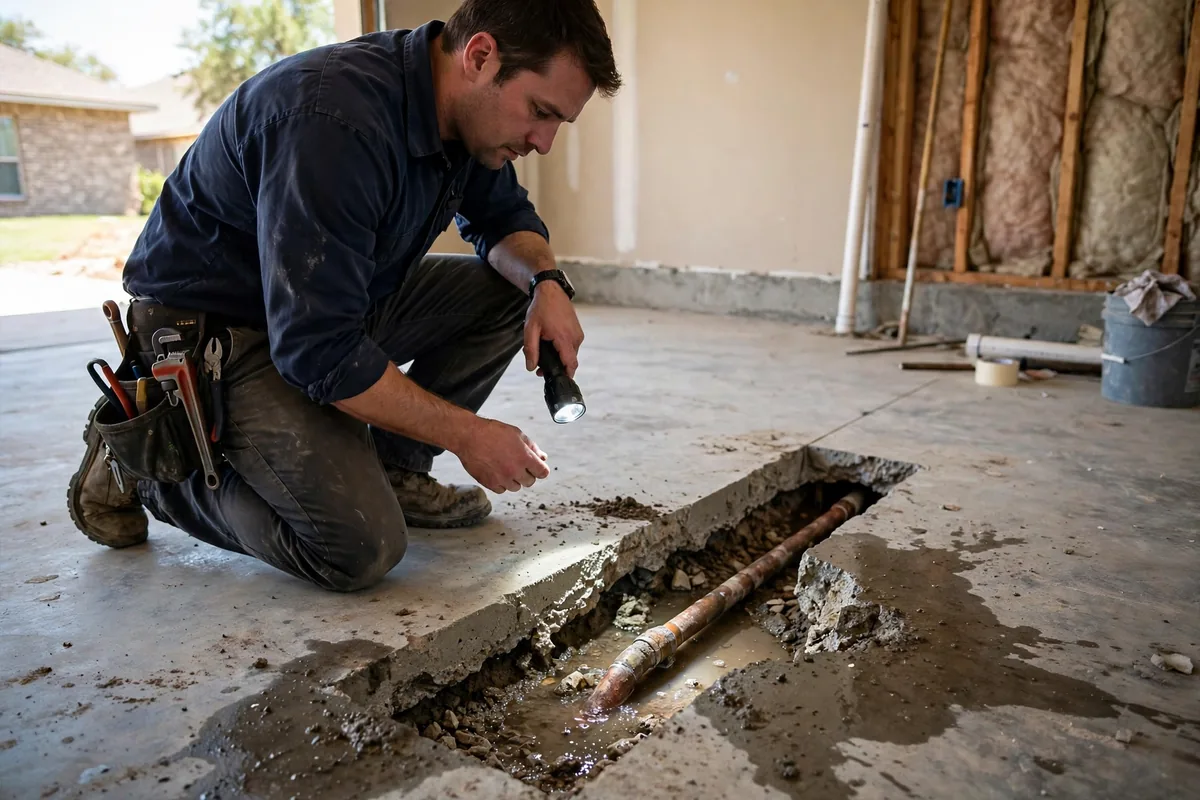
Yes, clay soil movement can crack pipes in Texas without any freeze at all. The Blackland Prairie's expansive clay soil swells after heavy rain and shrinks in dry spells, and that cycle bends buried water lines and stresses joints under slabs and foundations. The break often shows up as a slow pressure drop or a wet patch rather than a dramatic flood. A pro confirms it with a pressure test and, where the line runs underground, sometimes a pipe camera inspection, then replaces or reroutes the damaged section so the moving ground no longer loads it.
Does Texas Homeowners Insurance Cover A Sudden Burst But Not A Gradual Leak?
Generally, yes: sudden and accidental bursts are usually covered, while gradual leaks are usually not. An attic line splitting on a hard freeze night is the classic covered event, because the damage was sudden and beyond your control. A joint that wept for months inside a wall is treated as maintenance, and the resulting damage is commonly denied. Document everything from the first hour: photos, dates, meter readings and the cut-out pipe section. If an insurer disputes your claim, the Texas Department of Insurance publishes consumer guidance, and our guide to how pros find a hidden burst pipe explains the evidence a thorough inspection produces.
Who Pays When A Pipe Bursts: You, Or The Utility?
You pay for lines on your side of the meter, and the utility pays for the street main on its side. The city water utility owns the main under the street and the water meter, so a break there is its repair and its bill. Everything from the meter through your yard and into the house belongs to the homeowner. In practice the boundary matters most for underground and under-slab breaks, which is why a pro first confirms which side of the meter is losing water, a check homeowners in Austin and every other Texas city can request before any digging or floor work starts.
Why Do Attic And Exterior-Wall Lines Burst First In Texas Winters?
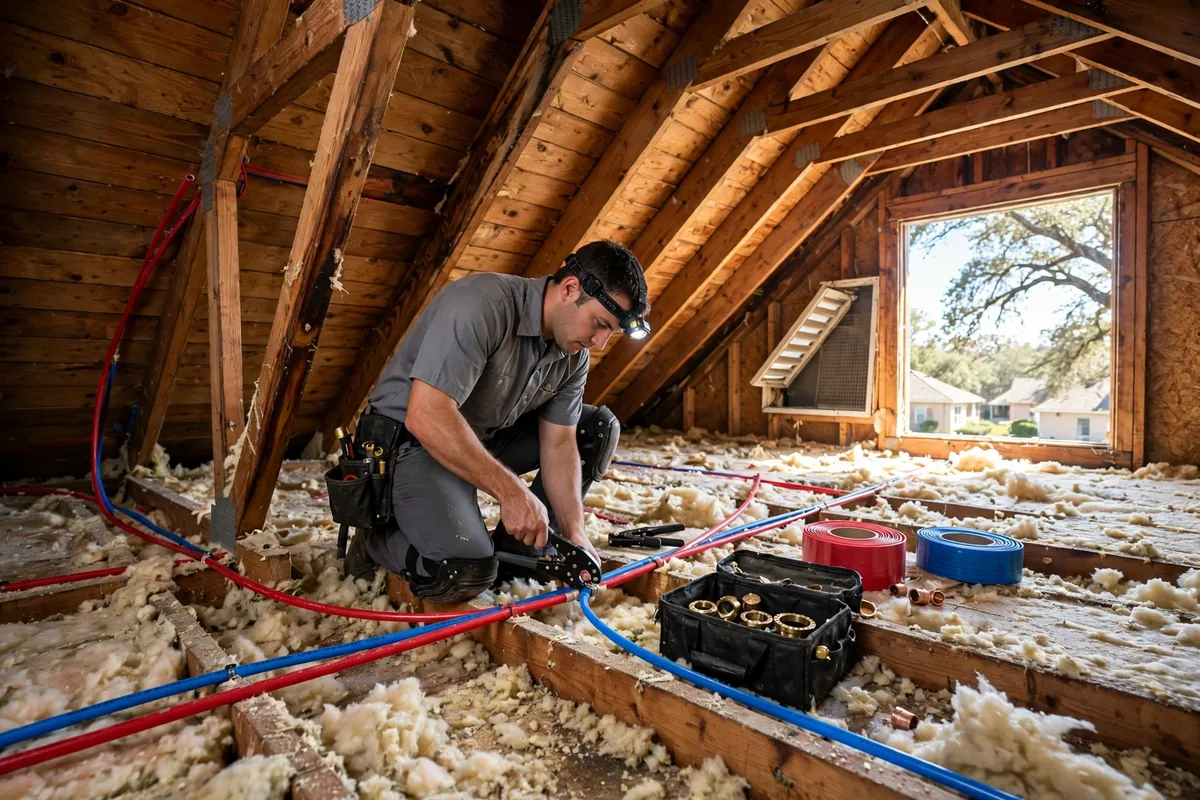
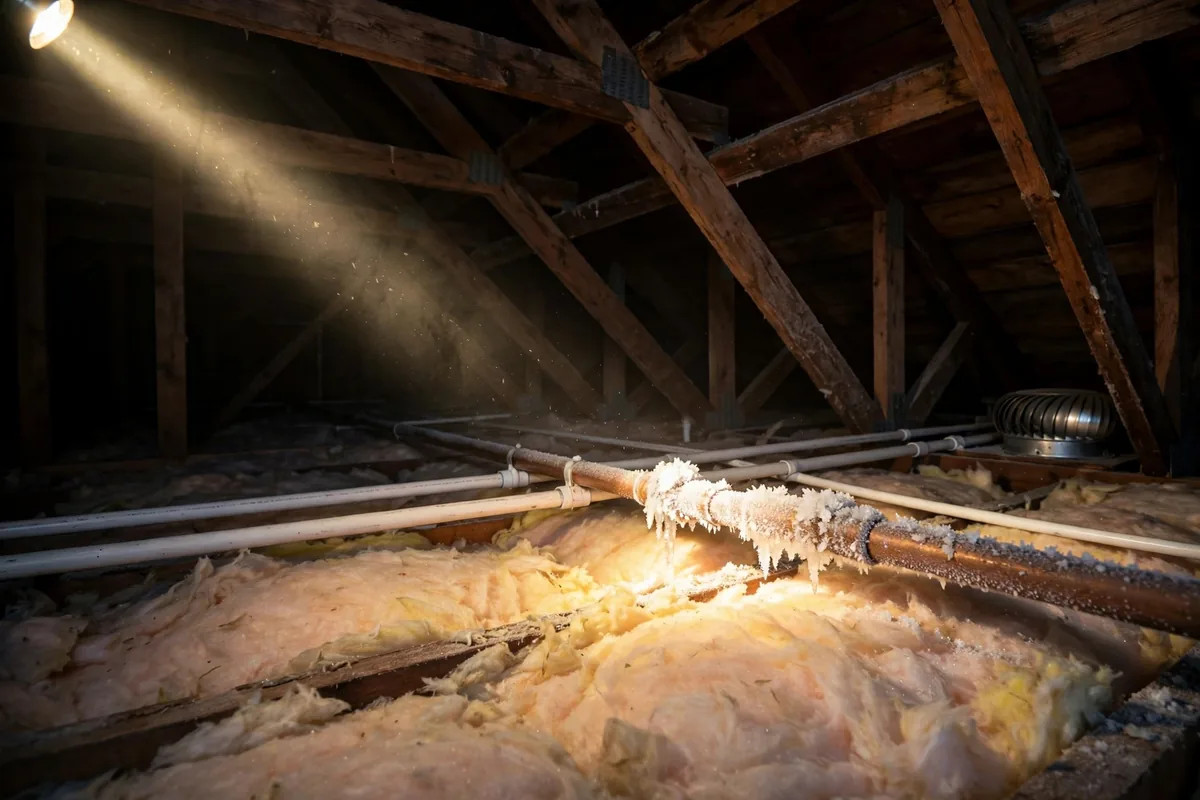
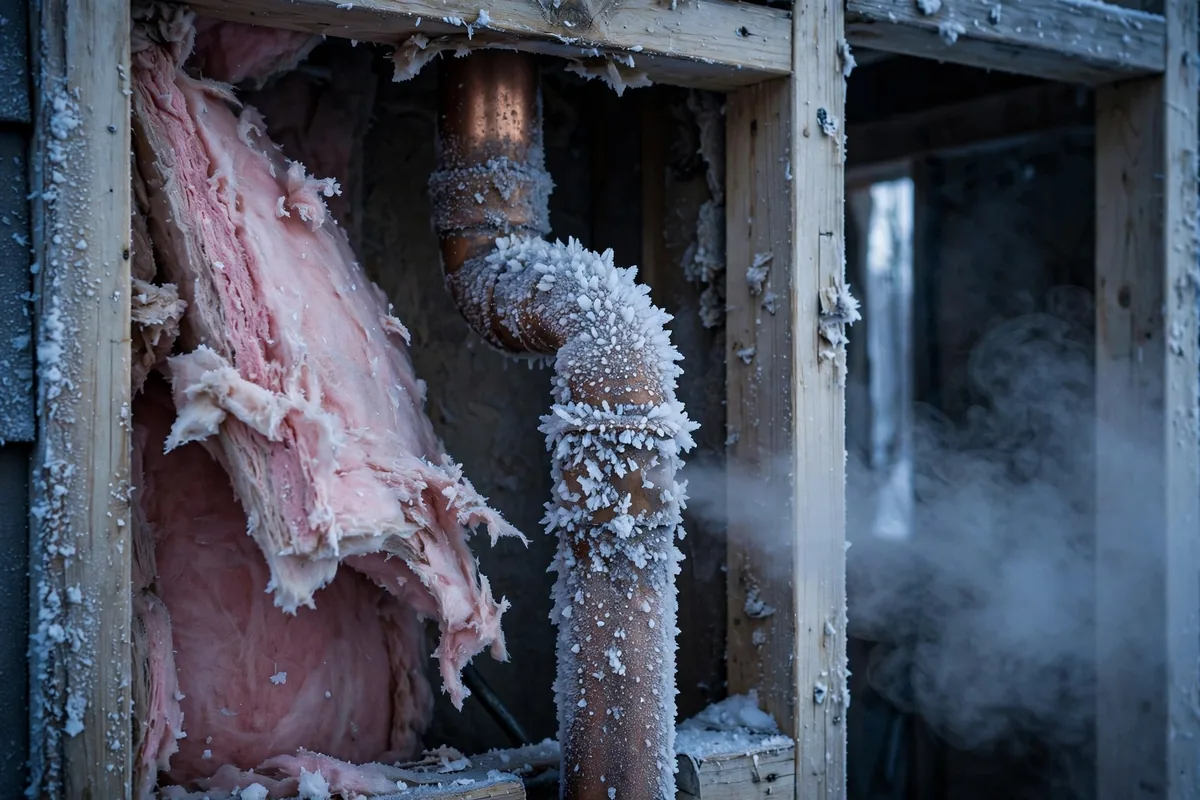
Attic and exterior-wall lines burst first because Texas homes route supply lines overhead and along outside walls, where a hard freeze reaches them fastest. With a median of 41.2 freeze days a year across the cities we serve and January lows averaging 34.5°F, the average night is not the danger; the danger is the handful of nights far colder than average, when an uninsulated attic line can freeze solid before morning. When it splits, the water falls through ceilings and walls, which is why Texas freeze damage so often starts from above. Pipe insulation on attic runs is the practical defence, as homeowners in Arlington relearn most winters.
Why Does Younger Texas Housing Still Burst?
Younger housing still bursts because its risks are different, not absent. Only 33.2% of Texas homes predate 1980, the lowest share of the three states we serve, and the median home was built in 1992. CPVC and PVC pipe, common in that stock, turn brittle in a hard freeze and can crack rather than split neatly. Polybutylene pipe, fitted in many 1980s and 1990s homes, degrades from inside and is known for sudden failures. Add slab foundations that hide leaks for days, and a 1995 Texas home can flood as thoroughly as a 1955 one.
Who Licenses Plumbers In Texas?
The Texas State Board of Plumbing Examiners licenses plumbers statewide and administers the state plumbing license law. Unlike states where licensing sits with a health department, Texas runs a dedicated board, and its website offers a public license lookup. Cities then add their own permit and inspection requirements on top of the state license. When you hire a pro anywhere in Texas, the board is the authority behind the license. Homeowners comparing states will find Illinois works through its public health department instead, on our Illinois page.
What Can You Do If A Repair Goes Wrong In Texas?
Put your complaint in writing to the pro first, with the agreed price, the invoice and photos of the problem. Ask for the price of any significant repair in writing before work starts, because a written figure is your strongest evidence later. If the business will not put things right, the Texas Attorney General's Consumer Protection division accepts complaints about home repair and can explain your options, and license complaints can go to the Texas State Board of Plumbing Examiners. Keep every message and receipt, since a clear paper trail is what turns a dispute into a resolvable complaint.