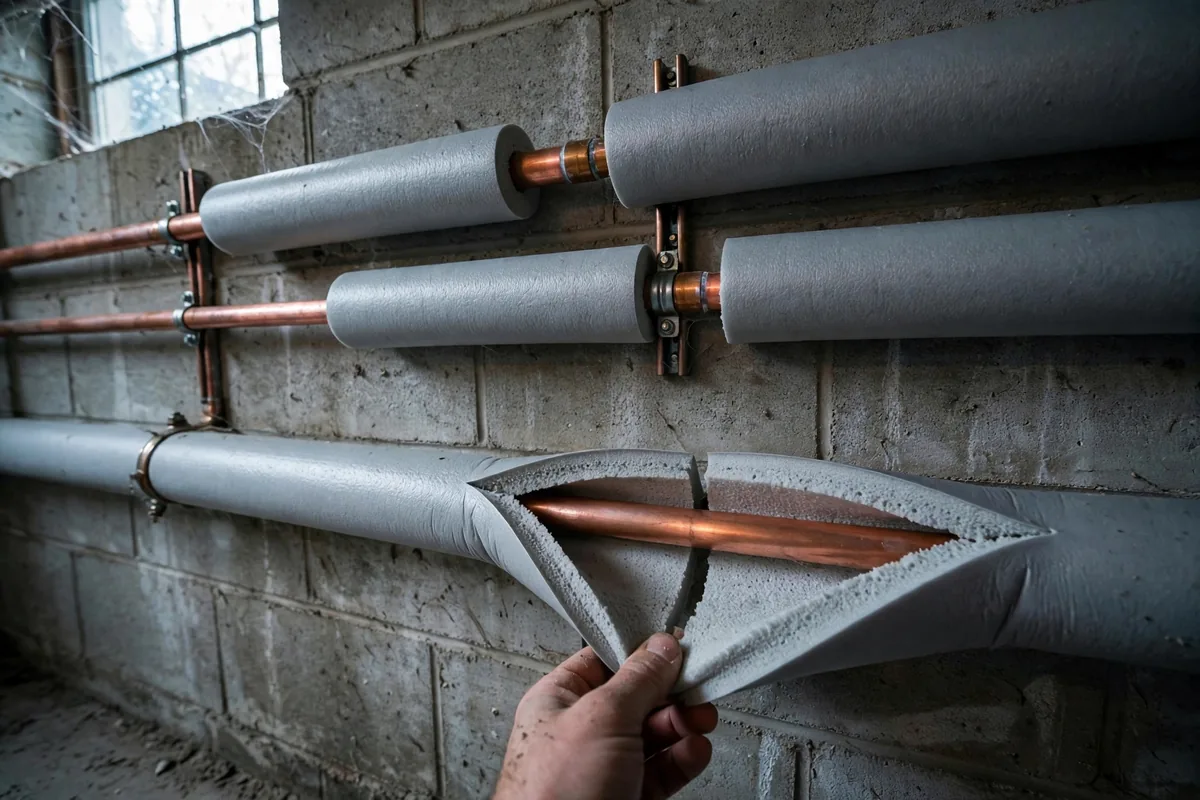
Pipe Insulation
Pipe Insulation To Prevent Burst Pipes: Where It Matters Most
Not sure how pipe insulation works or what it involves exactly? One free call connects you with a local pro who can arrive in 30–60 minutes. Call now.

Answered 24/7 · Free To Call · No Obligation
Free Call · Answered 24/7 · Local Pros Near You
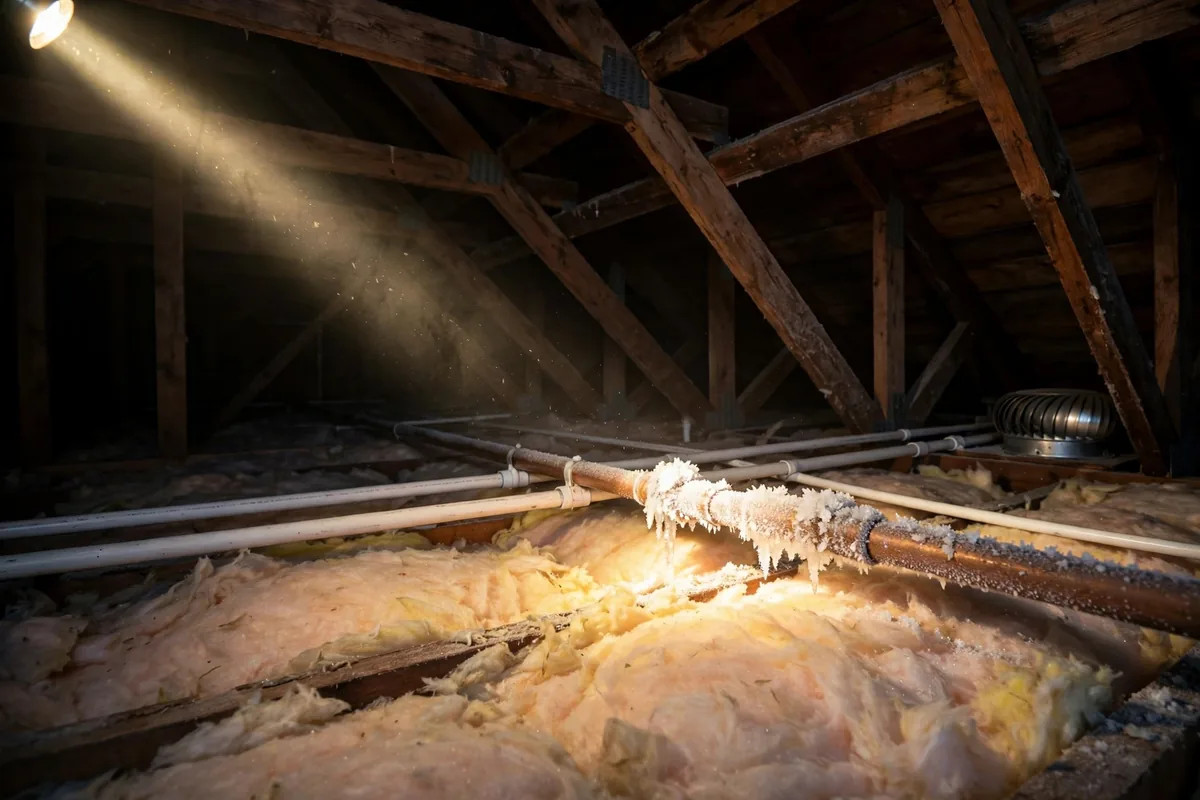
A burst pipe in attic lines is a design accident waiting for weather. Attic runs sit outside the home's heated envelope — above the insulation, exposed to roof-vent air that tracks the outdoor temperature — so on the coldest nights they freeze first, and when they burst, gravity delivers the water through the ceilings below. Warm-climate homes are the most exposed of all: their attic lines were rarely routed or insulated for a freeze.
Every house has a coldest pipe, and in a great many houses it lives in the attic. Attic plumbing exists for good reasons — it is the easy route between bathrooms, the natural path in homes built on a concrete slab — but it places pressurised water in the one space designed to be as cold as the outdoors. When a freeze tests a house, the attic line is the exam's first question.
An attic is ventilated on purpose: soffit and roof vents keep it near outdoor temperature to protect the roof. The home's warmth stops at the ceiling, where the insulation blanket lies. A pipe run below that blanket, tucked against the ceiling, borrows the house's heat. A pipe run above the blanket — laid over the insulation for convenience, or pushed up there by later work — sits in ventilated cold air with nothing between it and the night but roof decking.
Wind completes the exposure: cold air moving through vents strips heat far faster than still air, so a windy freeze night chills attic lines faster than the thermometer suggests. The pipe does not know the house below is warm. It knows only its own small, draughty world — which is why attic lines freeze in houses whose living rooms never felt cold.
Because their building habits assume the freeze never comes. NOAA's 1991–2020 normals give Austin, TX a January average low of 41.8°F and just 11.9 freeze days a year — so attic runs there were installed by generations of builders who never had to think about them freezing: lines above the insulation, minimal pipe insulation, no heat tape. The normals describe the average year faithfully. A burst does not need an average year; it needs one exceptional night, and Texas cold snaps deliver those on their own schedule.
When the snap arrives, it arrives for the whole region at once — every exposed attic line in the city tested the same night, pros overwhelmed, and the damage multiplied by discovery lag as water rains through ceilings. The lesson is not that Texas should build like Minnesota; it is that an attic line is a freeze component in any state, and its protection should be specified for the coldest night of the decade, not the average night of the year.
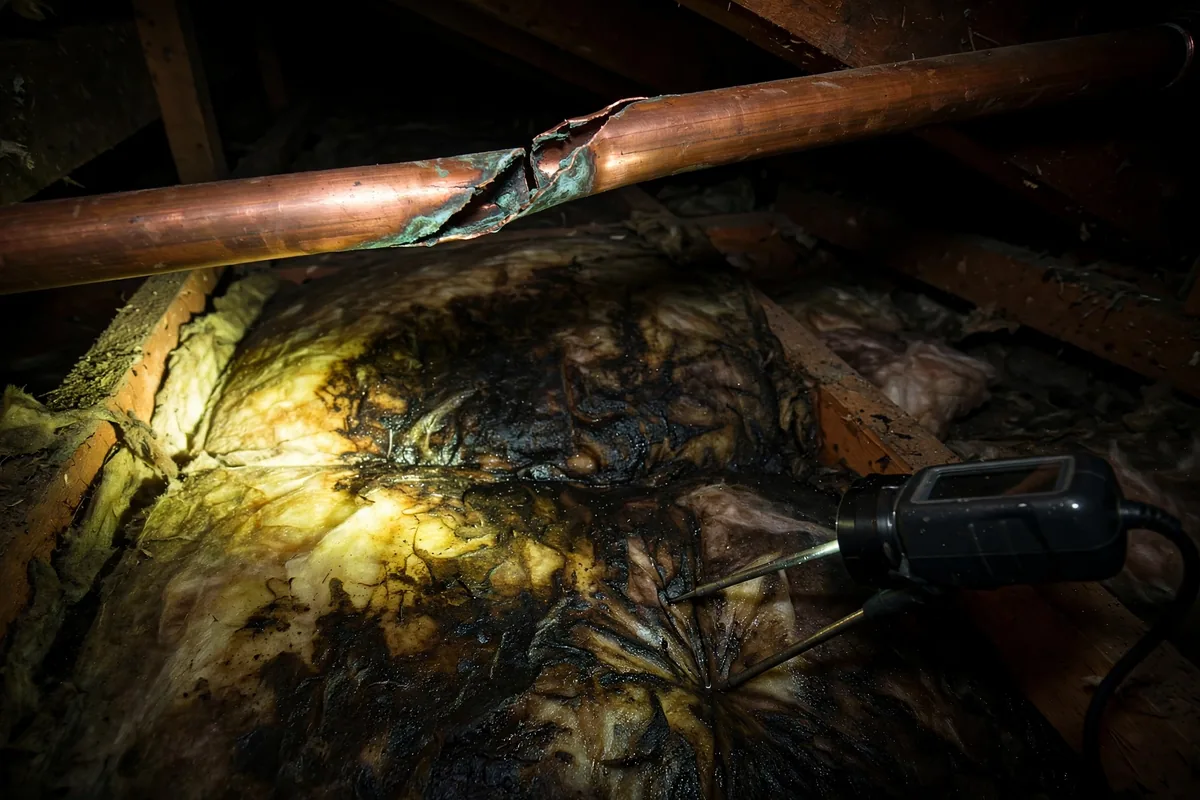
Usually through the ceiling: a spreading stain, paint bubbling, a drip that becomes a bulge as saturated drywall gains weight — treat a bulging ceiling as a collapse risk and keep people and furniture from beneath it. Sometimes the announcement is subtler: the water meter moving with the house quiet, pressure down at the taps, the sound of water where no pipe should be heard. Because the attic is visited rarely, small attic leaks can run longest of all, wetting insulation and joists for days.
The response mirrors any burst, with altitude added: main shut-off valve first, electricity to the wet ceiling's circuits off at the breaker, buckets and plastic below, then the call — and if ceilings are soaked through, water extraction booked in the same hour, not the same week. Do not climb into a wet, dark attic to investigate while water is live — the pro will enter with the water off, boards across the joists, and a thermal imaging camera to map the wet field before a foot is placed wrong.
An attic burst is a rainstorm inside the house, delivered from above. The ceiling is not the damage; it is the messenger — the pipe and the insulation are the story.
Water Moving Where It Shouldn't?
One free call connects you with a local pro who can arrive in 30–60 minutes and find the burst without tearing the house apart first.
Call (800) 555-0100Three things beyond the new section of copper pipe or PEX pipe that replaces the split. First, the wet insulation: soaked batts lose their insulating value and hold moisture against joists and ceiling, so saturated sections come out and are replaced once the structure is dry — structural drying in an attic means air movement and verification with a moisture meter, not just time. Second, the cause audit: why this line froze when its neighbours did not — a vent aimed at it, insulation displaced by storage or trades, a run lifted above the blanket during past work.
Third, the ceiling below gets its honest assessment: stained is cosmetic; soft, sagging or mould-flecked drywall is a replacement conversation, sequenced after the drying is verified. In Arlington, TX, the attic jobs that end well are the ones where the repair ticket reads pipe, insulation, cause, ceiling — in that order — rather than pipe alone.
In layers, cheapest truth first. Route and keep lines below the insulation blanket wherever possible — under the blanket, the house's own heat is the protection, free and always on. Where a line must ride above it, pipe insulation sleeves are the minimum, fitted completely with joints and elbows covered; heat tape under the insulation serves the runs that history has already flagged. Seal the odd local cold sources: a vent baffle deflecting a draught aimed at a pipe, a hatch or recessed-light leak pouring cold air onto one section.
During a forecast snap, the live defences join in: heat kept even overnight, the attic line's taps dripping on the worst nights, and — for a house that will sit empty — the system drained rather than trusted. In Alief, TX and Athens, TX alike, these are the measures that decide whether the regional snap is a news story or a personal one.
Sometimes, yes — when the attic route is indefensible: a line that must cross above the insulation in a vent's direct path, a run that has frozen twice, or a layout where protection cannot be maintained because storage and trades keep disturbing it. Pipe rerouting drops the line into the warm zone — through interior walls or below the blanket — and deletes the risk rather than managing it. It is the same calculation as the under-slab reroute, played vertically.
If the line stays, let the decision be conscious and the protection layered, then verify after the next cold snap with a meter-quiet check and a look in the attic with a torch. Across Texas, the homes that come through exceptional freezes dry are not the lucky ones; they are the ones whose attic lines were treated as the freeze components they are — in a state where the statistics said not to bother. Abilene's housing makes the same point from the age side: with 56.1% of Abilene, TX homes pre-1980, attic lines there carry both exposures at once.
Finding the split is a kit job: an acoustic leak detection check along the run, a thermal imaging camera for the wet path behind drywall, a moisture meter to map how far the water travelled, and a pipe camera inspection where the line runs under the slab.
Seen across bursts by location, attic bursts are the ones most often discovered late, because the water announces itself one floor down, on a ceiling that was dry at breakfast.
More straight answers about finding hidden bursts and what happens after you find one.
Still Have Questions? Call Free
A real person answers, day or night, and connects you with a local pro who can check the problem in person.
(800) 555-0100Yes — rarely by the calendar, completely when it matters. Austin averages only 11.9 freeze days a year (NOAA 1991–2020), but an attic line does not experience the average; it experiences the coldest night, uninsulated and vent-exposed. Exceptional cold snaps test every such line in the region simultaneously, which is why Texas attic bursts arrive as regional events. The protection standard is the decade's coldest night, not the year's typical one.
Insulation over a pipe in a cold attic slows heat loss from the pipe, but the pipe's only heat source is the water and the house below — a thick blanket on top, with the pipe still above the ceiling's insulation layer, can actually isolate it from the house's warmth. The effective arrangement is the pipe below the attic's insulation blanket, borrowing ceiling heat, with its own sleeve as a second layer. Position beats thickness.
Not while water is live and the extent is unknown. Ceilings below a leak can be saturated and weak; attic floors are joists and plasterboard, and a misplaced step goes through. Shut the water off first, let the pro enter with boards, light and a plan. Your inspection tools from below — meter, stains, sounds, photos — gather everything the diagnosis needs without the risk.
Days, in the quiet version: a pinhole or a slow split drips into insulation that absorbs and hides it, and the first visible sign — a ceiling stain — appears only when the material below saturates through. That is why the water meter check matters in houses with attic lines: a meter that creeps with the house quiet is the attic's smoke alarm, arriving days before the ceiling speaks.
On the flagged runs, yes: a line with freeze history, a section that cannot sit below the blanket, or a stretch in a vent's path are proper heat tape candidates — fitted under pipe insulation, on a working circuit, checked each autumn. It is a targeted defence, not a whole-attic strategy; the route and the blanket position remain the primary protection, with the tape guarding the exceptions.
It loses most of its insulating value while wet, holds moisture against joists and the ceiling board, and dries slowly in a still attic — a mould invitation with a long fuse. Saturated sections are normally removed, the structure dried and verified, and new insulation laid once readings are dry. Skipping this step leaves the ceiling's stain as a recurring feature and the joists in a damp microclimate.
Because they solve real problems: in slab homes they are often the only practical route between wet rooms, they keep pipes accessible without opening floors, and in mild climates the freeze exposure is genuinely small in most years. The design is a reasonable trade that becomes a liability only when the protection is never specified for the exceptional night. Rerouting is for the indefensible runs; most attic lines just need their layers.
The water itself mostly travels down, but sustained leaks wet joists, trusses' bearing ends and the ceiling structure, and chronic damp invites rot and mould in the frame. A single prompt-handled burst rarely threatens structure; the quiet, weeks-long leak is the structural story. Both argue for the same habit: any unexplained meter movement in a house with attic lines earns a same-week investigation, not a note to self.
If your system has an isolation valve for the attic run and the fixtures it feeds can be spared, draining that run for a vacancy or an extreme snap is sound. For occupied homes the layered defences — position, insulation, heat tape on flagged sections, dripping taps on the worst nights — are the practical version. Ask a pro during any visit to identify whether your attic run can be isolated; knowing the option exists is half its value.
Reviewed By Hamza
Lead Plumbing & Emergency Pipe Repair Specialist
Hamza is a certified plumbing and pipe restoration specialist with extensive field experience diagnosing sub-zero pipe splits, thermal stress fractures, and slab leaks across harsh winter climates. He specializes in non-destructive leak localization, copper-to-PEX conversions, and preventative freeze-proofing to safeguard residential and commercial plumbing systems against catastrophic water loss.
Updated October 30, 2026
Ceiling staining, a meter that moves at night, or a Texas cold snap forecast with attic lines overhead? One free call connects you with a local pro who can arrive in 30–60 minutes — or audit the attic run calmly before the snap does.
Free Call · Answered 24/7 · Local Pros Near You
Not sure how pipe insulation works or what it involves exactly? One free call connects you with a local pro who can arrive in 30–60 minutes. Call now.
Not sure how winterize empty house pipes works or what it involves? One free call connects you with a local pro who can arrive in 30–60 minutes. Call now.