Can a Pipe Burst If the Water Is Off
Can A Pipe Burst If The Water Is Off?
Questions on can a pipe burst if the water is off? One free call connects you with a local pro who can arrive in 30–60 minutes. Call now for help.

Answered 24/7 · Free To Call · No Obligation
Free Call · Answered 24/7 · Local Pros Near You
To winterize empty house pipes properly means more than turning the water off: close the main valve, drain the lines from the lowest point with the highest taps open, drain the water heater, clear the traps with plumbing antifreeze, disconnect the hoses, and leave the taps open. An empty house has no body heat, no daily water movement and nobody to hear a drip — so its plumbing must hold air, not water, before the cold arrives.
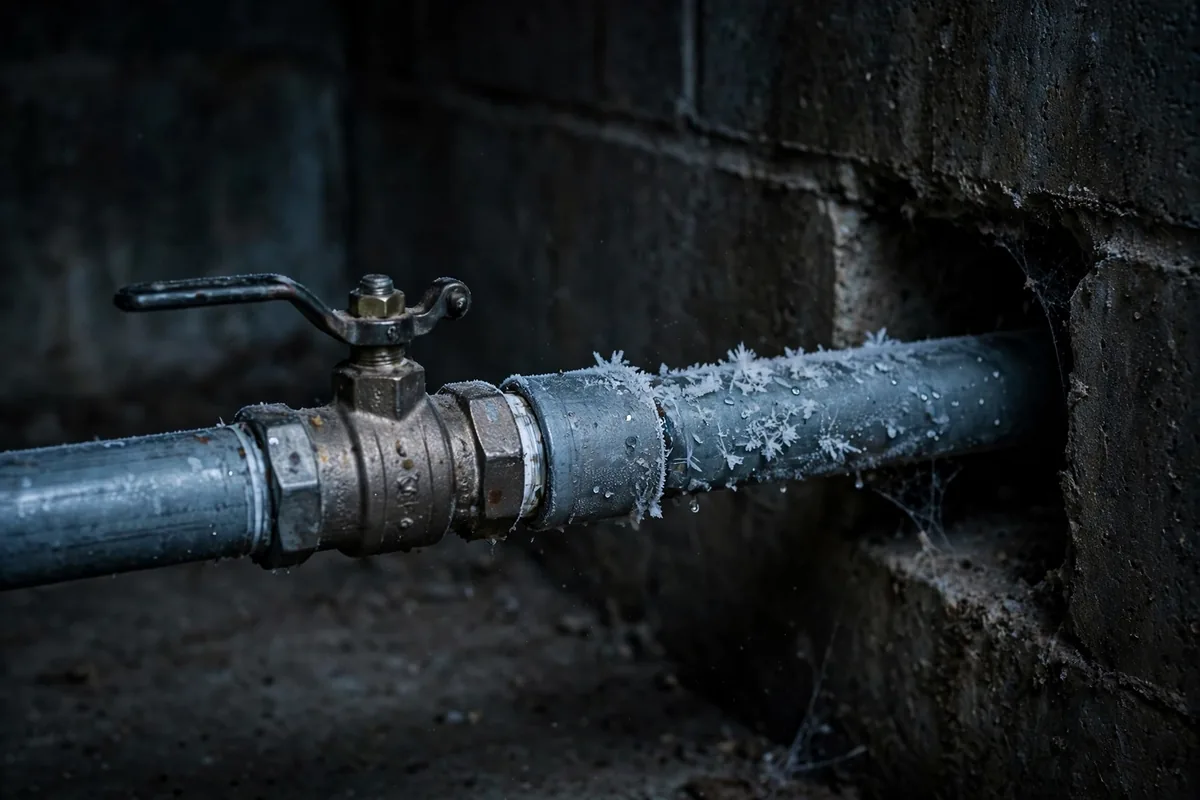
A vacant home in winter is a plumbing system with every defence removed: no warm bodies, no showers cycling warm water, no one to catch the sound of running water at 3 a.m. The burst that results is the worst version of the event — days of flow into an empty building. Winterising is the discipline that prevents it, and it is a sequence, not a gesture: the valve alone, as our companion guide shows, leaves the pipes full.
Occupied homes borrow protection from life itself: heating run for comfort keeps pipe chases warm; daily water use replaces cold water in lines with warmer supply; small leaks meet human ears quickly. Vacancy removes all three and adds a fourth risk — heating systems left low or off to save money, in houses that may sit through the season's coldest weeks unvisited. In Bartlett, IL, averaging 152.6 freeze days a year (NOAA 1991–2020), an undrained empty house is not a risk but a schedule.
The vacancy category is wider than people think: homes between tenants, inherited houses in probate, properties for sale, seasonal cabins, and homes empty for a long winter trip. Each deserves the same answer, scaled by how cold the region and how long the absence.
In order: close the main shut-off valve (the meter side too, if the utility's arrangement allows or requires). Open the highest taps in the house, then the lowest tap or drain point, and let gravity empty every run. Open each fixture in turn from top floor down — the attic taps, the rooms on exterior walls, the basement and crawl space runs — so no branch is missed. Drain the water heater through its valve into a hose to a safe outlet. Disconnect and drain all hoses, and drain the hose bib / outdoor spigot line per its type. Leave the taps open while the house sits empty — residual water needs expansion room, and air is the goal state of every line.
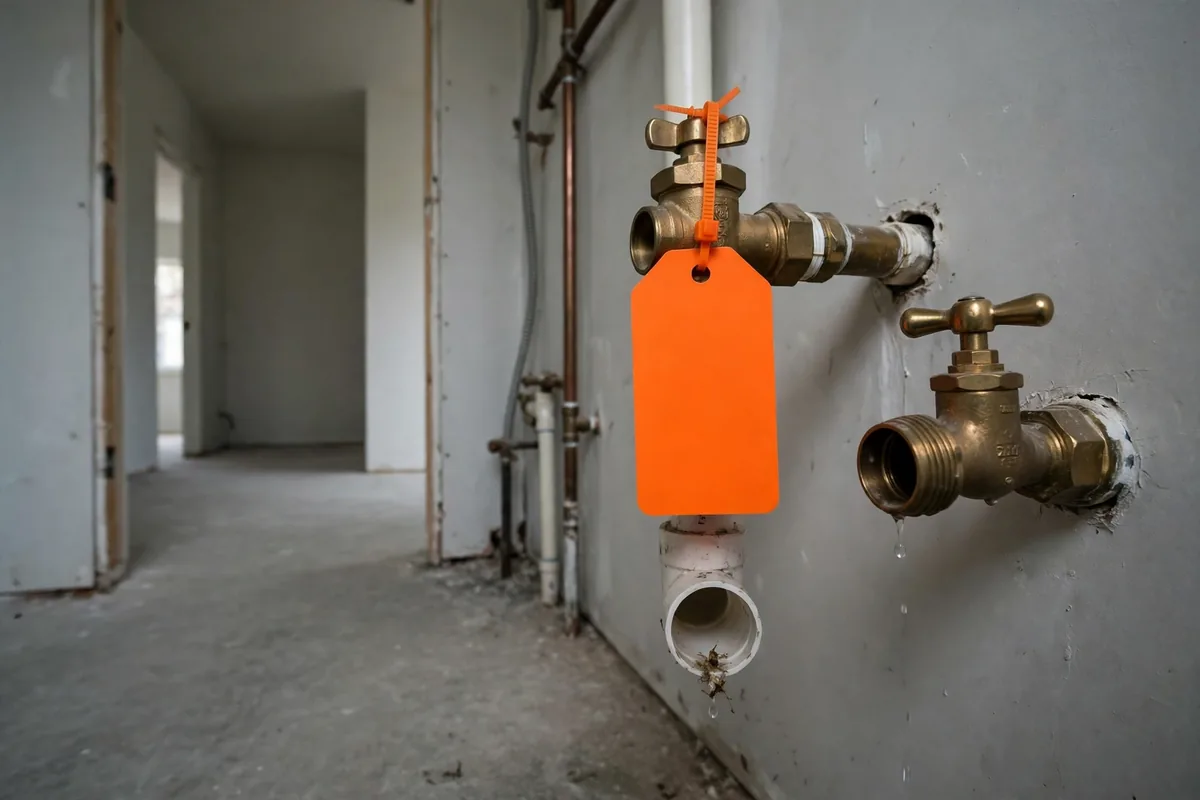
Tag the main valve with the date and the fact the system is drained, so nobody — a well-meaning relative, a viewing agent — repressurises it casually. If any section cannot be drained by gravity (a low loop, a trapped run), a pro can blow lines clear with controlled air pressure; that is the one step worth hiring out if your layout needs it.
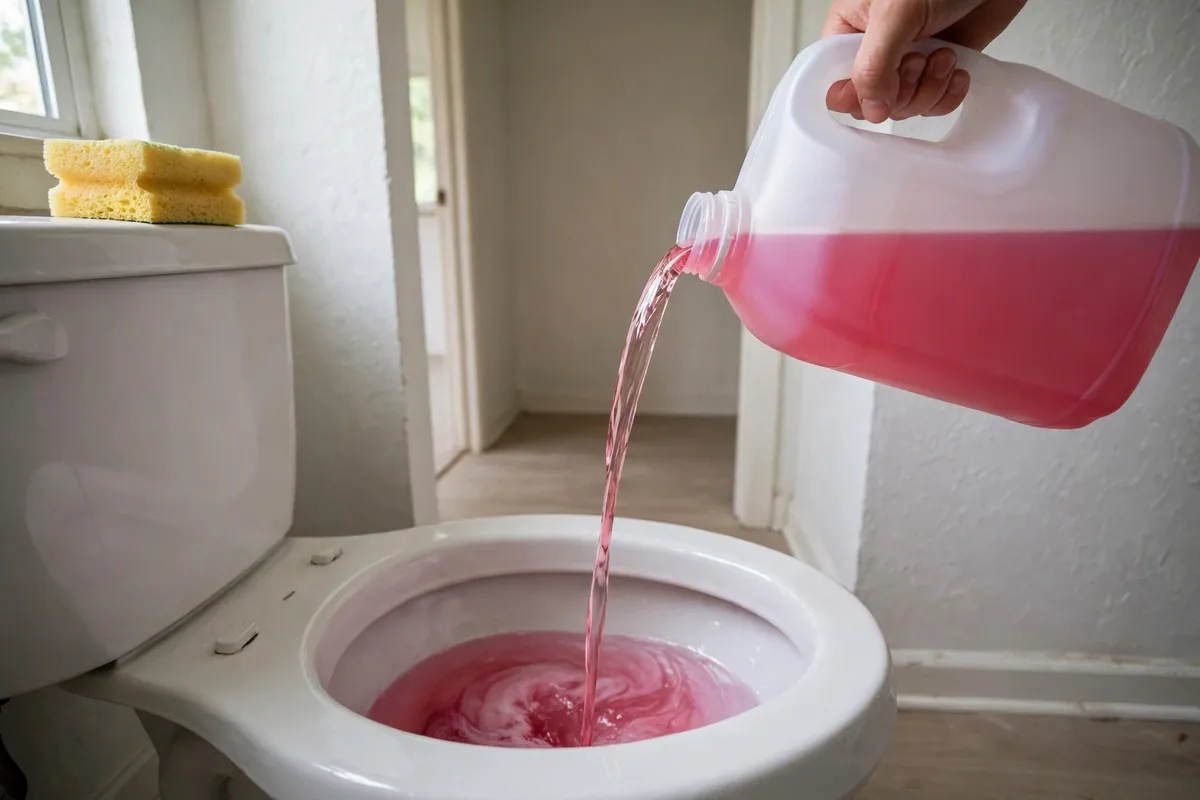
Draining clears supply lines; the water standing in drain traps, toilet bowls and tanks cannot be drained the same way, and it can freeze and crack porcelain and trap arms. The standard defence is plumbing antifreeze — the non-toxic propylene glycol type made for this purpose, never automotive antifreeze — poured into each trap, bowl and tank after flushing and sponging them as dry as practical. The water heater, drained, gets its power or gas turned off and a note on it: do not energise before refilling.
Do not forget the quiet appliances: the washing machine's hoses and pump (drain per its manual), the dishwasher line, the fridge's ice-maker line, and any laundry hookup in an unheated room. In Avon, IL, with a January average low of 13.0°F, the winterise list that skips the ice-maker line is the one that gets remembered in February.
Water Moving Where It Shouldn't?
One free call connects you with a local pro who can arrive in 30–60 minutes and find the burst without tearing the house apart first.
Call (800) 555-0100Both are legitimate strategies with different failure modes. Heat maintained at a steady low setting (commonly around 55°F) with the system live protects pipes and lets the house be used at short notice — but it bets on the heating never failing through the coldest weeks, and a boiler that dies on a Friday is discovered as a burst on a Monday. Any run that stays live through an unheated space keeps its pipe insulation, with heat tape guarding the worst-exposed section. A drained system bets on nothing mechanical; its failure mode is only an incomplete drain.
The deciding factors are absence length, climate severity, and check frequency. Short absences with reliable heating and a checker nearby: heat strategy. A whole winter, a northern address, no regular checker: drain it. Across Illinois and into Texas — where an empty Aiken, TX house still averages 91.6 freeze days — the drained system is the choice that rests easiest. Many owners combine: drained lines plus minimal heat for the building fabric itself.
An occupied house protects its pipes by living in them. An empty house must be protected by preparation — the drain is not pessimism, it is the substitute for presence.
Someone should: vacancy plus winter argues for a named checker — neighbour, relative, property manager — walking through weekly in cold regions and after every severe snap everywhere: look for leaks, listen, check the heating is alive if the heat strategy is in use, confirm the water meter is still if the system was left live. Insurers often ask exactly this about empty properties, and your state department of insurance can explain how vacancy affects a policy's terms.
Leave the checker equipped: the pro's number, the insurer's number, the city water utility's number, the shut-off location, and permission in writing to call the pro directly if water is found. A checker who must first reach you in another time zone is a delay built into the emergency plan.
Slowly, and as an inspection. Close the taps left open, remove the valve tag, and open the main valve gradually while walking the house: listen for hissing, watch for weeping at every fixture and along the runs that sat coldest, then close all taps and watch the water meter settle to stillness. Refill the water heater fully before restoring its power or gas — an energised empty heater damages itself in minutes.
Find a problem now and it is a repair; find it after a week of normal use and it is a claim. The recommission walk is the winterise's mirror image, and it deserves the same unhurried care — in Akron, OH or anywhere the pipes sat empty, treat the first pressurised hour as a pressure test the whole house sits for.
Finding the split is a kit job: an acoustic leak detection check along the run, a thermal imaging camera for the wet path behind drywall, a moisture meter to map how far the water travelled, and a pipe camera inspection where the line runs under the slab.
More straight answers about finding hidden bursts and what happens after you find one.
Still Have Questions? Call Free
A real person answers, day or night, and connects you with a local pro who can check the problem in person.
(800) 555-0100The trigger is absence multiplied by cold risk and heating reliability, not a fixed day count. A long weekend in a heated, checked house needs nothing beyond normal precautions. A month away with the heating low argues for shut-off plus partial draining in a cold state; a whole winter empty argues for the full sequence anywhere with real freezes. When in doubt, drain — the procedure is reversible in an hour, and its opposite is not.
That is the half-measure this guide exists to retire: the valve stops new water arriving, but the lines stay full, and full lines in a cold, empty house freeze and split exactly as live ones do — sometimes more readily, because the water is still and sealed. The flood then reveals itself at thaw or at your spring return. Shut-off plus drain is the complete action; either half alone is a story with a wet ending.
The propylene glycol products sold for plumbing and RV winterising are non-toxic and made for traps, bowls and tanks — the standing water that draining cannot remove. Automotive antifreeze (ethylene glycol) is poisonous and never belongs in household plumbing or drains. Necessity depends on climate: in genuinely freezing regions, unprotected traps and toilet bowls crack; in mild areas with a heated envelope, the risk is smaller and the choice is yours.
Where the heat strategy is chosen, a steady setting around 55°F is the common practice — warm enough to protect pipes in walls, low enough to be economical — with every interior door open so heat reaches every chase. The strategy's weak point is heating failure, which is why it pairs with a checker or a low-temperature alarm that phones home. A thermostat set low in a house nobody checks is a hope, not a strategy.
Often, yes: many policies attach conditions to vacancy — how long the home may sit empty, what precautions (heat maintained, water off, regular checks) keep cover intact. The specifics are in your wording, and your state department of insurance explains the general landscape. Practically: a documented winterise plus a checking log is the strongest position a vacant-home owner can occupy after a burst.
Follow the strategy you chose: if the heating is off and the system drained, the water heater's gas or power goes off with it, and its valve stays tagged. Fridges are emptied and propped open; washing machine taps closed. Leave electricity on if alarms, a sump pump or the heating need it. The principle is that every system left live is either needed or monitored; everything else is deliberately, documentedly off.
Then the drain missed a section — a low loop or a run that traps water — and the lesson is recorded for next year: that section gets blown clear or rerouted. Handle the event itself by the book (do not repressurise blindly; inspect on refill, which is when winterised systems reveal their splits). A split found at the careful spring refill is the procedure working as designed — the failure happened silently, the discovery happened safely.
Yes — and for complex layouts (multiple low loops, a boiler-fed system, outbuildings on the same supply) it is money well spent: the pro drains, blows lines clear where gravity fails, treats traps, tags valves, and leaves a checklist you can reverse in spring. Ask for the recommissioning walk to be included or documented; the pair of visits brackets the winter with professionals at both ends, which is exactly where the risk lives.
They are the hardest case: too used to drain fully each time, empty too long to trust. The working compromise is a partial drain designed with a pro — the system arranged so a short, practised sequence (valve, drain point, taps) empties it in minutes at each departure, with antifreeze standing in the traps all season. Design the routine once, write it on a card at the valve, and the house stops depending on anyone's memory.
Reviewed By Hamza
Lead Plumbing & Emergency Pipe Repair Specialist
Hamza is a certified plumbing and pipe restoration specialist with extensive field experience diagnosing sub-zero pipe splits, thermal stress fractures, and slab leaks across harsh winter climates. He specializes in non-destructive leak localization, copper-to-PEX conversions, and preventative freeze-proofing to safeguard residential and commercial plumbing systems against catastrophic water loss.
Updated October 30, 2026
Empty house facing winter — or one to reopen in spring? One free call connects you with a local pro who can winterise the system properly, or walk the recommissioning inspection with you before the water goes back on.
Free Call · Answered 24/7 · Local Pros Near You
Questions on can a pipe burst if the water is off? One free call connects you with a local pro who can arrive in 30–60 minutes. Call now for help.
Not sure how frozen pipe thawing works or what it involves exactly? One free call connects you with a local pro who can arrive in 30–60 minutes. Call now.