Frozen Pipe Repair
Frozen Pipe Repair Vs Burst Pipe Repair: The Line That Has Not Split Yet
Not sure how frozen pipe repair works or what it involves exactly? One free call connects you with a local pro who can arrive in 30–60 minutes. Call now.

Answered 24/7 · Free To Call · No Obligation
Free Call · Answered 24/7 · Local Pros Near You
Frozen pipe thawing, done safely, is patience with the right tools: find the frozen section, open the tap it feeds so meltwater and steam can escape, and apply gentle, moving heat — a hair dryer, a heat lamp, warm towels — starting nearest the tap and working back. Never use a torch or any open flame: it can boil the water in the pipe, scorch the wall, and turn a frozen pipe into a burst one.
A frozen pipe is a problem with a fuse already lit: thaw it well and the incident ends with a working tap; thaw it badly and you can split the pipe, scorch the wall, or start a fire inside a cavity you cannot see. The good news is that safe thawing asks for nothing exotic — warmth, patience, and the discipline to keep every flame away from the pipe. Here is the method, in order.
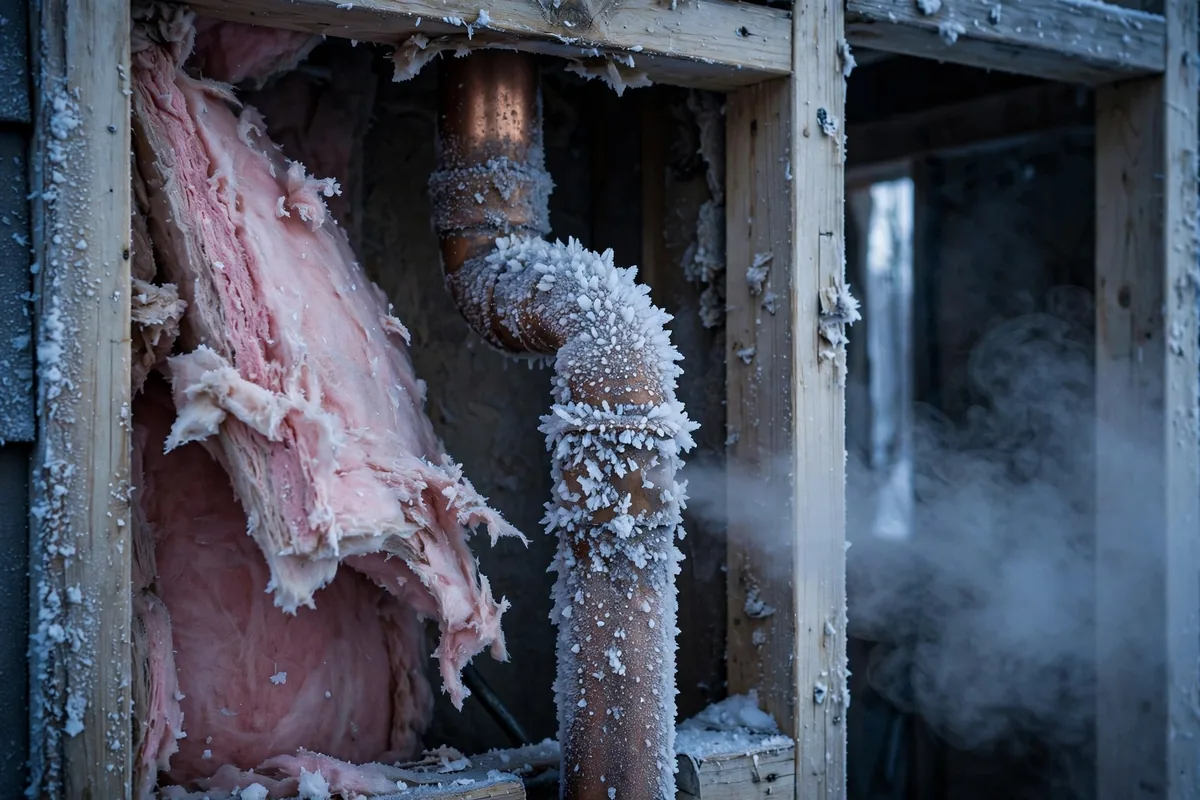
Start from the symptom: the tap that runs dry or trickles on a cold morning is fed by the frozen run. Follow that run as far as you can see it — the frozen section is usually in the coldest part of its path: an exterior wall, a crawl space, an unheated basement corner, or a cabinet on an outside wall. Frost on the pipe, a section noticeably colder than the rest, or a slight bulge all confirm the spot.
In Bartlett, IL — 152.6 freeze days a year, January average low 13.7°F (NOAA 1991–2020 normals) — the suspect list is familiar to every homeowner: kitchen sink lines on north walls, bathroom pipes over crawl spaces, and attic runs above unheated garages. Work out the location before reaching for heat; warming the wrong ten feet wastes the coldest hour of the morning. The same suspect list serves homes across Illinois.
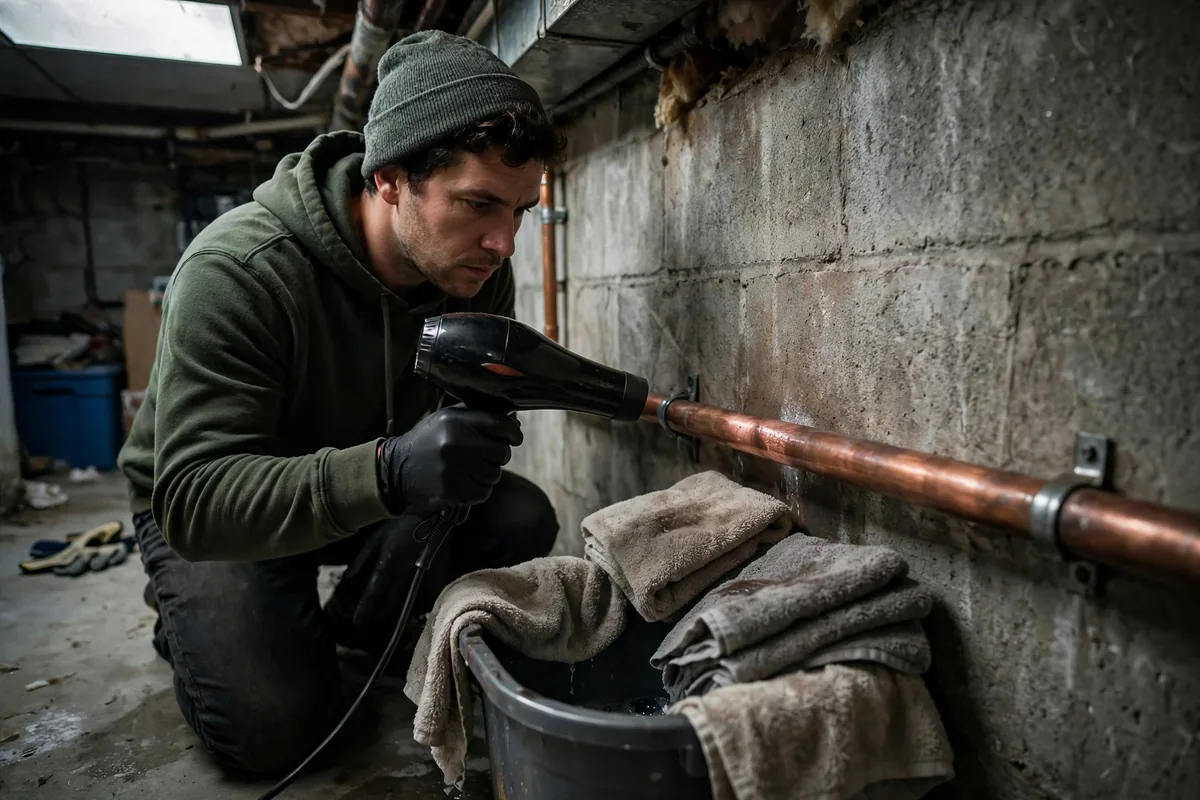
Three preparations. First, open the affected tap and leave it open: it relieves pressure as ice melts and gives the water somewhere to go, and its first trickle tells you the thaw is working. Second, know your main shut-off valve location and be ready to use it — if the pipe has split behind the ice, thawing will release that water, and your hand should already know the way. Third, clear the area: move anything flammable or water-sensitive away from the work zone, and put a bucket and towels under the run.
If the frozen pipe is inside a wall, in a ceiling, or somewhere you cannot see or reach, skip the DIY stage. Heat you cannot watch is heat you cannot control, and hidden pipes are pro work with detection equipment. The same goes for any pipe that is visibly bulged or cracked — that one needs repair, not thawing.
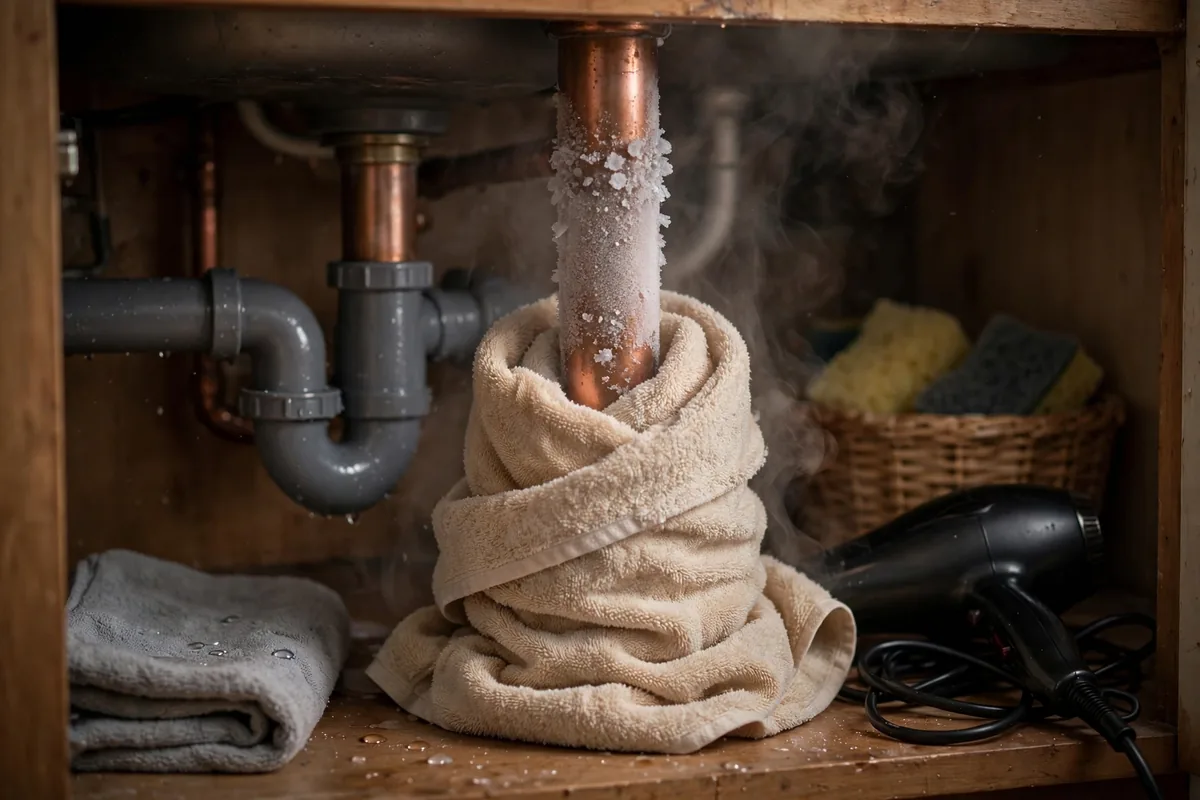
The safe toolbox is boring on purpose: towels soaked in warm (not boiling) water and wrapped around the pipe, refreshed as they cool; a hair dryer on its lowest setting, kept moving; an electric heating pad wrapped around the section; a space heater warming the space the pipe runs through — itself watched, and kept clear of anything flammable; and simply raising the home's heating and opening cabinet doors so warm room air reaches the run.
Heat tape deserves a mention as prevention rather than rescue: fitted before winter, it holds vulnerable runs above freezing. During an active freeze it can help a thaw along on the section it covers. What all the safe methods share is gradual warmth spread over the pipe — never a fierce point of heat on frozen metal and plastic.
The rule that keeps houses safe is simple: if it has a flame, it never touches the pipe — not the torch, not the lighter, not the heat gun on its highest blast.
Water Moving Where It Shouldn't?
One free call connects you with a local pro who can arrive in 30–60 minutes and find the burst without tearing the house apart first.
Call (800) 555-0100Never use an open flame of any kind: propane torch, blowtorch, lighter, candle, or a kerosene or gas heater aimed at the pipe. On copper pipe the torch adds a second failure mode: its heat can soften the solder in nearby joints. A torch can boil the water inside a frozen section into steam pressure that bursts the pipe, can ignite joists, insulation and dust inside walls, and can melt solder joints and plastic pipe outright. Fire services repeat this warning every winter because the fires keep happening every winter.
Also avoid boiling water poured directly on a frozen pipe (thermal shock can crack it, and the water goes everywhere), and never leave a space heater or hair dryer running unattended against a pipe while you leave the house. In Aurora, IL and Avon, IL — where January lows sit in the low teens — the thawing season is long, and the flame shortcut tempts people every year. It is never the shortcut it looks like.
This sequence is the heart of safe pipe thawing: work from the tap toward the frozen section, not the other way round. Warming the part of the pipe nearest the faucet first gives melting water an escape route; starting at the far end traps meltwater between two ice plugs and builds exactly the pressure that splits pipes. Move the heat slowly along the run, keep the tap open, and expect progress in tens of minutes, not seconds.
As the tap begins to trickle, keep warming gently until full flow returns — stopping at the first drip leaves a partial plug that refreezes faster overnight. Then leave the tap dripping slowly through the rest of the cold snap if the freeze continues; moving water and relieved pressure are cheap protection until temperatures recover.
The thaw is an inspection. Watch the entire run as pressure returns: joints, elbows, and any section that looked bulged or frost-heavy. Check the water meter once taps are closed — it should be still. Treat those first minutes back at full pressure as a pressure test, and stay in the room for them. Look at the wall, ceiling and floor along the run for new damp; a split that was plugged by its own ice announces itself now, quietly, as a wet patch or a meter that will not rest. A thermal imaging camera traces the cold run through a wall, and a moisture meter tells new damp from old.
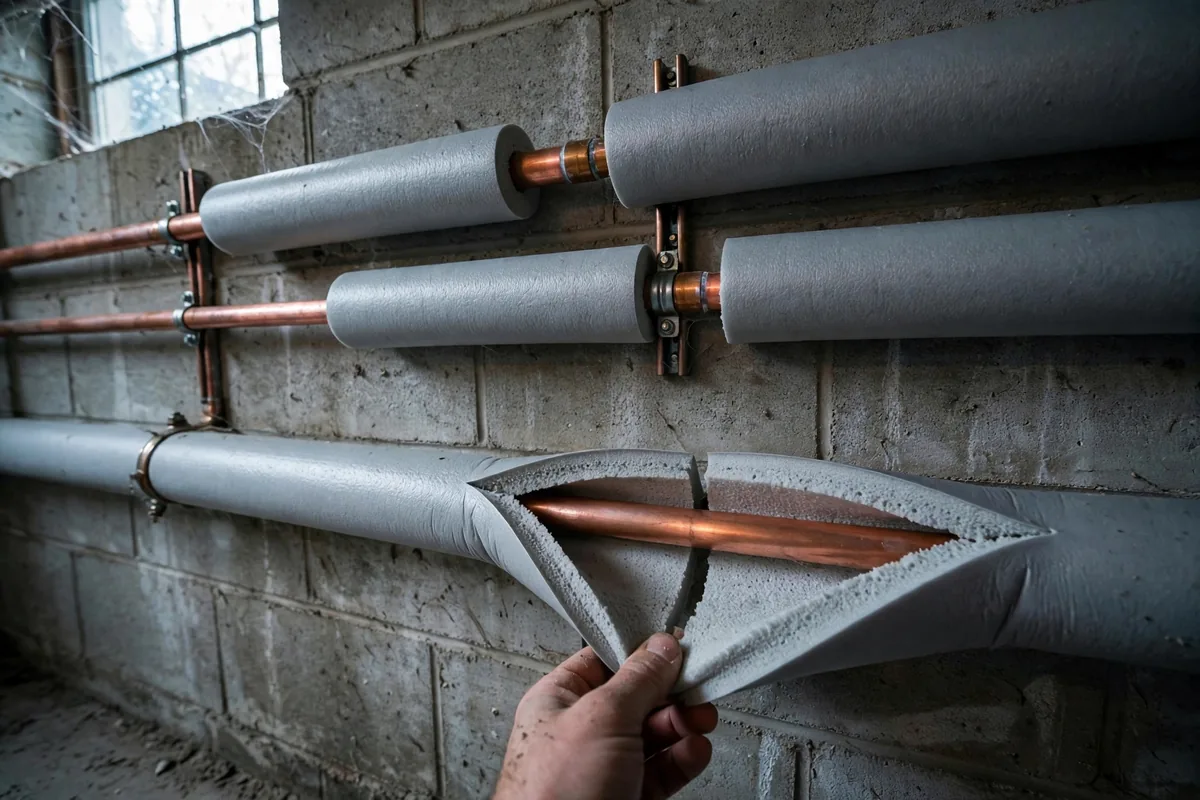
If everything holds, finish with protection before the next night: pipe insulation on the run, the cold-air gap sealed, heat tape if the spot is a repeater, and give the water heater's closet lines the same audit while you are at it. If anything leaks, bulges or hisses, that pipe has graduated from thawing to repair — shut the water off and make the call. In Amarillo, TX, where cold snaps arrive fast after mild weeks, this post-thaw check is the step that separates a story from a claim.
In Alpha, the thaw-day burst is the recurring call, and the emergency burst pipe repair in Alpha page explains what happens when a thaw goes wrong.
Beecher's freeze bursts follow the same script as the thaw above — the emergency burst pipe repair in Beecher page has the local version.
More straight answers about finding hidden bursts and what happens after you find one.
Still Have Questions? Call Free
A real person answers, day or night, and connects you with a local pro who can check the problem in person.
(800) 555-0100With gentle heat, expect tens of minutes to a few hours depending on the frozen length, the pipe's exposure, and how cold the surrounding space is. A short section in a cabinet thaws quickly; a long crawl-space run in a deep freeze is slow work. Impatience is the main hazard — raising the heat intensity to speed things up is how pipes get split and walls get scorched. Steady warmth wins.
Running warm water helps only after a trickle is established — water cannot pass the ice plug to warm it from inside until some flow exists. Before that, pour warm (not boiling) water over towels wrapped around the pipe instead. Once flow starts, a gentle warm flow through the line speeds the melt from inside while you continue warming the outside — a good combination, always gradual.
Open. An open tap relieves pressure as the ice expands and melts, gives the meltwater somewhere to go, and provides your progress signal — the first trickle says the plug is failing. Keeping the tap closed traps pressure between the plug and the faucet, which is the precise mechanism that splits pipes. Open the affected tap first, and leave it open through the thaw.
Do not aim heat blindly at the wall. Start with the ambient approach: raise the home's heating, open any access panels, and warm the room; infrared warmth through the wall sometimes frees a shallow freeze. If flow does not return, or the wall shows any dampness, stop and call — a pro can locate the frozen section, open a small access if needed, and thaw under watch rather than by hope.
Three reasons: it can superheat a pocket of water into steam that bursts the pipe from inside; its flame and conducted heat can ignite joists, insulation and accumulated dust in hidden cavities, starting fires that smoulder unseen; and it can melt solder joints and plastic pipe, manufacturing new leaks. Every winter fire-safety campaign repeats the same line because the pattern repeats: no open flame on pipes, ever.
Yes — either because it was already split and the ice was plugging the hole, or because heating the wrong end first traps meltwater under pressure. That is why preparations come before heat: tap open, shut-off valve located, bucket ready. If water starts escaping anywhere unexpected, stop heating, close the main valve, and switch from thawing mode to burst mode — the repair call replaces the thawing project.
Crawl spaces add cold, darkness and tight access. Warm the whole space where possible with a watched space heater placed safely away from materials, or work section by section with a hair dryer and towels, with someone else in the house aware you are under there. Watch for the bulge or frost line that marks the plug, and inspect every joint as flow returns — crawl-space splits leak into the ground and hide longer than indoor ones.
Keep the heating steady — including overnight and when you are out — rather than letting the house cool deeply at night, since pipes freeze in the coldest hours before dawn. There is no magic number that fits every wall cavity, but consistency is the principle: pipes in exterior walls depend on the home's warmth leaking outward, and a big night-time setback starves exactly that protection.
Protect the exact run that froze: pipe insulation over it and its elbows, seal the air leak that fed cold to it (wall gaps, vent openings, rim-joist leaks), and consider heat tape for champion repeaters. During later cold snaps, repeat the soft measures — even heating, cabinet doors open, a slow drip on the known tap. A pipe that froze once has given you its location; believe it.
Reviewed By Hamza
Lead Plumbing & Emergency Pipe Repair Specialist
Hamza is a certified plumbing and pipe restoration specialist with extensive field experience diagnosing sub-zero pipe splits, thermal stress fractures, and slab leaks across harsh winter climates. He specializes in non-destructive leak localization, copper-to-PEX conversions, and preventative freeze-proofing to safeguard residential and commercial plumbing systems against catastrophic water loss.
Updated October 30, 2026
Frozen pipe, no flow, and the run is hidden, bulged or already weeping? Skip the thaw attempt — one free call connects you with a local pro who can thaw it under watch, test it, and repair anything the ice has damaged.
Free Call · Answered 24/7 · Local Pros Near You
Not sure how frozen pipe repair works or what it involves exactly? One free call connects you with a local pro who can arrive in 30–60 minutes. Call now.
Not sure how pipe insulation works or what it involves exactly? One free call connects you with a local pro who can arrive in 30–60 minutes. Call now.