Frozen Pipe Thawing
How To Thaw A Frozen Pipe Safely (And What Never To Use)
Not sure how frozen pipe thawing works or what it involves exactly? One free call connects you with a local pro who can arrive in 30–60 minutes. Call now.

Answered 24/7 · Free To Call · No Obligation
Free Call · Answered 24/7 · Local Pros Near You
A frozen pipe that has not split yet is a rescue job: thaw it slowly and safely, check it under pressure, and protect it before the next cold night. A burst pipe is a damage job: the wall of the pipe has already opened, water is escaping, and the work is shut-off, section replacement and drying. Frozen pipe repair happens before the split; burst pipe repair happens after it.
"Frozen" and "burst" describe two moments in the same story, and confusing them costs homeowners the one chance to skip the expensive chapter. A pipe can be frozen solid and completely intact — cold, blocked, but whole. Hours later, or one thaw later, the same pipe can be split and flooding. The repair for each moment is different, and so is the urgency.
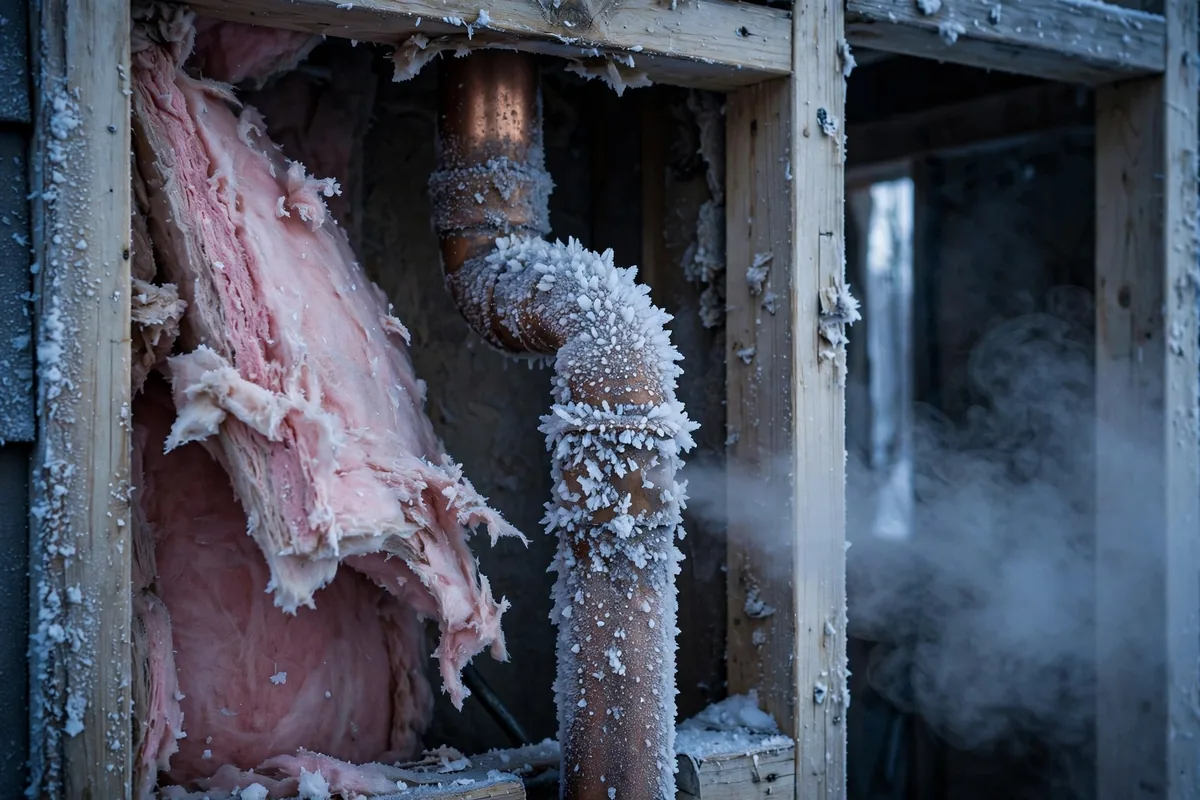
Ice forms first where the pipe is coldest, usually at an exterior wall or unheated space, and grows inward until it plugs the line. The plug itself is not what breaks pipes. The damage comes from pressure: water expands by about 9% as it freezes, and the ice plug traps liquid water between itself and the nearest closed tap, squeezing that water harder as more ice forms until the pipe wall gives way.
That detail explains the confusing part — the split often appears some distance from the ice plug, at the weakest point of the trapped section. It also explains why a pipe can freeze without bursting: if pressure had somewhere to go, or the freeze stopped short, the wall holds. In Aurora, IL, with 134.2 freeze days a year (NOAA 1991–2020 normals), both outcomes happen on the same street in the same cold snap.
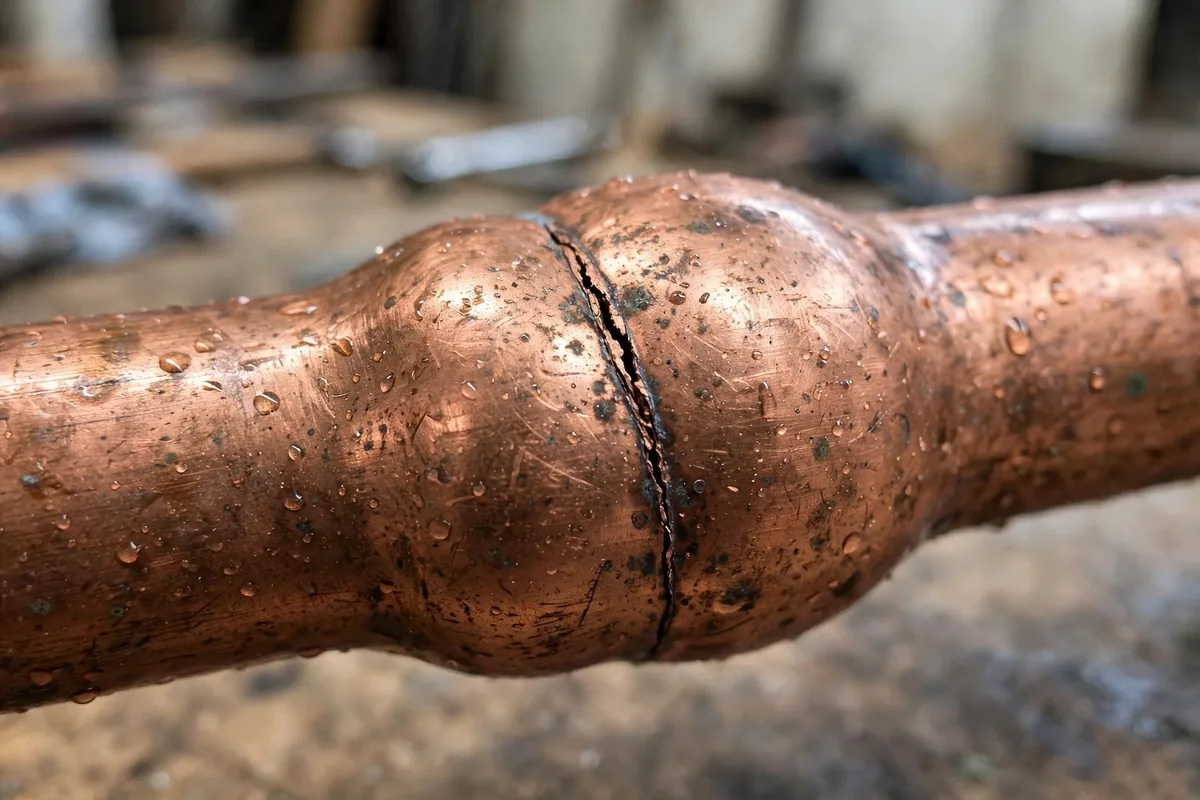
The frozen-but-intact signature is loss without water damage: a tap that gives a trickle or nothing on a cold morning, frost or unusual cold on an exposed pipe, a bulge in the pipe wall — and no sound of running water, no wet spots, and a still meter once that tap is closed again. The line is blocked, not breached.
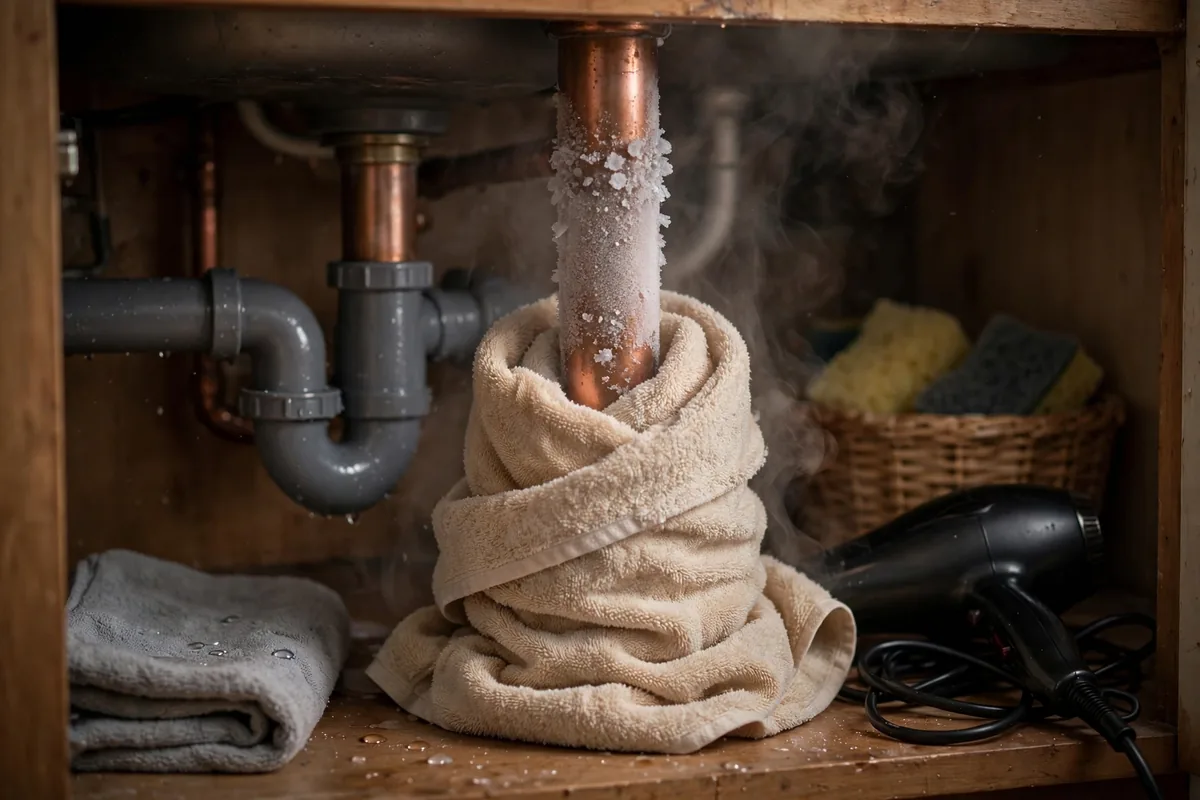
Act on that signature quickly, because it is the cheap version of the problem. Keep the affected tap open slightly, warm the pipe's surroundings, and read the thawing guidance before touching anything: gentle heat only, never a flame. Our guide to thawing walks through the safe method step by step, and it is the whole job at this stage if the wall has held.
Frozen pipe repair starts with a careful thaw — safe pipe thawing with warm air, towels soaked in warm water, or a heating pad, working from the tap back toward the frozen section. As flow returns, the pro (or you, watching closely) checks the full run for leaks: the thaw reveals whether the wall survived, because a split only starts leaking once the ice inside it melts.
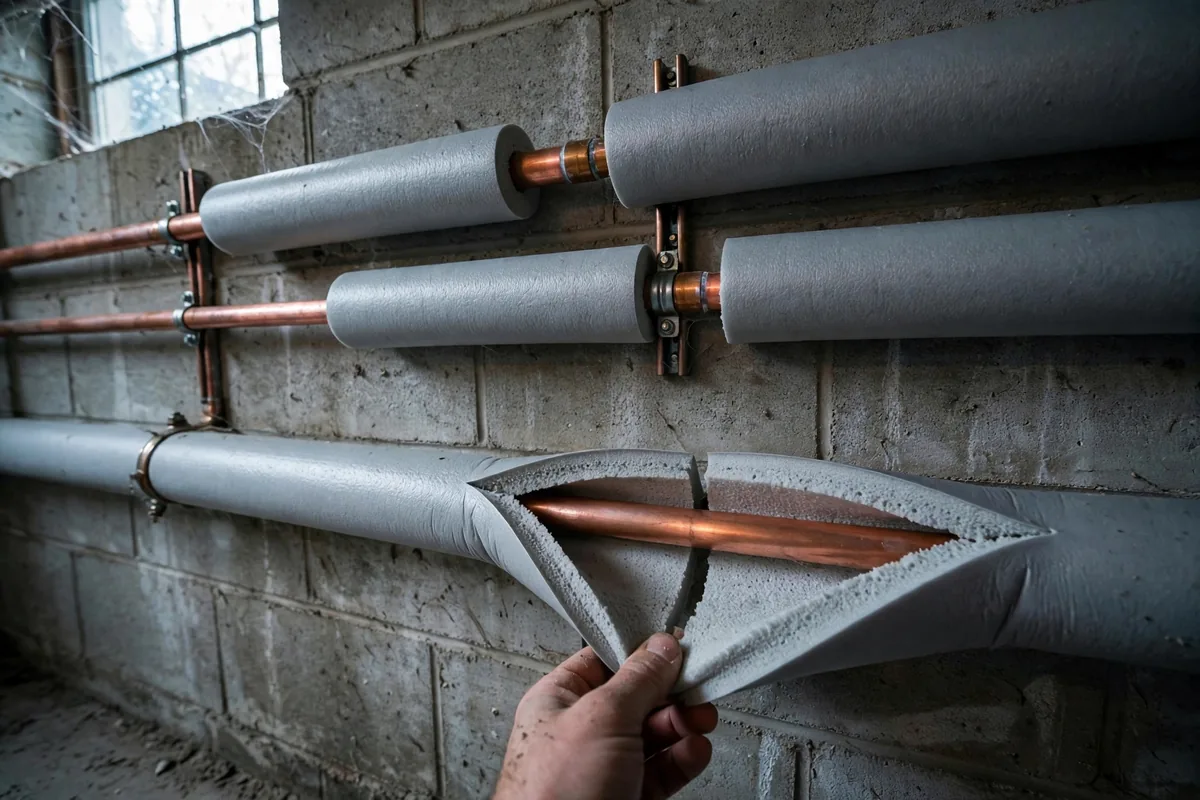
If the pipe held, repair may end with protection: pipe insulation on the run, sealing the air leak that let the cold in, heat tape on the worst stretch. If a bulge or hairline crack shows, that section gets replaced before it is trusted again. A moisture meter sweep of nearby walls and floors confirms the thaw did not leave hidden damp behind the finished surfaces. In Bartlett, IL, where January lows average 13.7°F, that inspection step is the difference between a thaw and a flood.
A frozen pipe gives you a warning and a deadline. A burst pipe gives you neither — that is the entire difference.
Water Moving Where It Shouldn't?
One free call connects you with a local pro who can arrive in 30–60 minutes and find the burst without tearing the house apart first.
Call (800) 555-0100Everything about the job changes. Water is now escaping at pressure, so the sequence becomes emergency work: close the main shut-off valve, drain the line, and stop the damage before any repair talk. The split section is cut out and replaced — section replacement with copper pipe joined by soldering, or PEX pipe with press fittings — then proven with a pressure test, and only then do water extraction and structural drying begin.
The bill and the disruption both jump: wall or ceiling opened, wet materials dried or removed, sometimes flooring involved. Compare that with the thaw-and-inspect visit for the pipe that was caught frozen. Same pipe, same cold night — the outcome is decided by which side of the split you catch it on. Homeowners across Illinois learn this once; the goal is to learn it from the frozen version.
Because the ice was plugging the hole it made. A pipe can split at the height of a freeze and leak nothing while the split is frozen shut; the flood begins when temperatures rise and the plug melts. That is why so many burst calls in Amarillo, TX — 116.9 freeze days a year, with sharp cold snaps — arrive a day or two after the cold breaks, and why the post-thaw hours deserve the same vigilance as the freeze itself.
Practically: after any freeze that stopped a tap, watch the thaw. Check the meter, walk the house, look under sinks and along exterior walls as flow returns. If pressure surges back oddly or the meter runs with taps closed, the split has announced itself — treat it as a burst from that moment.
A pipe that froze once has told you exactly where your house is vulnerable. The fixes, in order of permanence: seal the cold-air path (gaps in the wall cavity, crawl-space vents, rim-joist leaks), add or upgrade pipe insulation on the run, fit heat tape where exposure is worst, and — for the pipe that defeats all of that — talk to a pro about rerouting it into warm space — through the attic, inside an interior wall, anywhere the cold cannot follow.
Behaviour helps too: even heating through cold nights, cabinet doors open under sinks on exterior walls, and a slow drip on the worst tap during extreme cold. In Akron, OH, the homes that thaw-and-protect in January are simply not the homes flooding in February. Frozen pipe repair ends the incident; prevention ends the pattern.
More straight answers about finding hidden bursts and what happens after you find one.
Still Have Questions? Call Free
A real person answers, day or night, and connects you with a local pro who can check the problem in person.
(800) 555-0100Yes — many frozen pipes thaw safely as temperatures recover, especially if the freeze was brief and pressure had room to relieve. The risk window is the thaw itself: watch for leaks as flow returns, check the meter with taps closed, and inspect the run for bulges. A pipe that thaws clean once can still be weakened, so protect the run before the next freeze rather than assuming it is fine.
There is no safe number of hours. Bursting depends on how completely the line plugs, how much trapped water is compressed, the pipe material, and how cold it gets — a pipe can split within hours of a hard freeze or survive days frozen. Treat any frozen line as urgent from the moment a tap runs dry; the thaw-and-check process should start the same day.
It is a sensible precaution if you can: closing the main shut-off valve means that if the pipe has split, the thaw cannot flood the house while you are out or asleep. Leave the affected tap open to relieve pressure as it thaws. If you do not know whether it split, shutting off first and thawing second is the cautious order.
A bulge means the ice stretched the pipe wall, and stretched metal is weakened metal — that spot is now the likeliest failure point on the run, this winter or a later one. Most pros recommend replacing a visibly bulged section rather than trusting it, and at minimum it should be inspected and flagged for insulation and monitoring.
Because the freeze plugs one run at a time. The tap fed by the frozen section loses water first — often an upstairs or exterior-wall fixture — while other branches still flow. That single dry tap on a cold morning is an early warning worth acting on immediately; left alone, the plug grows and neighbouring runs in the same cold wall can follow.
Gentle warm air is one of the accepted home methods: a hair dryer on a low setting or a space heater warming the room — never aimed at one spot until it is hot, never left unattended, and never near flammables. What is never safe is an open flame — torch, lighter or gas burner — which can split the pipe, ignite the wall, and void any claim of careful thawing.
Not always, but an inspection is wise when: the pipe visibly bulged, it froze in a place you cannot inspect, the same run freezes repeatedly, or the thaw produced any dampness at all. A pro can pressure-test the run, confirm the wall held along its whole length, and quote the insulation or rerouting that stops the annual repeat.
PEX tolerates freezing better than rigid pipe because it can expand slightly with the ice, and it often survives freezes that split copper. It is not immune: fittings are the weak point, repeated freezes fatigue the material, and a long deep freeze can still crack it. The thaw-and-inspect routine applies to PEX homes exactly as it does to copper ones.
Pipes freeze when the air around them stays below freezing long enough — the often-quoted alert level is around 20°F outdoors for exposed or poorly insulated runs, but wind, wall cavities and unheated spaces can freeze a pipe at higher outdoor temperatures, and well-insulated interior pipes survive lower ones. Local normals matter more than one number: know your cold spots, not just the forecast.
Reviewed By Hamza
Lead Plumbing & Emergency Pipe Repair Specialist
Hamza is a certified plumbing and pipe restoration specialist with extensive field experience diagnosing sub-zero pipe splits, thermal stress fractures, and slab leaks across harsh winter climates. He specializes in non-destructive leak localization, copper-to-PEX conversions, and preventative freeze-proofing to safeguard residential and commercial plumbing systems against catastrophic water loss.
Updated October 30, 2026
Tap run dry in the cold and you are not sure which side of the split you are on? One free call connects you with a local pro who can thaw it safely, test it under pressure, and tell you honestly which repair you actually need.
Free Call · Answered 24/7 · Local Pros Near You
Not sure how frozen pipe thawing works or what it involves exactly? One free call connects you with a local pro who can arrive in 30–60 minutes. Call now.
Not sure how pipe insulation works or what it involves exactly? One free call connects you with a local pro who can arrive in 30–60 minutes. Call now.