Repiping
When To Repipe A House Instead Of Repairing Another Burst
Not sure how repiping works or what it involves exactly? One free call connects you with a local pro who can arrive in 30–60 minutes. Call now.

Answered 24/7 · Free To Call · No Obligation
Free Call · Answered 24/7 · Local Pros Near You
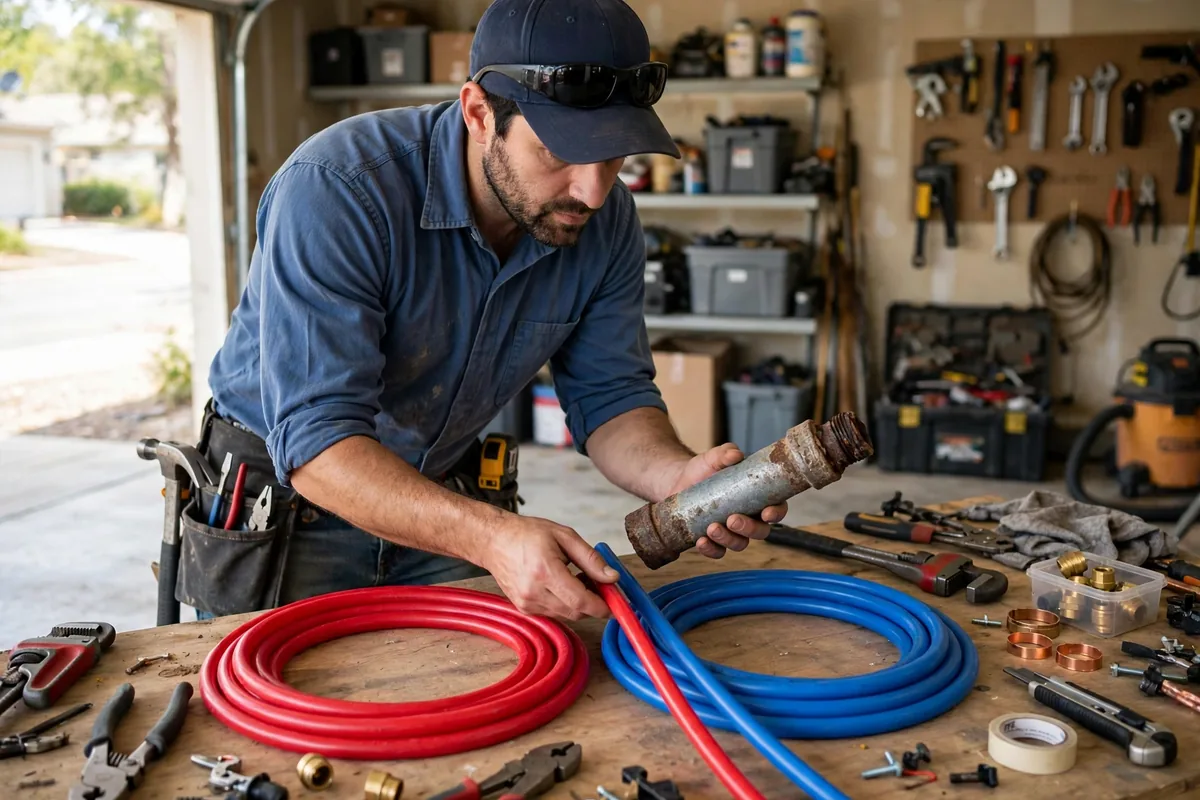
Whole house repiping replaces every pressurised supply line in the home in one planned project: the pro maps and routes new pipe (usually PEX or copper), connects each fixture room by room, pressure-tests the system, and only then retires the old lines. Most homes take two to five days, with water restored in stages, and wall patching afterwards is usually a separate trade.
A whole-house repipe sounds like the most disruptive job in plumbing, which is why homeowners postpone it until the bursts make the schedule for them. In practice it is a planned, sequenced project — nothing like the chaos of an emergency. Here is the job step by step, from the first survey to the final pressure test, so you know exactly what you are agreeing to.
The job starts with a survey: the pro maps your current system — where lines run, what material each run is, where the main shut-off valve and water heater sit — and agrees the new routes with you. You get a written scope: which lines are replaced, which (if any) stay, the material, and what wall opening is expected room by room.
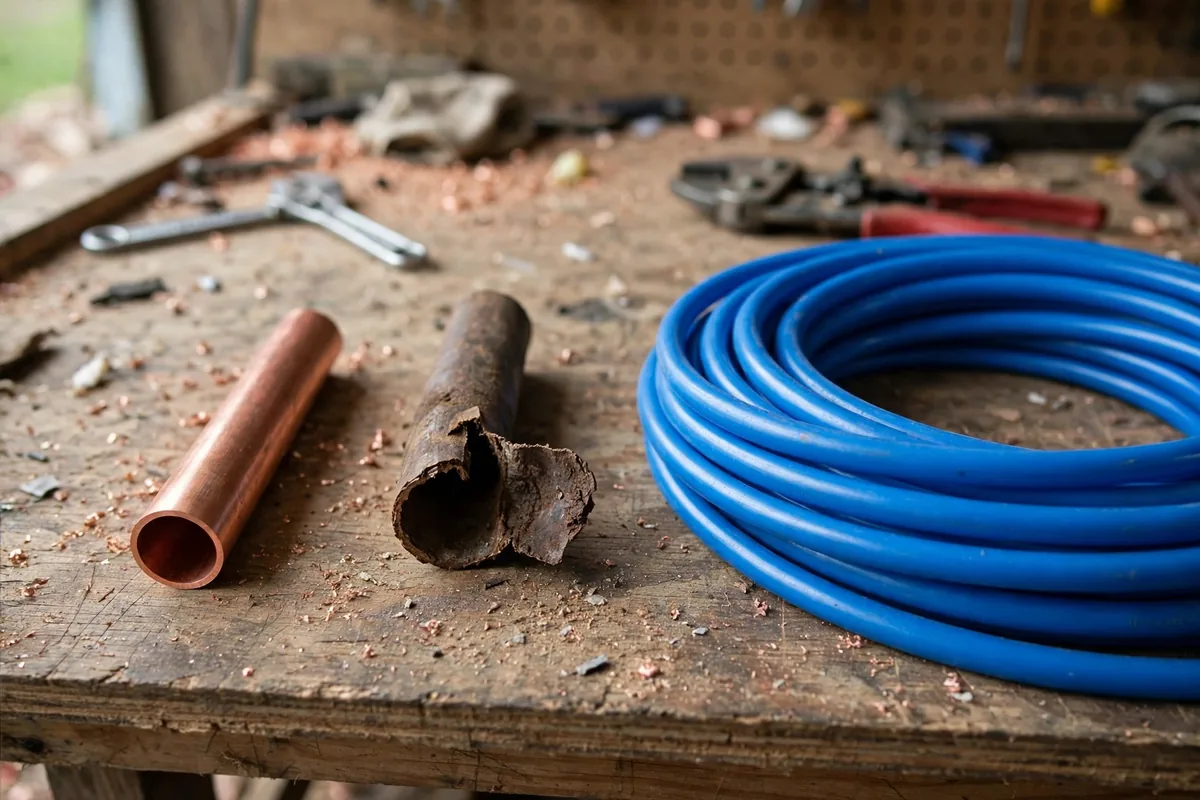
This is also when the honest exclusions are named: drains are not part of a supply repipe, and wall patching and painting are usually a separate trade unless the quote says otherwise. In older housing like Berwyn, IL — median home built in 1938 — the survey also flags galvanized steel pipe remnants and any polybutylene pipe sections, and notes that old cast iron pipe on the drain side is a separate system, quoted separately if it needs work so the plan removes the risky stock first.
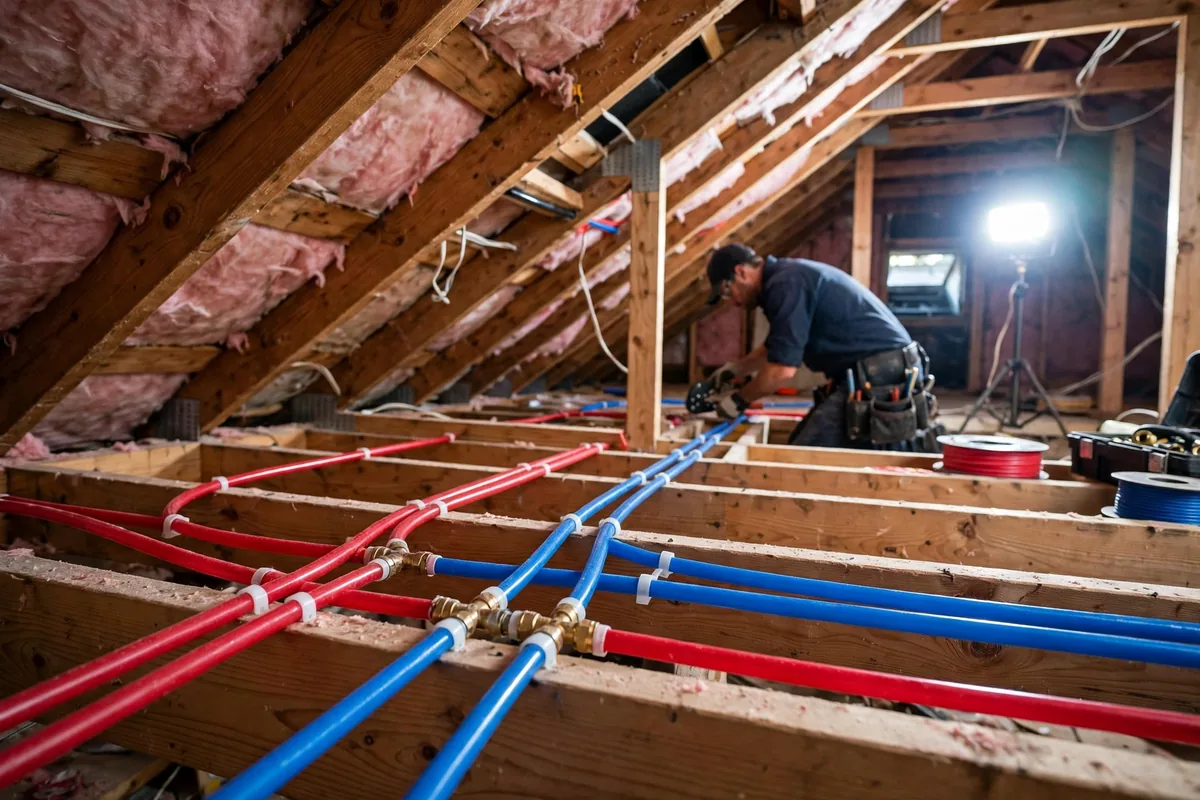
New lines take the path of least demolition. Pros route through attics, basement ceilings, crawl spaces and closets wherever possible, dropping lines down wall cavities to each fixture. The old pipes are mostly left where they are — drained and capped — because removing them would mean opening every wall they pass through.
Each fixture gets its connection in turn: kitchen, bathrooms, laundry hookup points, water heater, hose bibs. Modern PEX makes this routing forgiving — it bends around obstacles and needs fewer in-wall joints than rigid copper. Where copper is chosen, runs are planned straighter and openings are a little larger. Either way, the principle holds: the house stays a house, not a building site, in every room the crew is not actively working on.
A repipe replaces the route, not just the pipe — the new lines go where future access is easy, even when the old ones did not.
A typical day: the crew arrives, isolates the section they are working on, runs and connects that section, and moves on. Furniture near work areas gets covered or shifted; floors on the route get protected. By evening, most crews aim to leave the home with working water — at minimum to the essentials — unless the day's stage makes that impossible, which they should have warned you about at the survey.
Homes in Akron, OH and Barberton, OH — both over 83% pre-1980 housing stock (US Census Bureau ACS 2024) — follow this same rhythm: two-storey colonials with basement access tend to move faster than homes on a concrete slab where every run must route overhead. The work is effectively pipe rerouting at whole-house scale, with copper pipe joined by soldering where rigid runs are chosen, and pipe insulation added wherever new lines cross cold spaces.
Water Moving Where It Shouldn't?
One free call connects you with a local pro who can arrive in 30–60 minutes and find the burst without tearing the house apart first.
Call (800) 555-0100The water goes off in stretches, not for the whole project. Expect full shut-offs during changeover moments — tying the new system into the main and the water heater — and sectional shut-offs while individual runs are connected. Many households arrange their days around a few announced windows rather than a dry week.
Fill bottles and a kettle before a shut-off window, keep one bathroom's schedule in mind, and ask the crew each morning what today's water plan is. A well-run repipe treats your routine as part of the logistics; surprises here usually mean the survey was rushed, which is worth raising with the pro early, not on day three.
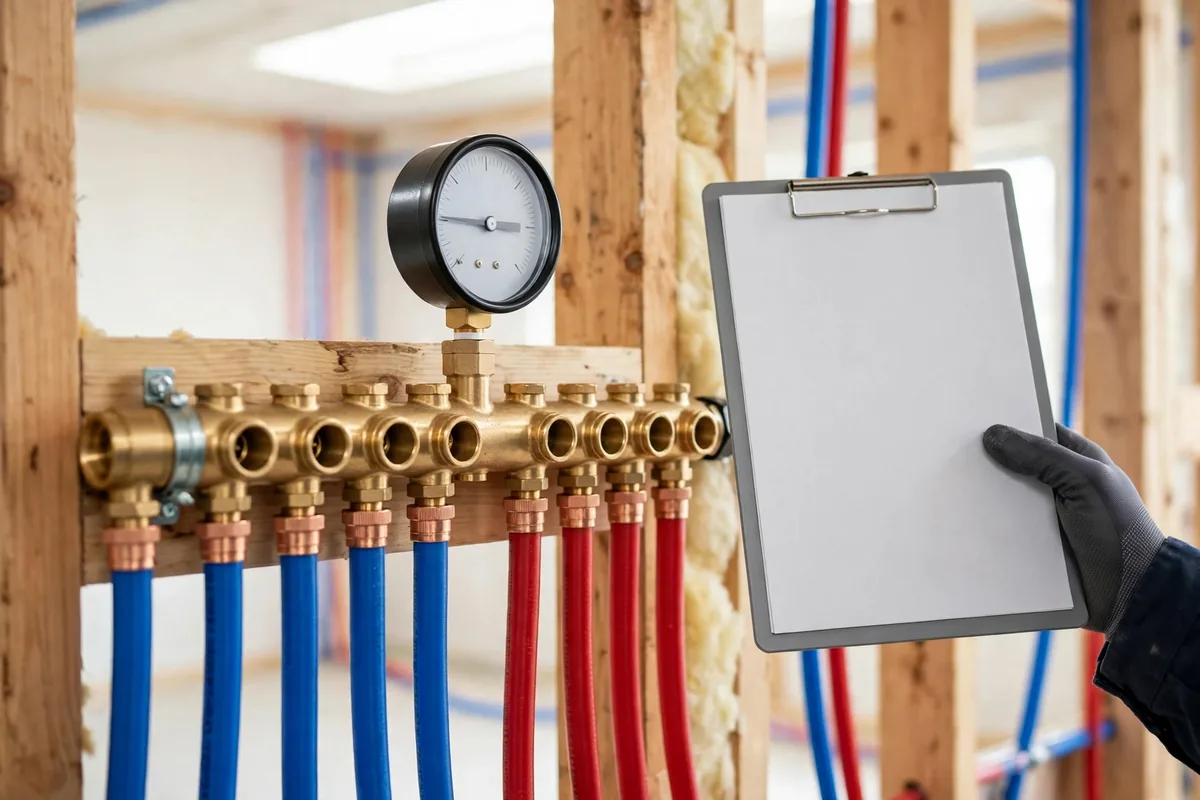
Before any opening is closed, the new system gets a pressure test: lines are pressurised and the gauge is watched to prove every joint holds. Fixtures are then run one by one to flush the lines, check flow at each tap, and confirm hot and cold are correctly connected everywhere — the unglamorous step that catches the one crossed line before it becomes a callback.
Only after the test passes are the old lines formally retired and the wall openings handed over for patching. Keep the paperwork from this stage: the scope, the test result, and the material list are exactly what a future buyer or a future pro will want to see. Our Ohio page names the state sources that stand behind work of this scale.
Patching and paint, mostly — the openings are usually modest (hand-sized at most fixture points, larger only where access demanded it) but they are drywall work, not plumbing. Some homeowners fold this into the same week with a decorator; others live with patches briefly. Agree whose job it is before the repipe starts, because assumptions here cause most of the friction around an otherwise clean project.
Then enjoy the quiet differences: pressure back at the showers, no rust tint after the lines sit, and a system whose age you actually know. In Athens, OH, where many homes mix original and later pipe stock, owners often say the real change is psychological — the next cold snap in Illinois or Ohio is weather again, not a threat assessment.
More straight answers about finding hidden bursts and what happens after you find one.
Still Have Questions? Call Free
A real person answers, day or night, and connects you with a local pro who can check the problem in person.
(800) 555-0100Almost never. Repipes are sequenced so the home stays liveable: water returns in stages, rooms are worked on one at a time, and most crews restore essential service each evening. Families usually stay put, adjusting around announced shut-off windows. Moving out becomes worth discussing only for very large homes, complex reroutes, or when the household cannot manage any daytime water interruption at all.
Less than people fear. New lines route through attics, basements and closets where possible, so wall openings concentrate at fixture connections — typically modest patches behind showers, under sinks and in a few wall cavities. Slab and two-storey homes may need more. The survey should map expected openings room by room, and patching is normally a separate trade from the plumbing.
Yes, and it often is — winter is when failing systems announce themselves. Crews plan around the cold: lines are drained before changeovers, new runs are protected from freezing during the work, and the home is not left with exposed unheated pipe overnight. The main difference is urgency of scheduling, since pros are busiest in freeze season; booking the survey early helps.
A manifold is a central hub where each fixture gets its own dedicated line and shut-off, instead of one trunk line branching along the way. It gives even pressure, lets you isolate a single fixture without touching the rest, and simplifies future repairs. It uses more pipe, so it is a design choice with a price attached — worth discussing at the survey if you are repiping anyway.
If your old lines were narrowed by rust and mineral scale — the classic galvanized pattern — yes, most homeowners notice stronger, steadier flow, especially at showers when other taps run. If pressure problems came from the street supply or a failing pressure regulator, a repipe alone will not fix them; a good survey checks the incoming pressure first so expectations are set correctly.
The scope by room and run, the pipe material, which old lines are removed versus capped, the pressure test, fixture reconnections, and clear statements about what is excluded — typically drain work, wall patching and painting. It should also name who handles permits where your area requires them. Vague lump sums are where disputes start; an itemised quote is the professional norm for a job this size.
Modern PEX and copper supply systems are built for decades of service — they are the same materials going into new construction today. Lifespan depends on water chemistry, correct installation and protection from freezing, which is why the route matters: lines in warm, accessible places age better than lines buried in slabs. Keep the material list and test paperwork from your repipe as the system's birth certificate.
Yes, staged repiping is legitimate when the plan is coherent: worst runs first — the ones bursting — then remaining original stock, with each stage pressure-tested and documented. The risk to avoid is random partial work with no map, which leaves mixed ages and no record. Ask the pro to write the full-house plan even if you execute it in stages, so stage two starts from a design, not a guess.
It happens in older homes: a rotten sole plate, an undocumented old repair, a drain issue nobody could see. The professional pattern is stop, show you, price the addition in writing, and proceed only with your agreement. A clear original scope makes these moments straightforward — you can both see what was and was not included — which is why the survey stage matters so much.
Reviewed By Hamza
Lead Plumbing & Emergency Pipe Repair Specialist
Hamza is a certified plumbing and pipe restoration specialist with extensive field experience diagnosing sub-zero pipe splits, thermal stress fractures, and slab leaks across harsh winter climates. He specializes in non-destructive leak localization, copper-to-PEX conversions, and preventative freeze-proofing to safeguard residential and commercial plumbing systems against catastrophic water loss.
Updated October 30, 2026
Thinking about a repipe and want the sequence priced properly? One free call connects you with a local pro who will survey the system, map the routes, and give you the whole job — stages, shut-offs and testing — in writing.
Free Call · Answered 24/7 · Local Pros Near You
Not sure how repiping works or what it involves exactly? One free call connects you with a local pro who can arrive in 30–60 minutes. Call now.
Wondering about burst pipe replacement and what to do first of all? One free call connects you with a local pro who can arrive in 30–60 minutes. Call now.