Pipe Leak Repair
Burst Pipe Vs Leaking Pipe: How To Tell An Emergency From A Slow Leak
Not sure how pipe leak repair works or what it involves exactly? One free call connects you with a local pro who can arrive in 30–60 minutes. Call now.

Answered 24/7 · Free To Call · No Obligation
Free Call · Answered 24/7 · Local Pros Near You
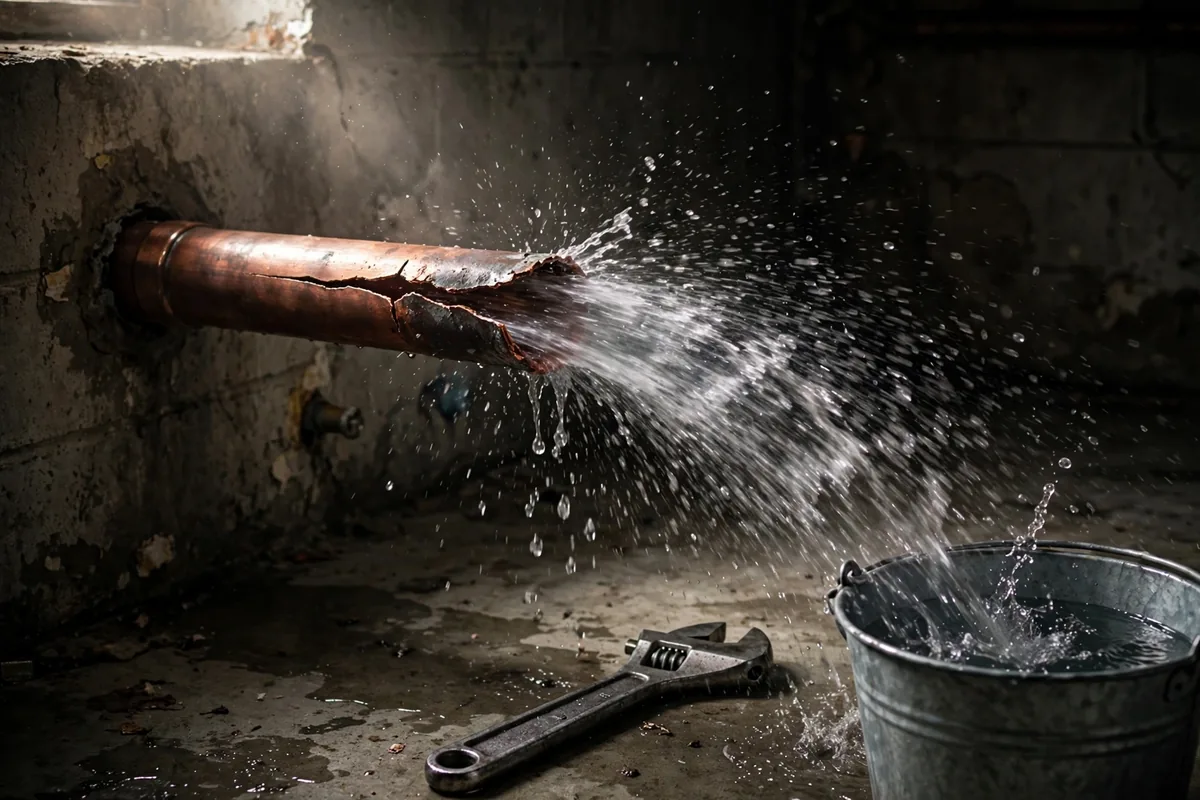
Emergency pipe repair is for problems that are actively damaging your home or cannot be controlled: water spraying or flowing where it should not, a burst you cannot shut off, loss of pressure across the house, water near electrics, or a meter that keeps running with everything closed. A slow drip you have contained in a bucket, with the fixture's own valve closed, is urgent — but it can usually wait for a booked visit in daylight.
The hardest moment in any pipe problem is the first one: standing in the water, phone in hand, deciding whether this is a tonight problem or a tomorrow problem. The answer is not about how frightened you are — it is about control. This triage guide draws the line the way pros draw it, so your 2 a.m. decision is a checklist, not a guess.
An emergency is any pipe failure that is actively causing damage you cannot stop. Three ingredients create one: water escaping at volume, water going somewhere it can do harm (into walls, ceilings, electrics, belongings), and no working way for you to shut it down. Remove any one ingredient — the water is off, the flow is contained, the area is safe — and the situation downgrades from emergency to urgent repair.
That definition covers more than bursts. A main water line failure flooding the yard toward the foundation, a water heater line spraying in a utility closet, or a frozen pipe that has begun leaking at thaw all qualify — as does a tired joint forced apart by high water pressure. In Addison, IL, the qualifying test is the same as everywhere: is damage happening right now, on a clock you do not control?
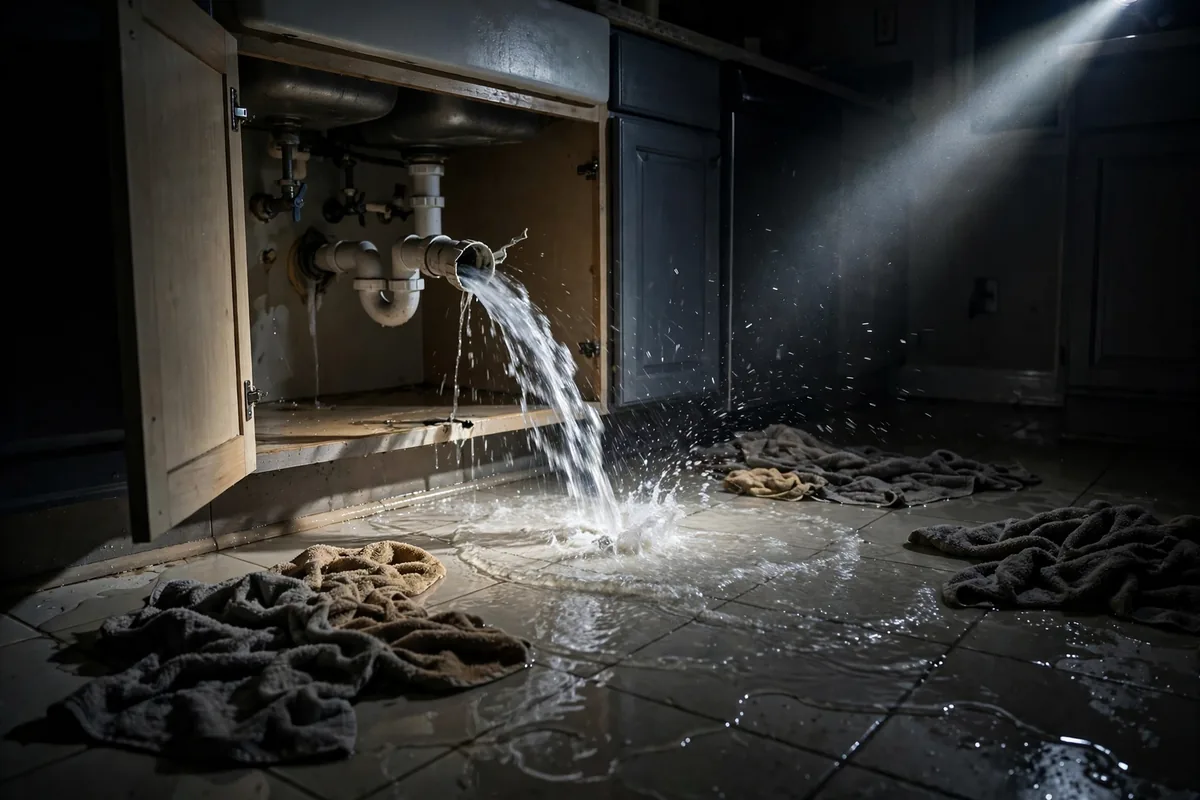
Call now for: any visible spray, stream or rapidly pooling water; a shut-off valve that will not stop the flow; water pressure lost across the whole house; the sound of running water with the water meter spinning and no visible source; a ceiling bulging or sagging with water weight; water anywhere near sockets, the breaker panel or appliances; and sewage-side failures backing up into the home; water pooling across a concrete slab floor; or water dripping from an attic run.
Each of those is damage in progress. The cost of a burst is measured in minutes of flow, so the emergency call is not an overreaction — it is the cheapest version of the event. Pros staffing emergency pipe repair lines across Texas and the Midwest expect exactly these calls at exactly these hours; you are not disturbing anyone by matching the problem to the service.
A contained problem can wait: a drip landing in a bucket under a sink with that fixture's valve closed, a damp patch that has been stable for days, one weeping joint with normal pressure elsewhere, a slow pinhole mist you have isolated. Faint green staining on a joint — pipe corrosion announcing itself — belongs on the same booked list. Book it promptly — days, not weeks — and keep the container emptied and the area monitored, because a leak that changes its behaviour graduates to the emergency list immediately.
The distinction is containment, not size. In Akron, OH, a small but unfindable leak — meter moving, no source visible — outranks a larger drip you can see and control, because hidden water is damaging structure unseen. If you cannot see it, cannot stop it, or cannot explain it, do not file it under "wait". A basement you have not checked is exactly that kind of unknown.
Emergency is not a size, it is a state: water moving, damage growing, and you without a working stop. Fix any one of the three and you have bought time.
Water Moving Where It Shouldn't?
One free call connects you with a local pro who can arrive in 30–60 minutes and find the burst without tearing the house apart first.
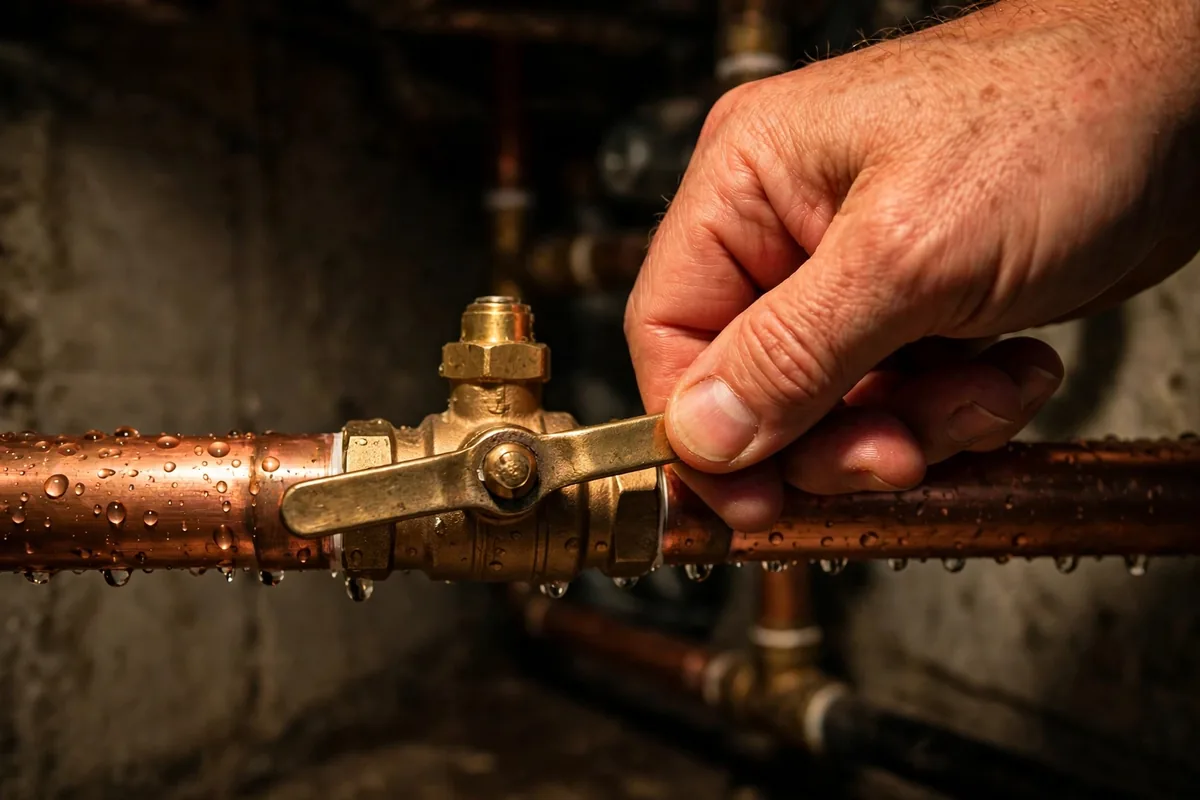
Call (800) 555-0100Run four questions. Is water escaping now? Can I stop it at the main shut-off valve? Is it touching anything electrical or structural? Is the meter still moving with everything closed? A "yes, no, yes, yes" pattern is an emergency in any house. A leaking joint you have bucketed, with the fixture isolated and the meter still, is a morning booking with a photograph and a note of when it started.
When the answers split — you stopped the house water but cannot find the source, or the flow stopped because the pipe froze rather than because you fixed anything — treat it as an emergency call for advice at minimum. A frozen pipe that stops flowing has not been repaired; it has been paused, and thaw will grade it. Homes in Austin, TX learned that pattern during hard cold snaps: the quiet pipe is the one to watch.
Keep the water off, protect belongings, and prepare information. Move furniture and valuables out of the wet area, lay towels at thresholds to slow the spread, and switch off electricity to flooded rooms at the breaker if water is near electrics and you can do it with dry hands from a dry floor. Photograph everything before cleanup — the room, the source, the meter reading.
Note the timeline: when you found it, what the first sign was, what you shut off and when. That record speeds the pro's diagnosis and anchors any insurance documentation later. Then clear a path to the shut-off valve and the failure area so the visit starts with work, not furniture moving. In Illinois winters, also keep the house heated — a second pipe freezing while you wait for the first one's repair is a misery that does happen.
Because water damage compounds. In the first hour it is a puddle and a wet skirting board; within hours it has wicked up drywall and into insulation; by the next day it is inside wall cavities and under flooring, and drying has become a project instead of a mop. Water extraction and structural drying are straightforward early and invasive late — floors lifted, sections of wall opened — purely because time passed.
That compounding is the entire economics of the emergency call. The repair to the pipe costs what it costs whenever it happens; the damage around it is priced by the clock. Classifying your problem honestly and acting at the right speed is the one part of the bill that is genuinely in your hands.
Finding the split is a kit job: an acoustic leak detection check along the run, a thermal imaging camera for the wet path behind drywall, a moisture meter to map how far the water travelled, and a pipe camera inspection where the line runs under the slab.
More straight answers about finding hidden bursts and what happens after you find one.
Still Have Questions? Call Free
A real person answers, day or night, and connects you with a local pro who can check the problem in person.
(800) 555-0100Yes, while it is flowing. A burst is an opened pipe wall releasing water at pressure, and the damage compounds by the minute. Once you have the water shut off and the area contained, the emergency phase ends and it becomes a repair — but getting to that shut-off is the emergency, and if the valve fails or the source is hidden, the call is an emergency call until a pro has control of it.
Treat it as one until it has thawed and been checked. Ice can plug the very split it caused, so a frozen pipe that 'stopped' may simply be paused; the leak resumes at thaw, possibly when nobody is watching. The safe sequence is water off, gentle thaw, close inspection of the whole run, and a pro's pressure test if there is any doubt about the pipe wall.
Probably not — a leak that only appears when one appliance runs is usually a drain-side or hookup problem, and drains are not pressurised. Contain it, stop using that machine, and book a visit. It graduates if the leak becomes constant (which points to the pressurised supply side of the laundry hookup), if water reaches electrics, or if you cannot isolate it — control, as always, is the deciding factor.
Response promises vary, and honesty matters more than speed claims: our pros can arrive in 30–60 minutes in the areas we serve. What should never vary is the sequence on arrival — control the water, find the failure, price in writing, repair, and pressure-test. If you are quoted a fast arrival with no mention of that sequence, you are hearing marketing, not a plan.
Call anyway — and call the water utility too, because they can shut the meter. While you wait, slow the water however you safely can: towels and buckets at the spread, belongings moved, electrics protected. Afterwards, make finding and labelling that valve your first project; the middle of a flood is the worst classroom. Many pros will walk the system with you on the visit and mark the valve before they leave.
Sudden whole-house pressure loss deserves same-day attention, because a common cause is water escaping somewhere — a burst main line, a split in a wall — and the meter will tell you: moving with everything off means loss. Gradual pressure decline over years is different (usually scale or a failing pressure regulator) and books normally. Sudden change is the alarm; slow change is the appointment.
A water heater that is spraying, or leaking from its supply lines at volume, is an emergency: close its valves and the main if needed, and keep clear if water is near its electrics or burner. A slow drip from the heater's drain or pressure relief valve is a booked repair — but heaters hold a tank of hot water above your floor, so any heater leak deserves a prompt, not eventual, response.
If water is reaching electrical panels, if you smell burning, or if anyone is at risk, that is a 911 situation — safety outranks plumbing. The water utility is the right call when you cannot stop the flow at your own valves, since they control the meter. For the burst itself, the pro is the call. Knowing which of the three your moment needs is itself a piece of emergency preparation.
Only if the damage is truly contained and drying has begun. A shut-off burst with soaked walls is not a paused problem: wet drywall, insulation and flooring keep degrading and growing mould on their own schedule. Turning the water off stops the cause; the repair and the drying still need to follow promptly. A week of wet structure costs far more than a week of inconvenience.
Reviewed By Hamza
Lead Plumbing & Emergency Pipe Repair Specialist
Hamza is a certified plumbing and pipe restoration specialist with extensive field experience diagnosing sub-zero pipe splits, thermal stress fractures, and slab leaks across harsh winter climates. He specializes in non-destructive leak localization, copper-to-PEX conversions, and preventative freeze-proofing to safeguard residential and commercial plumbing systems against catastrophic water loss.
Updated October 30, 2026
Still deciding whether yours qualifies? Describe it on one free call — a local pro will help you triage honestly, and if it is the tonight kind, they can arrive in 30–60 minutes with the water controlled first and the price in writing.
Free Call · Answered 24/7 · Local Pros Near You
Not sure how pipe leak repair works or what it involves exactly? One free call connects you with a local pro who can arrive in 30–60 minutes. Call now.
Not sure how burst pipe plumber works or what it involves exactly? One free call connects you with a local pro who can arrive in 30–60 minutes. Call now.