Safe steps for the wait, what the pro will do first, and how to protect the claim and the house.
What Should You Do While You Wait For The Pro?
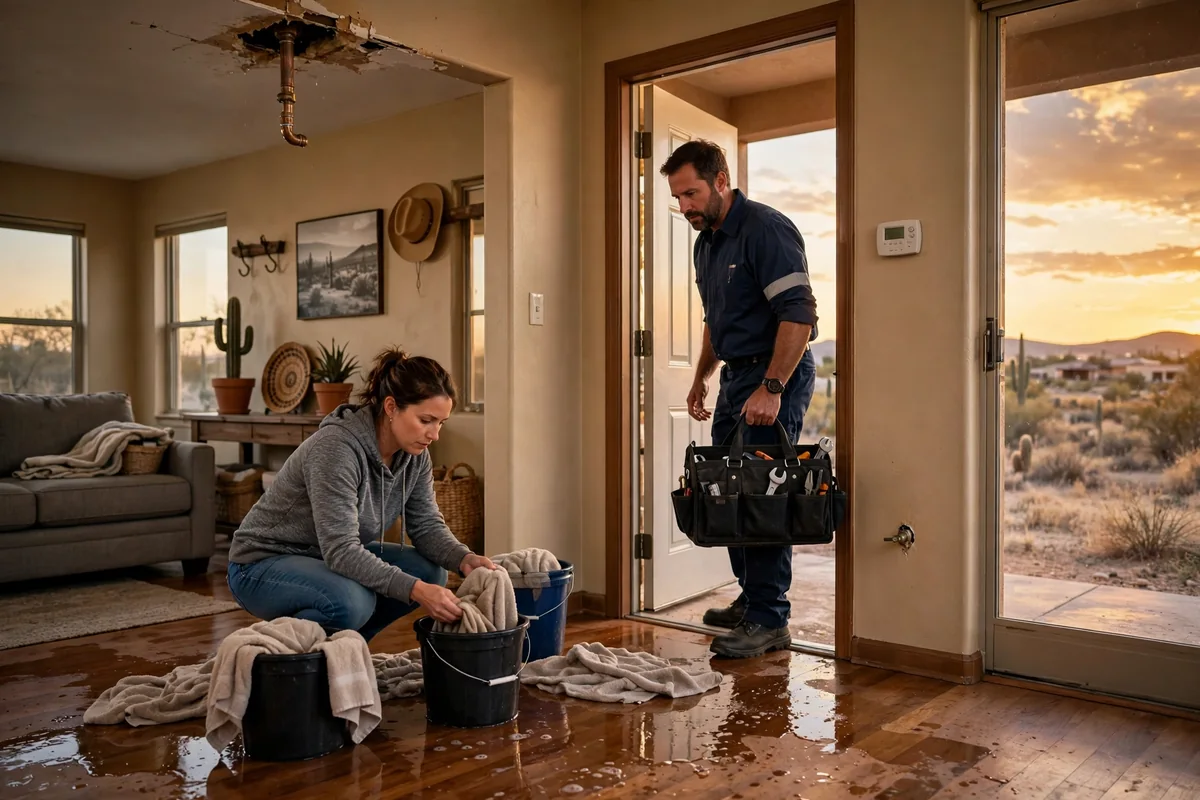
While you wait, protect people first and property second. Keep the main valve closed and check once that it is fully off. Stay out of any water that is near outlets, cords or the panel, and keep children and pets in the driest room in the house. If a ceiling is dripping but flat, a bucket underneath is fine; if it bulges, leave the room alone entirely. Move dry furniture and boxes out of rooms the water is heading for, lay towels at door thresholds to slow the spread, and take photos as conditions change. Unlock the entry the pro will use, and keep a flashlight handy rather than flipping wet switches.
What Does The Pro Do In The First Minutes On Site?
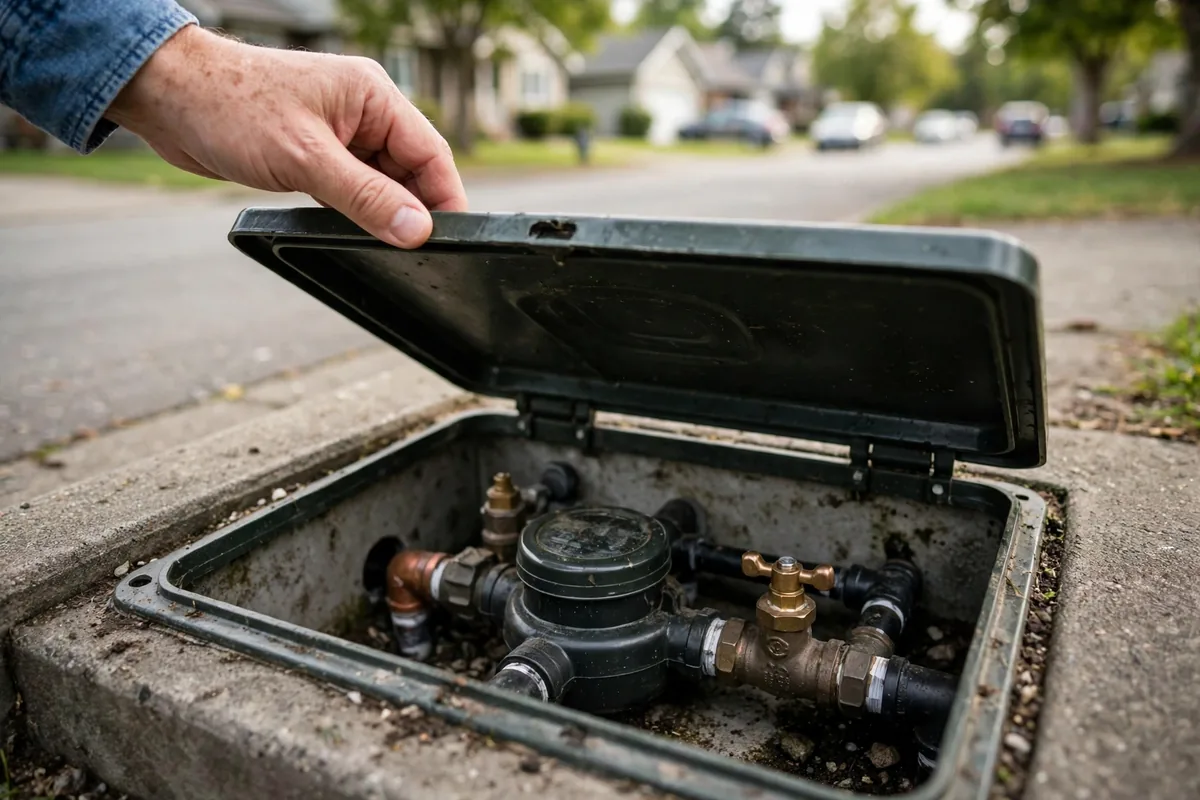
The first minutes on site are about proof, not tools: the pro confirms the main valve is closed and watches the water meter until it stops, which proves the house is no longer being fed. Then the hunt begins where the water is loudest or the floor is wettest, using listening gear and a moisture meter to follow the escape back to the split. In Abilene slab homes that often means pinpointing a spot through the floor before anything is opened. You get a plain explanation of what failed, what the repair involves and what affects the cost, before any cutting starts.
How Is The Burst Repaired During An Emergency Visit?
The lasting repair is always a section replacement: the split length is cut out and new pipe is fitted in its place. A pipe repair clamp or epoxy putty may slow a spray while the work area is prepared, but neither is the fix itself, and any pro who suggests leaving them as the repair should be questioned. After the new section is fitted, the line is pressure-tested, joints either side are checked for the same weakness, and water is restored slowly while the repair is watched at full pressure. The visit ends only when the line holds.
Which Burst Pipe Emergencies Happen Most In Abilene?
Abilene emergencies repeat a few patterns, shaped by West Texas cold snaps and a housing stock whose median home dates to 1975.
What Does A Freeze Split Look Like?
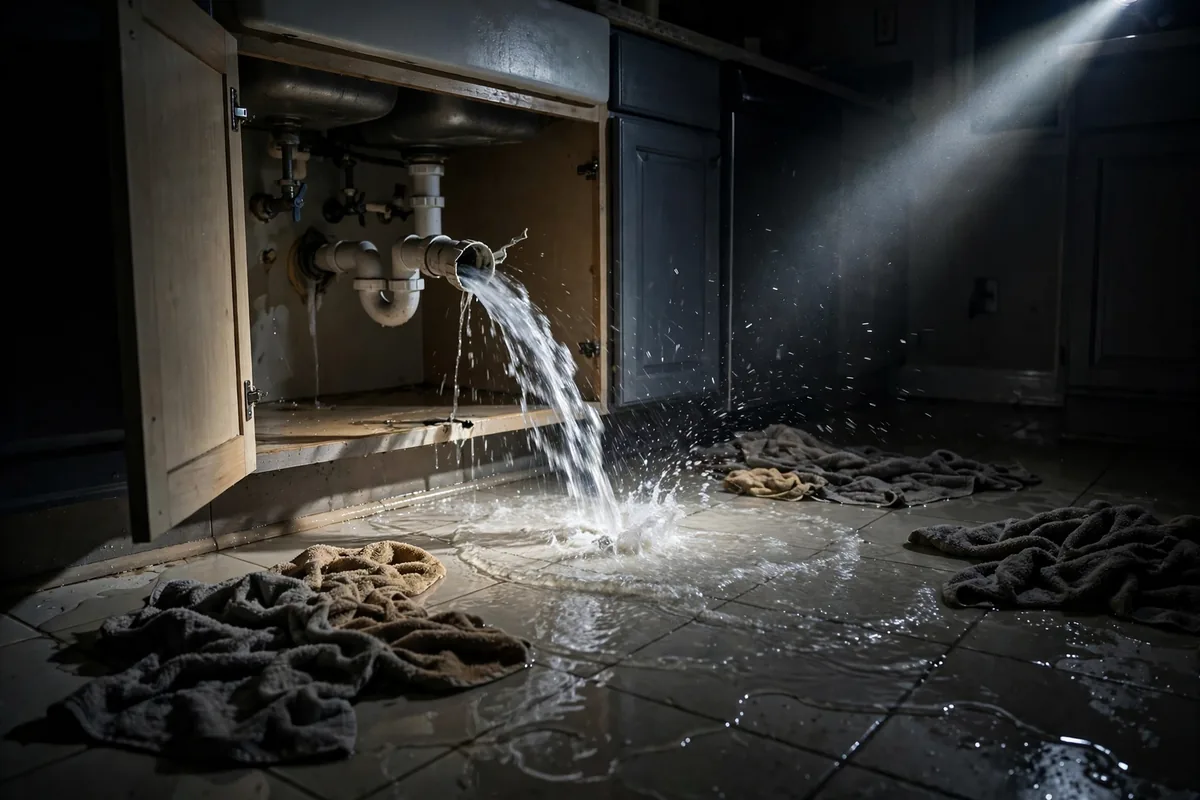
A freeze split opens lengthwise where ice expanded inside the pipe, most often in an attic or exterior-wall run. The ice plug can hide it completely until the thaw, when full pressure reaches the crack and the ceiling below starts to rain.
How Does A Corrosion Failure Present?
A corrosion failure begins as a pinhole leak or a weeping soldered joint in aging copper, then opens into a spray under normal household pressure. Green staining at joints, rust-coloured water and a damp patch that keeps returning are the usual weeks-long warnings.
What Happens When A Line Bursts Under The Slab?
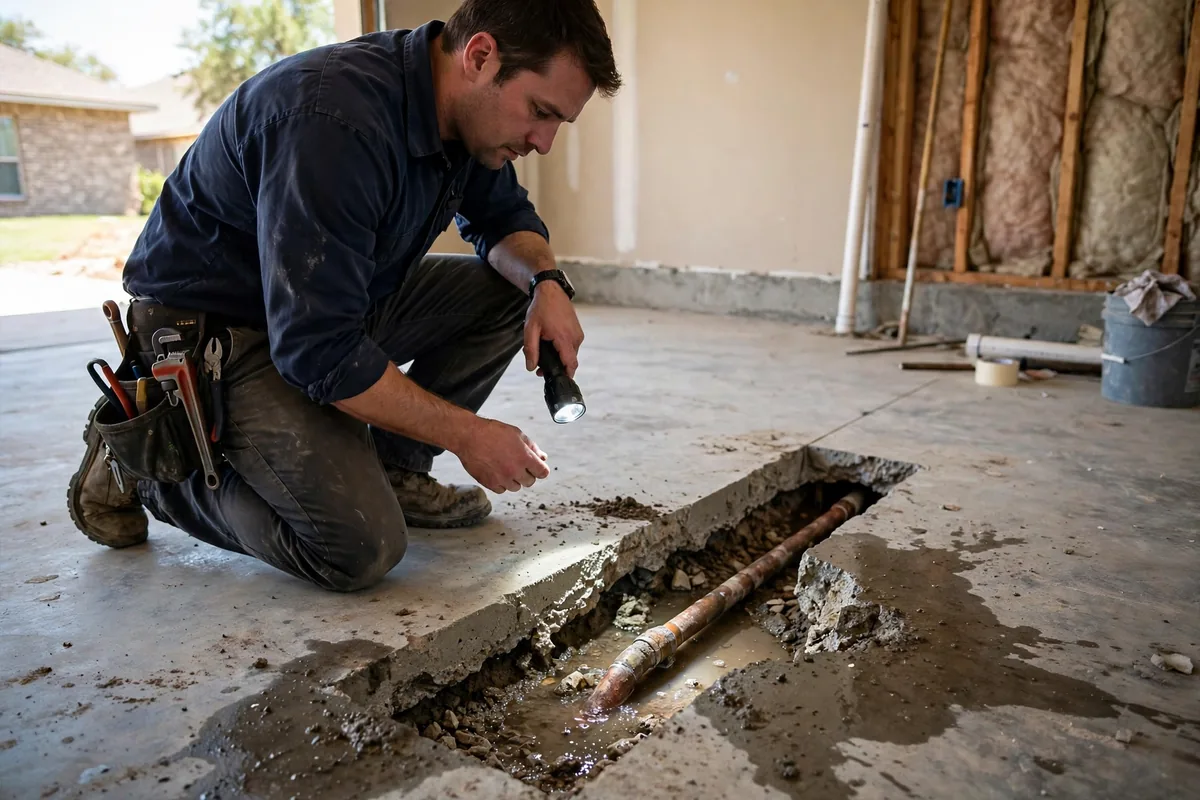
An under-slab break announces itself quietly: a warm patch on the floor, water easing out at baseboards, or running-water sounds with every tap closed. Locating it takes acoustic equipment and a moisture meter, and the repair opens the floor at the break point only.
What Does A Water Line Break Do To The Whole Home?
When the main service line breaks, pressure falls at every tap at once and the yard or street-side ground soaks. The supply is shut down first, the failed stretch is dug out and replaced, and service is restored only after the new line passes a pressure test.
The first minutes follow a drill: the main shut-off valve gets closed, the water meter is checked to confirm the flow has stopped, breakers near standing water are left alone, and a moisture meter starts mapping how far the water has already travelled through Abilene floors and walls.
Finding the split is instrument work, not guesswork: a thermal imaging camera traces the wet path behind drywall, an acoustic leak detection check follows the hiss along the run, and the crawl space, attic and basement all get inspected, because the visible stain is rarely where the pipe actually opened.