Safe steps for the wait, what the pro will do first, and how to protect the claim and the house.
What Should You Do While You Wait For The Pro?
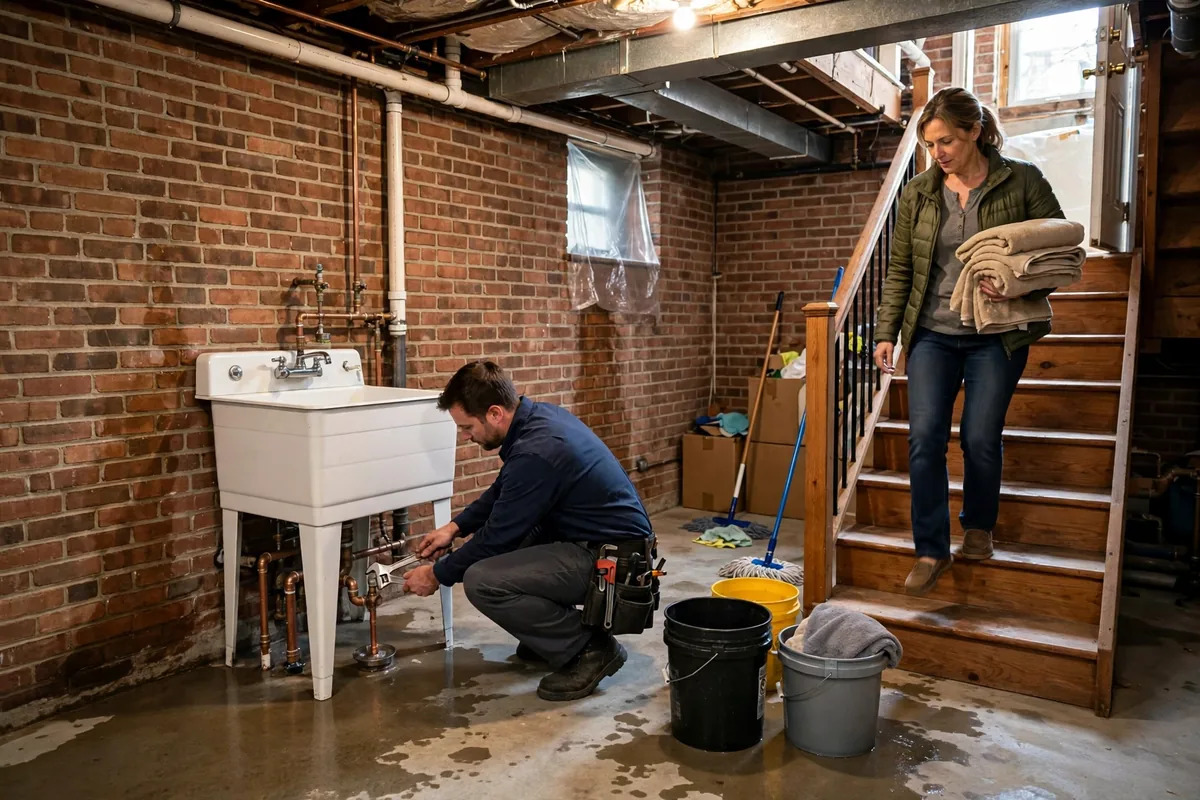
Use the wait for protection, not repairs. The valve stays shut and the taps stay open so the lines empty. On dry footing only, carry out what water ruins fastest — documents, electronics, rugs, soft furniture — and set buckets under drips where the ceiling above them is flat and sound. Towel the edges of the spread to slow it. Take clear photos of every affected room before anything is cleaned, because insurers will ask. Children and pets stay in one dry room, the door the pro will use gets unlocked, and that is the whole job list. No cutting into walls, no space heaters against frozen pipe, no wading to reach a panel.
What Does The Pro Do In The First Minutes On Site?
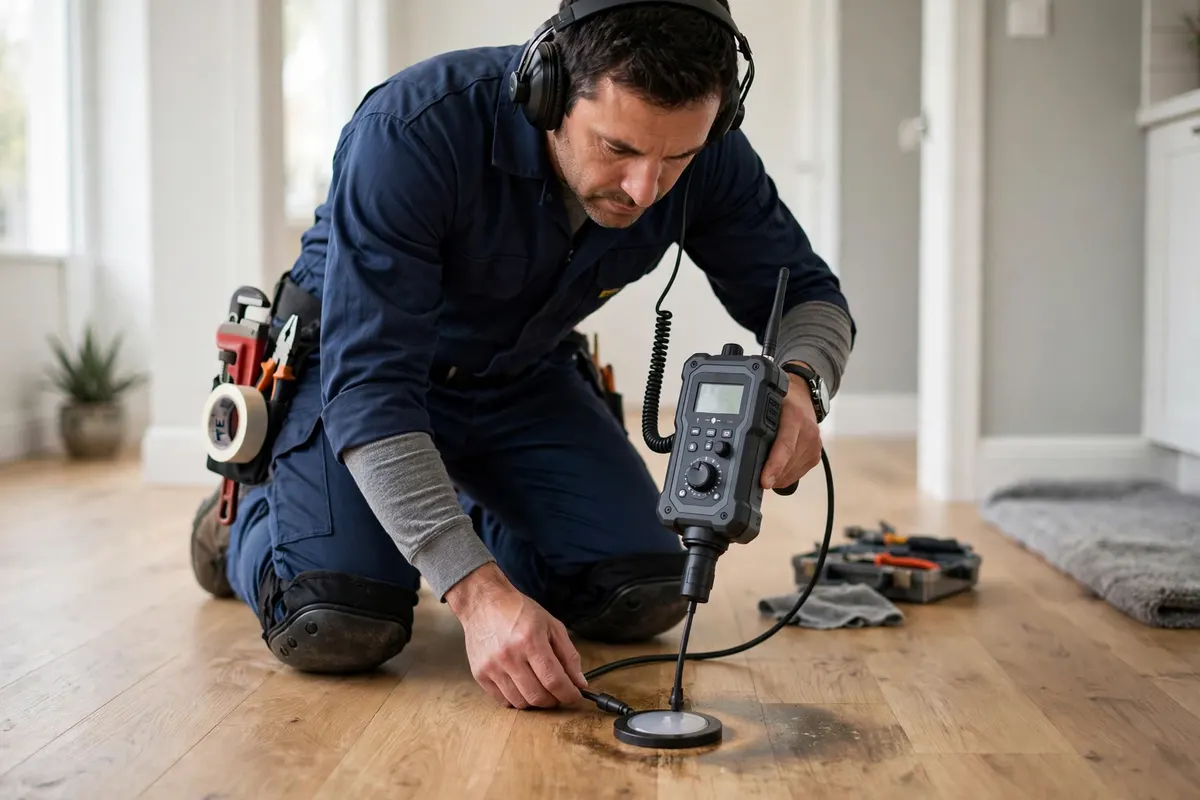
There is a discipline to the first minutes, and it starts with stillness at the meter: no dial movement, no argument about whether water is off. Next comes mapping — a moisture meter swept room by room, the wettest areas first, listening equipment along the pipe runs until the escape point gives itself up. Then a conversation, not a surprise: what burst, what comes out, what goes in, and what affects the price. The saw comes out after that conversation, never before.
How Is The Burst Repaired During An Emergency Visit?
The repair itself swaps old for new. Once the opening is made, the failed stretch is cut clear of both joints and a fresh section is fitted — crimped or pressed on plastic runs, soldered on copper. A pipe repair clamp or epoxy putty may calm a spray while the work is staged, but nothing temporary stays in the wall. Then proof: a pressure test at full load, eyes on every new joint, neighbours checked for the same wear pattern. Supply is restored tap by tap, and the repair is only called finished when the whole line holds quietly at pressure.
Which Burst Pipe Emergencies Happen Most In Bedford Park?
Ask a local pro to rank the emergencies and the same four come back every time. In Bedford Park they trace back to the same roots: long freeze seasons and a housing stock built for another era of plumbing.
What Does A Freeze Split Look Like?
Look for a seam-like opening along the pipe rather than a round hole: expanding ice splits the wall lengthwise. The same ice can cork the damage for hours or days, so the emergency frequently starts at the thaw, with water suddenly pouring from a line that seemed fine at breakfast.
How Does A Corrosion Failure Present?
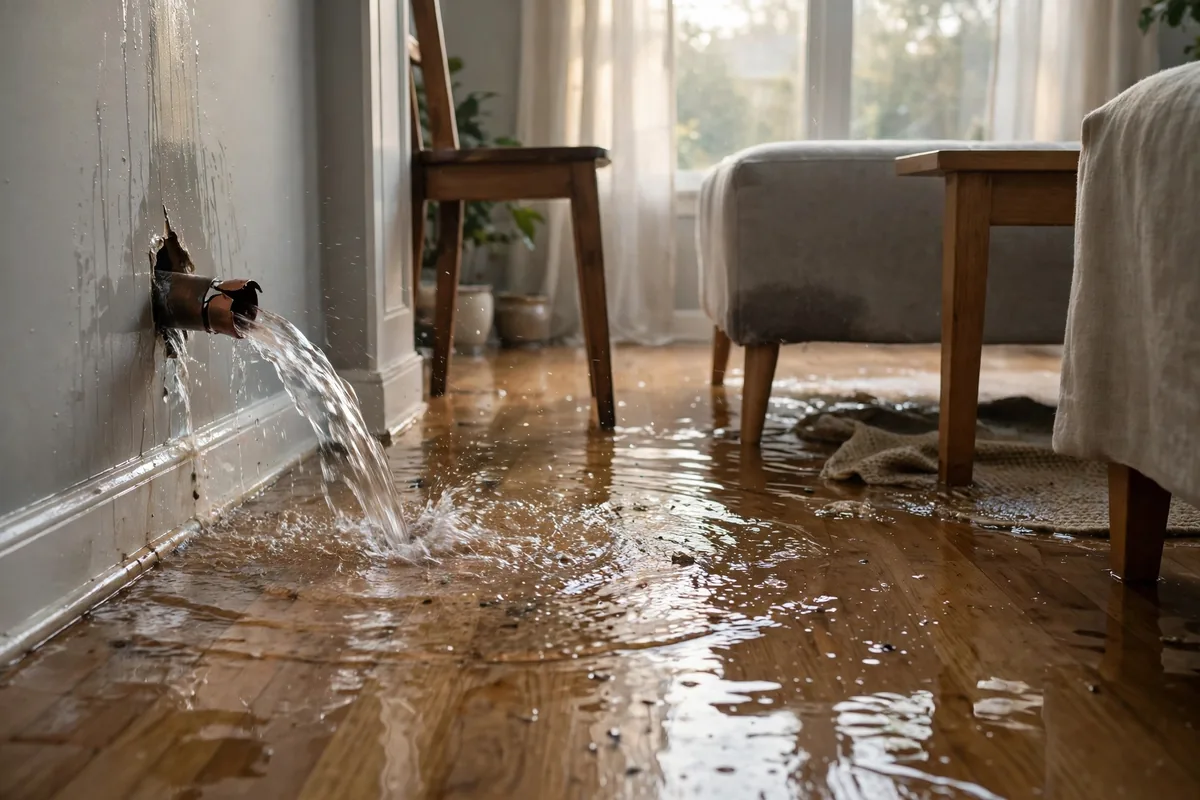
Corrosion failure is a slow story with a sudden ending. Months of pinhole leaks, staining and damp that keeps coming back end when the thinnest point of the wall gives way under full pressure. From that moment the line sprays continuously, and only the shut-off valve ends it.
What Happens When A Line Bursts Under The Floor?
Under-floor and slab breaks announce themselves indirectly: flooring that feels warm or starts to lift, water creeping out at baseboards, running-water sounds in a silent house, a meter that will not rest. Listening equipment and a moisture meter locate the break, and the floor is opened at that point only.
What Does A Water Line Break Do To The Whole Home?
A water line break is the burst with no partial version: the whole home loses pressure together, and the escaping water can run unseen underground for hours. The sequence is always shutdown at the meter first, then dig, replace and pressure-test — the house stays dry until the new stretch has proved itself.
The water heater matters in almost every call: it gets isolated and checked, because a burst on the hot side drains the tank through the break, and a heater refilling against an open line can flood a Bedford Park home long after the cold line is shut.
The first minutes follow a drill: the main shut-off valve gets closed, the water meter is checked to confirm the flow has stopped, breakers near standing water are left alone, and a moisture meter starts mapping how far the water has already travelled through Bedford Park floors and walls.
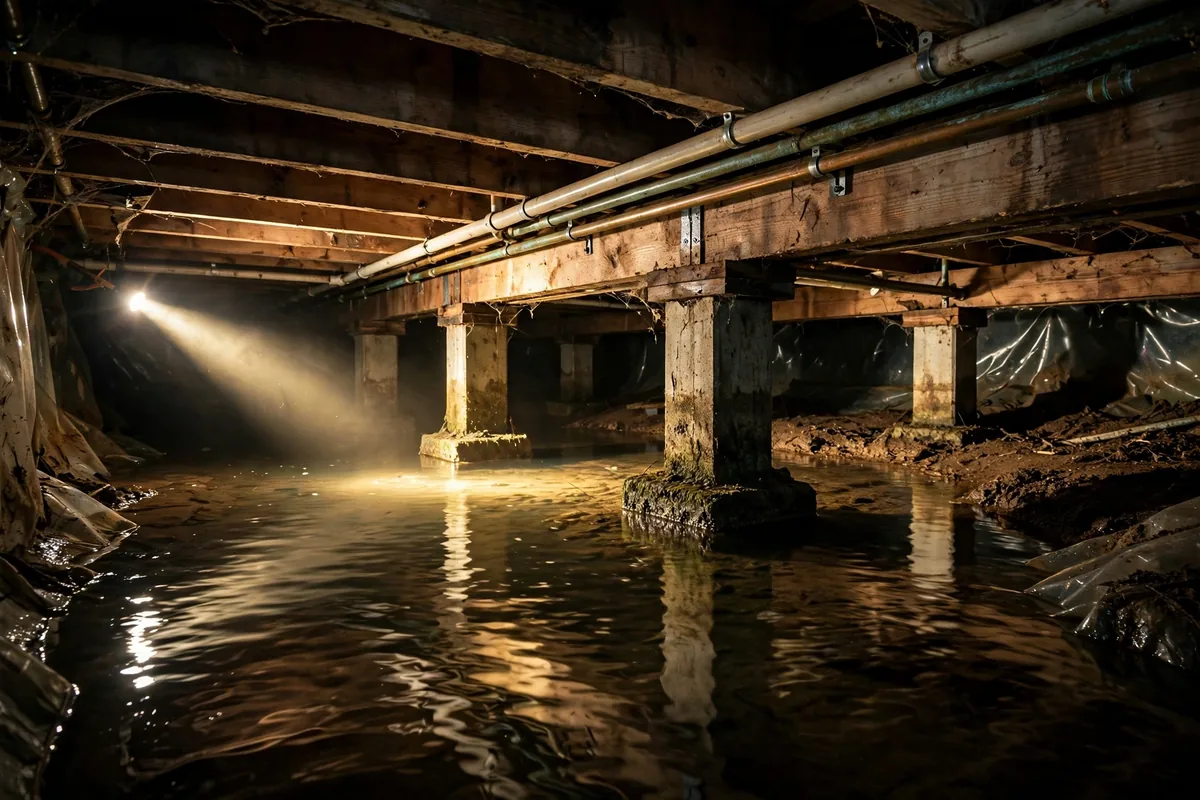
Finding the split is instrument work, not guesswork: a thermal imaging camera traces the wet path behind drywall, an acoustic leak detection check follows the hiss along the run, and the crawl space, attic and basement all get inspected, because the visible stain is rarely where the pipe actually opened.
Drying starts the same hour: water extraction pulls the standing water out, structural drying equipment goes in before mould can organise, and any section of drywall or flooring that traps moisture against an exterior wall is opened up to dry.