Safe steps for the wait, what the pro will do first, and how to protect the claim and the house.
What Should You Do While You Wait For The Pro?
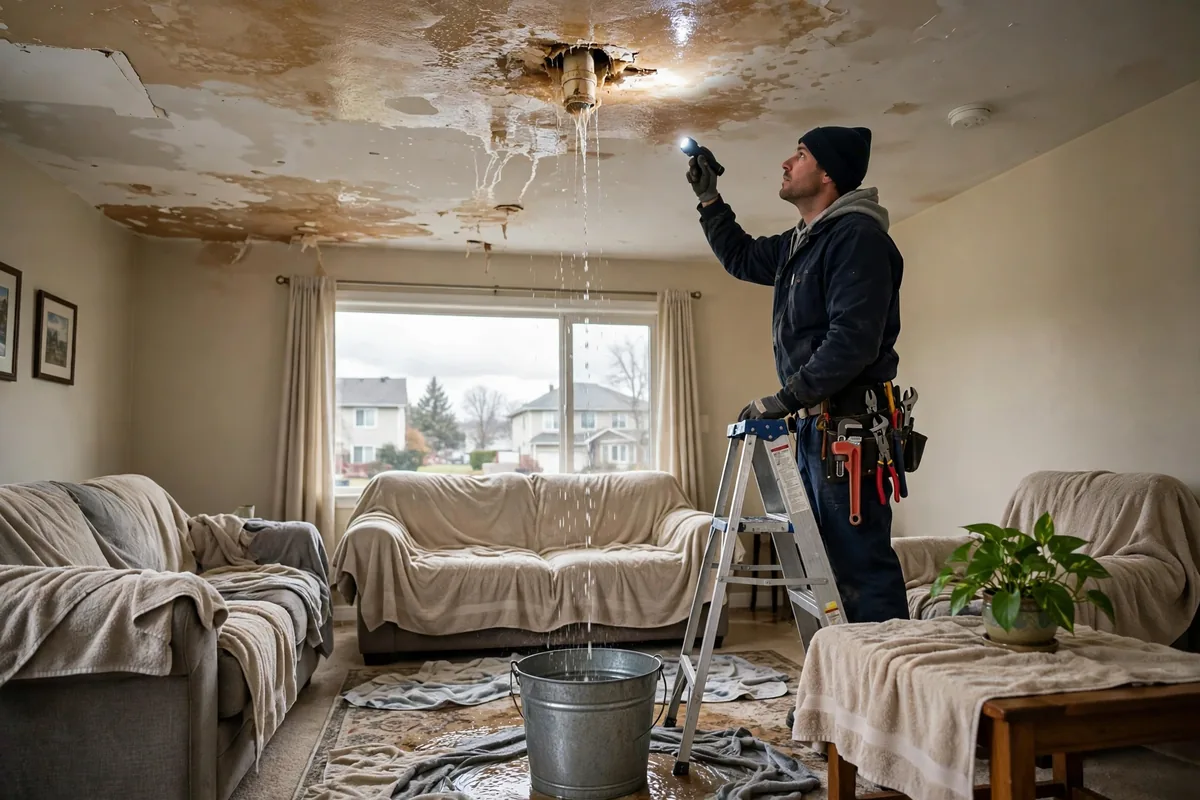
Your tasks while help travels are small and specific. Keep the main valve closed and faucets open so the system drains. Where the floor under your feet is dry, move belongings out of the wet rooms, working from the doorway inward, and put containers under active drips unless the ceiling is bulging — that room is then left alone entirely. Photograph the damage room by room. Settle children and pets somewhere dry, unlock the entry, and keep a flashlight handy if lights are off in the wet area. Anything involving cutting, heating frozen pipe or touching the breaker waits for the pro.
What Does The Pro Do In The First Minutes On Site?
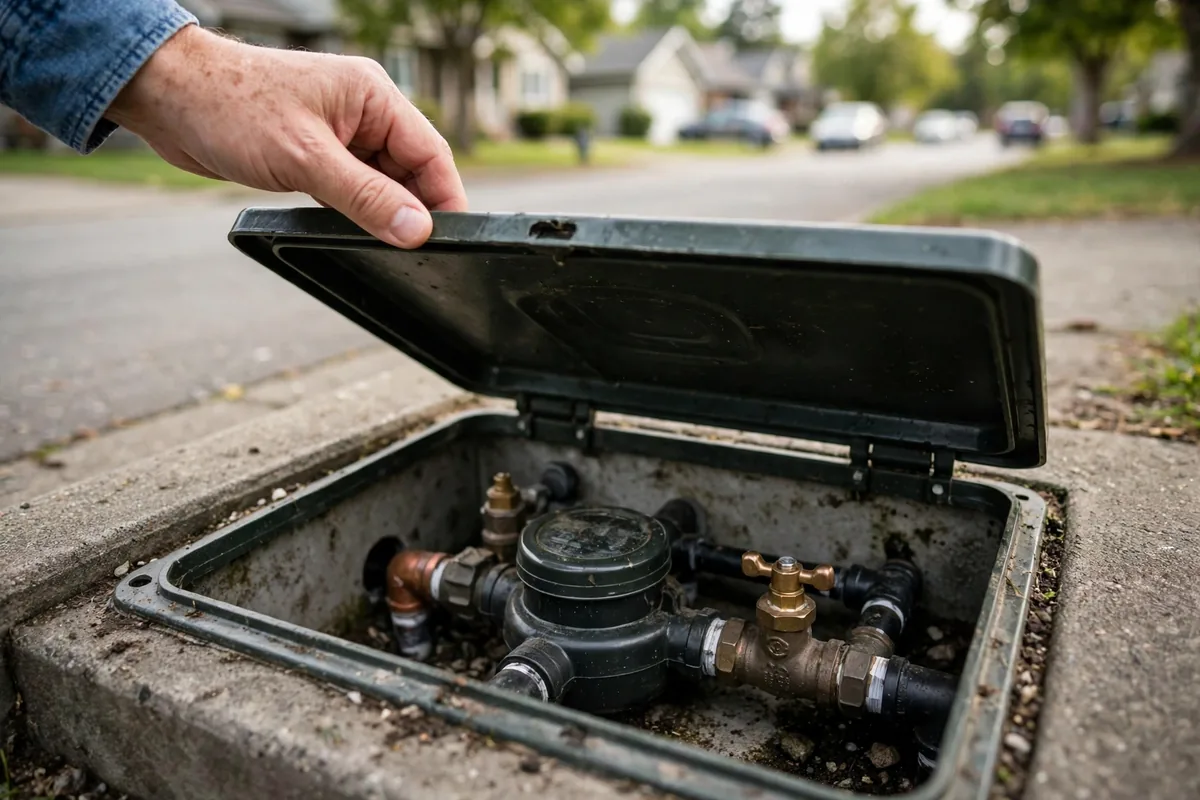
Expect method, not rushing. The pro confirms the stop first: house valve checked, eyes on the water meter until its dial is still. If water is somehow still moving, the meter valve outside closes the question. Then the search — moisture readings on walls and floors, ears and listening gear along the pipe runs, the basement, crawl space and under-floor voids checked in order of wetness. When the split is located, you get the short version before any tool touches pipe: what failed, what the repair involves, and what drives the cost. Only then does cutting start.
How Is The Burst Repaired During An Emergency Visit?
Forget the image of a patch. Emergency repair is cut-and-replace: out goes the damaged length, in goes new pipe, joined to match the existing run. Temporary measures — a pipe repair clamp, epoxy putty — exist only to calm a spray while the real work is set up. After fitting, the line faces a pressure test, and the neighbouring joints get inspected, because whatever weakened this section has been working on them too. Water returns in stages, taps opened one by one, so any second failure announces itself in the room where people are watching, not overnight.
Which Burst Pipe Emergencies Happen Most In Alsip?
Ask a local pro to rank the emergencies and the same four come back every time. In Alsip they trace back to the same roots: long freeze seasons and a housing stock built for another era of plumbing.
What Does A Freeze Split Look Like?
The signature is a lengthwise tear in a cold-zone run — basement, crawl space, exterior wall. Ice does the tearing and then, politely, plugs its own hole, so the pipe can look innocent until the thaw. When the plug melts, the split opens under full pressure and the room floods in minutes.
How Does A Corrosion Failure Present?
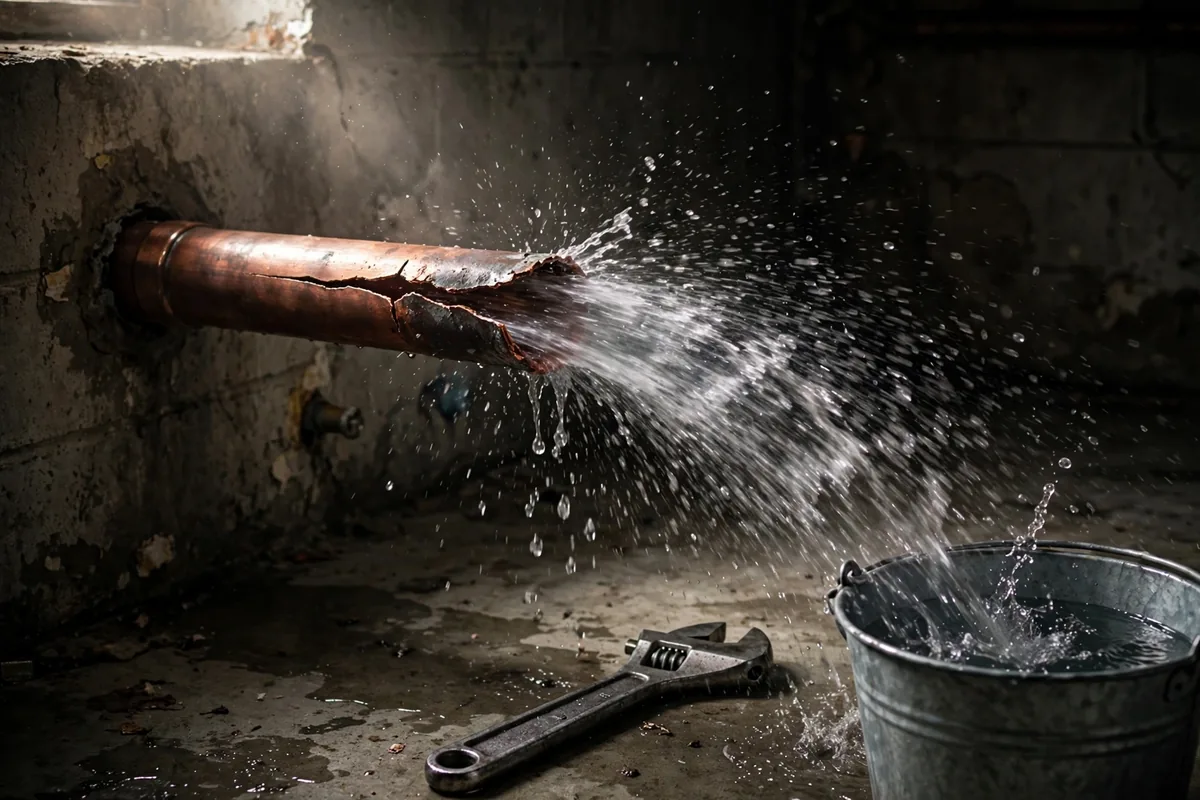
Before it bursts, corroded pipe confesses: weeping pinholes, discoloured metal, a damp smell in the room below, stains that reappear after every wipe-down. The emergency is simply the confession becoming a shout — the last thin point opens, and a leak you could dab becomes a spray you can only shut off.
What Happens When A Line Bursts Under The Floor?
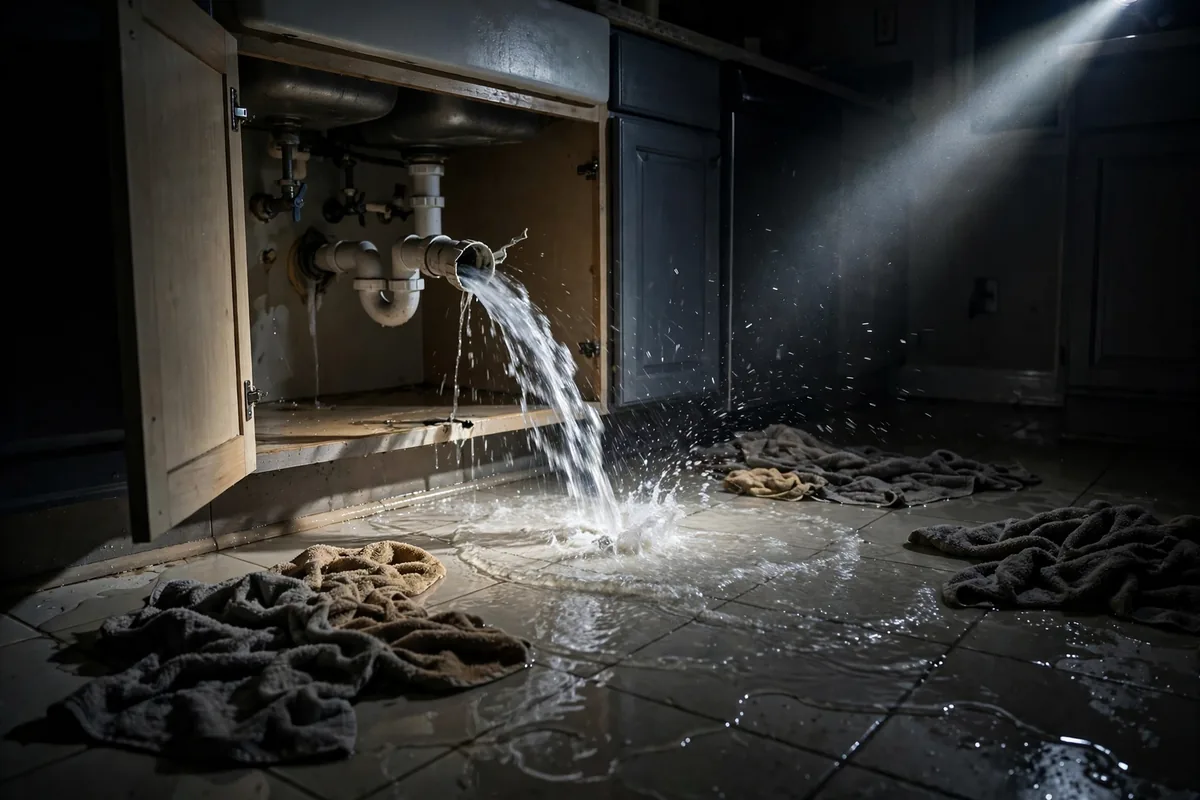
The break stays hidden; the evidence surfaces. Warm or lifting flooring, moisture wicking up at the baseboards, the sound of running water with every tap closed, a meter dial that creeps — an under-floor burst speaks in clues. The pro reads them with listening gear and moisture readings, then opens the floor once, at the point the evidence names.
What Does A Water Line Break Do To The Whole Home?
Because the supply line feeds the whole property, a break in it is a whole-house event: pressure collapses at every fixture while water escapes underground or across the yard. The pro closes the meter valve, digs to the failure, replaces the stretch, and tests the run before restoring flow.
The first minutes follow a drill: the main shut-off valve gets closed, the water meter is checked to confirm the flow has stopped, breakers near standing water are left alone, and a moisture meter starts mapping how far the water has already travelled through Alsip floors and walls.
Finding the split is instrument work, not guesswork: a thermal imaging camera traces the wet path behind drywall, an acoustic leak detection check follows the hiss along the run, and the crawl space, attic and basement all get inspected, because the visible stain is rarely where the pipe actually opened.
Drying starts the same hour: water extraction pulls the standing water out, structural drying equipment goes in before mould can organise, and any section of drywall or flooring that traps moisture against an exterior wall is opened up to dry.
The same call usually involves copper pipe, PEX pipe, CPVC pipe and concrete slab before it is done: the standard kit and checks a Alsip pro works through.