Safe steps for the wait, what the pro will do first, and how to protect the claim and the house.
What Should You Do While You Wait For The Pro?
Make the house safe, then make it ready. Safe means: supply confirmed off (the meter should stand still), wet rooms powered down or vacated, nobody under a loaded ceiling, children and pets parked in the dry end of the house. Ready means: a clear path to the attic hatch, the water heater and the meter box, a torch that works, and your photographs taken of every wet room as it stands.
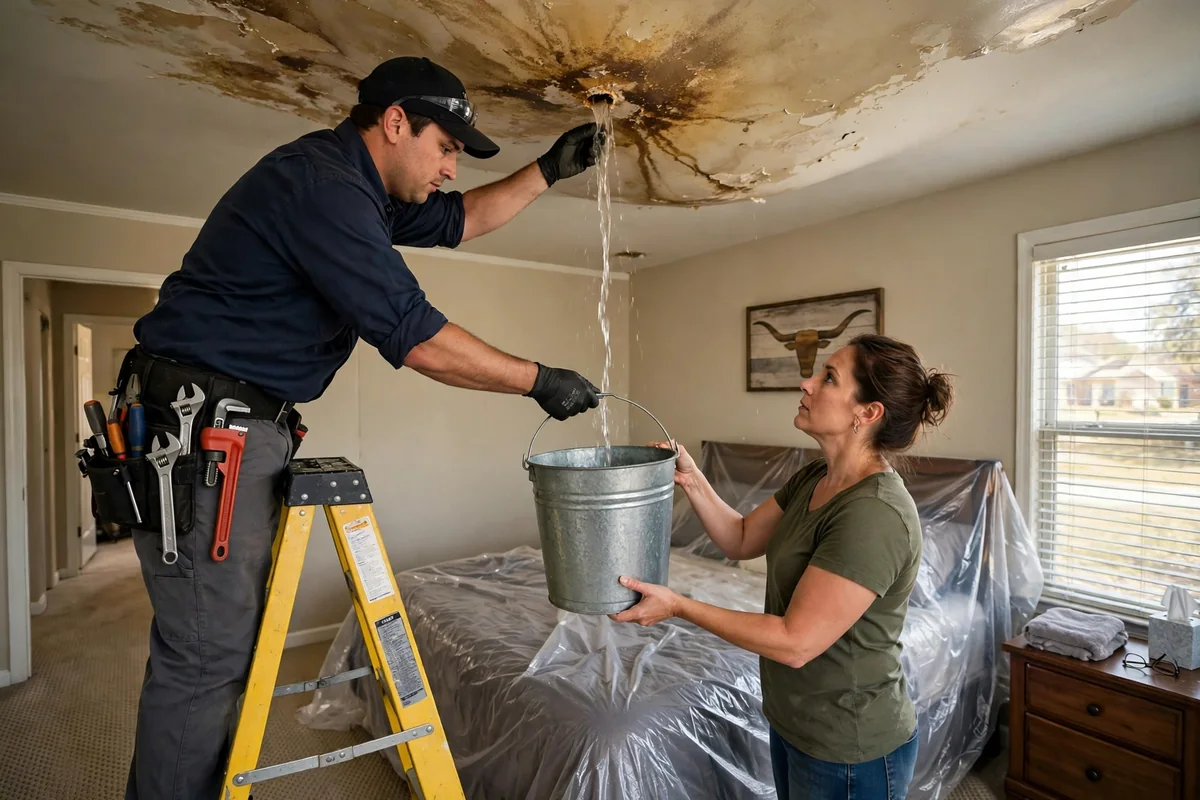
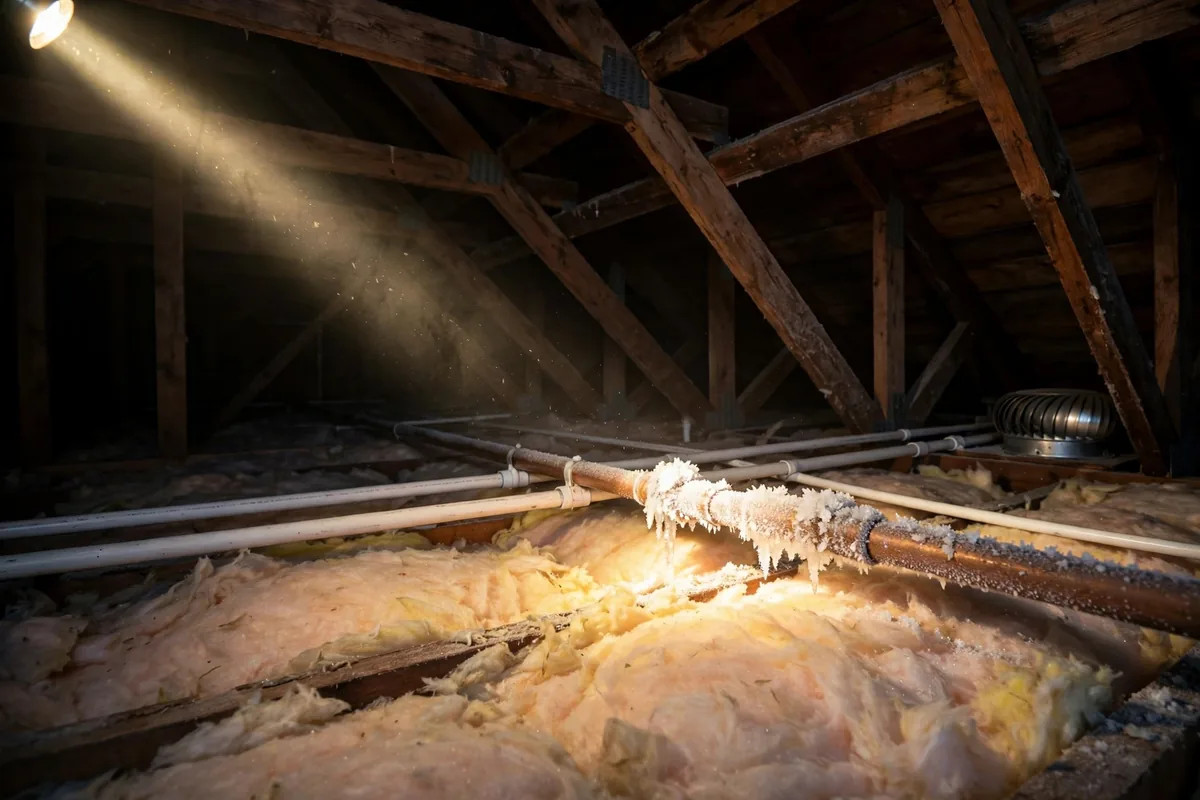
Resist the urge to start the repair. Do not poke a bulging ceiling (the pro drains it through a controlled hole, not a collapse), do not pull wet drywall, and do not run a heater against a frozen attic line unsupervised. Every fact about where water showed first is evidence — the more of it the pro can read undisturbed, the faster the break is found.
What Happens In The First Minutes After A Burst Pipe In Alvarado?
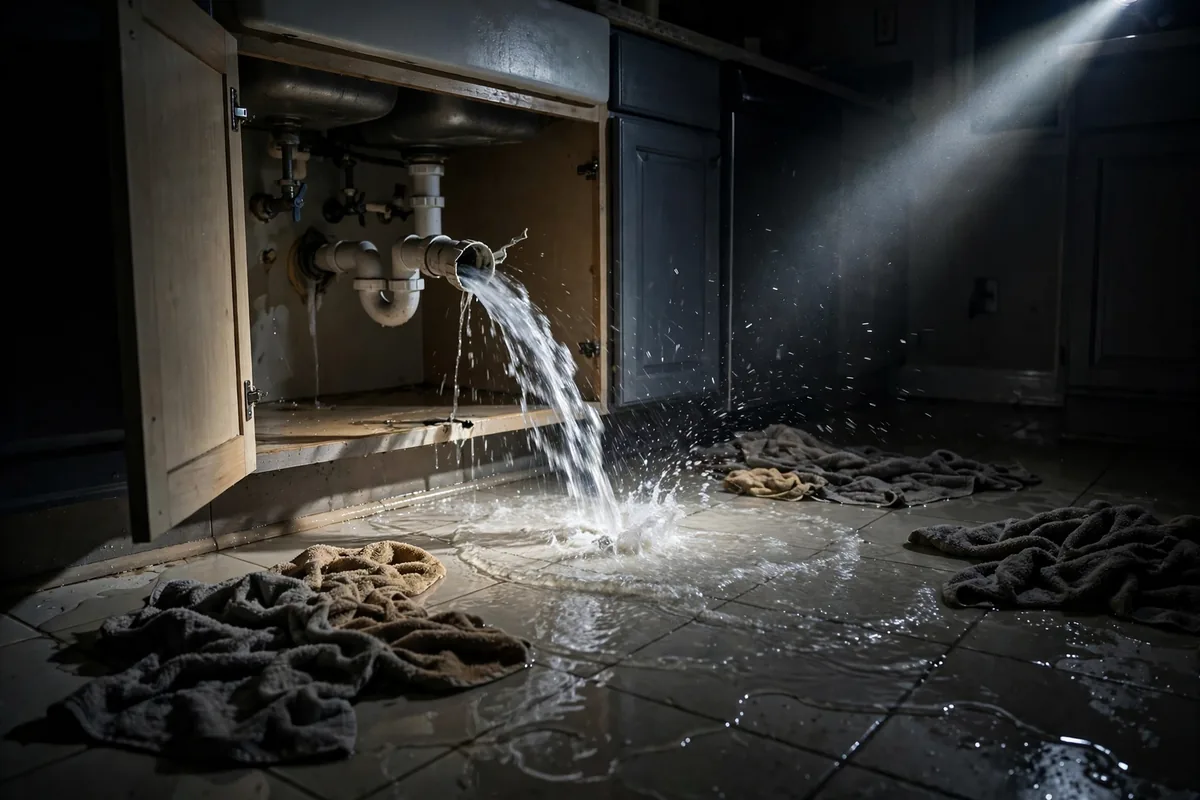
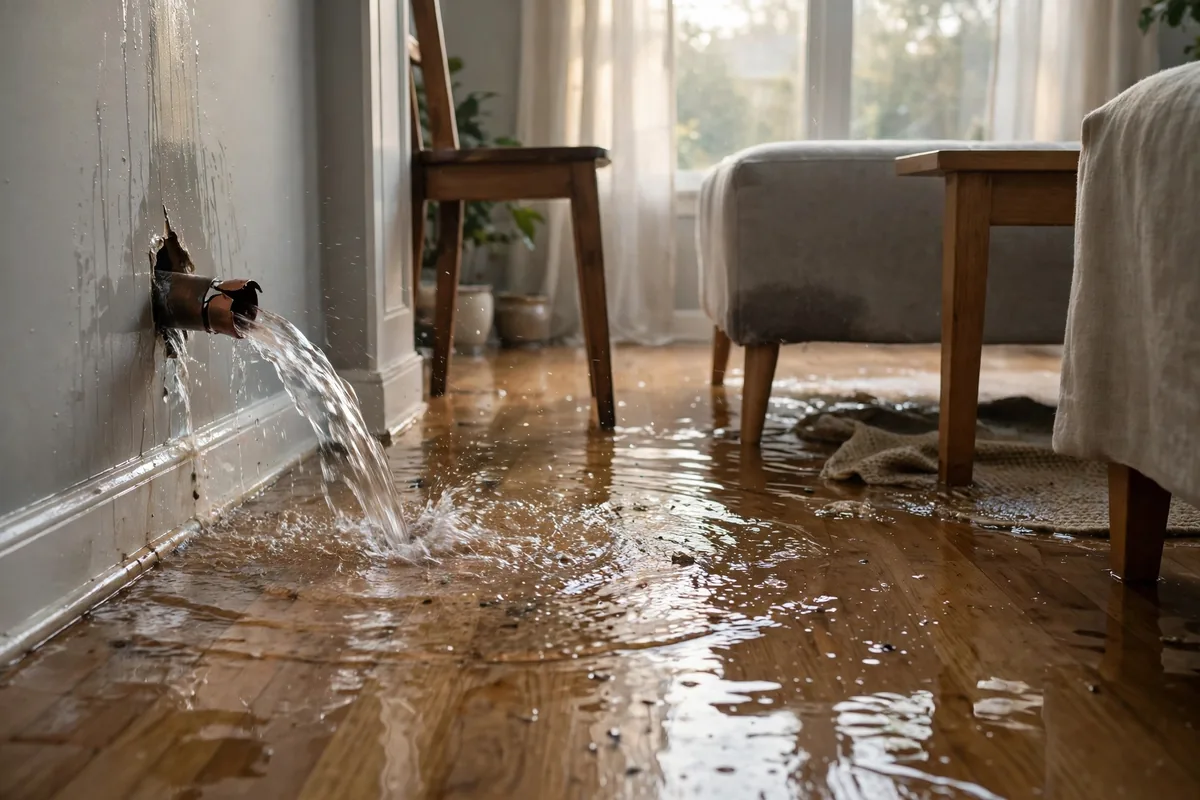
Arithmetic makes the case: a split attic line at full pressure can put a ceiling's worth of water into the rooms below in under an hour. Minute one is the shut-off. Minute two is the ceiling check — which rooms are wet from above, and is anyone still in them? Minute three is power to those rooms. Mopping ranks a distant fourth, and only where the ceiling overhead is sound.
The meter is your witness throughout: a dial still creeping after the house valve closes means the yard line is the loser, and the meter valve ends it. In Alvarado's subdivisions the meter box sits at the front verge — know yours before the freeze week, and the first minutes of your emergency get much cheaper.
How Is A Burst Pipe Repaired During An Emergency Visit?
Corner it, cut it out, prove the fix. Cornering is zoned pressure testing and listening gear, not exploratory holes: the system is split into sections until the one losing pressure stands alone. The repair is new pipe in place of the failed length — soldered, pressed or crimped to match the system — and for slab lines, a reroute overhead that ends the underground problem permanently.
Proof is a full-pressure hold with the work open, neighbouring joints inspected for the same stress, and water restored gradually while the pro watches the repair. If the same event wounded a second section, this is when it confesses. You should never learn about a second leak from a new stain next week.
Which Pipe Emergencies Happen Most Often In Alvarado?
They divide by era: the subdivisions freeze, the old core corrodes, and the clay works on everyone's buried lines.
Attic Splits At The Thaw
The signature Alvarado call: two or three nights in the twenties, then a morning stain spreading across a bedroom ceiling as the thaw releases a split attic line. The upstairs tap that ran dry was the warning; the ceiling is the announcement. Insulation and a drip plan prevent most of them.
Slab Lines Letting Go Quietly
No spray, no drama — a meter creeping, a floor warming over the hot run, baseboards wicking at one wall. Slab leaks flood slowly into the ground and the foundation, and by the time surface clues argue, the line has been pouring for days. Detection from above the floor finds them without demolition.
Old-Core Joint Failures
In the pre-1980 core — 33.1% of the town — galvanized and early copper joints reach the end of their corrosion budget, usually on a cold morning's pressure demand. The failure is sudden even though the cause took forty years. Sections this tired are replaced in length, not coupled and hoped for.
Yard Lines Worked Loose By Clay
Johnson County clay swells and shrinks with the seasons, flexing every buried joint it surrounds. The yard line that lets go at 11 P.M. has been loosening for years. It shows as a green strip, a soft verge and a meter that won't rest — and it is fixed by re-bedding, not just replacing.
If the street side is involved, the city water utility and, for road or flooding problems, the county emergency management office come into it — the city controls the main in the street, the county coordinates the wider response, and the pro handles everything from the meter into the house.
The water heater matters in almost every call: it gets isolated and checked, because a burst on the hot side drains the tank through the break, and a heater refilling against an open line can flood a Alvarado home long after the cold line is shut.
The first minutes follow a drill: the main shut-off valve gets closed, the water meter is checked to confirm the flow has stopped, breakers near standing water are left alone, and a moisture meter starts mapping how far the water has already travelled through Alvarado floors and walls.
Finding the split is instrument work, not guesswork: a thermal imaging camera traces the wet path behind drywall, an acoustic leak detection check follows the hiss along the run, and the crawl space, attic and basement all get inspected, because the visible stain is rarely where the pipe actually opened.