Safe steps for the wait, what the pro will do first, and how to protect the claim and the house.
What Should You Do While You Wait For The Pro?
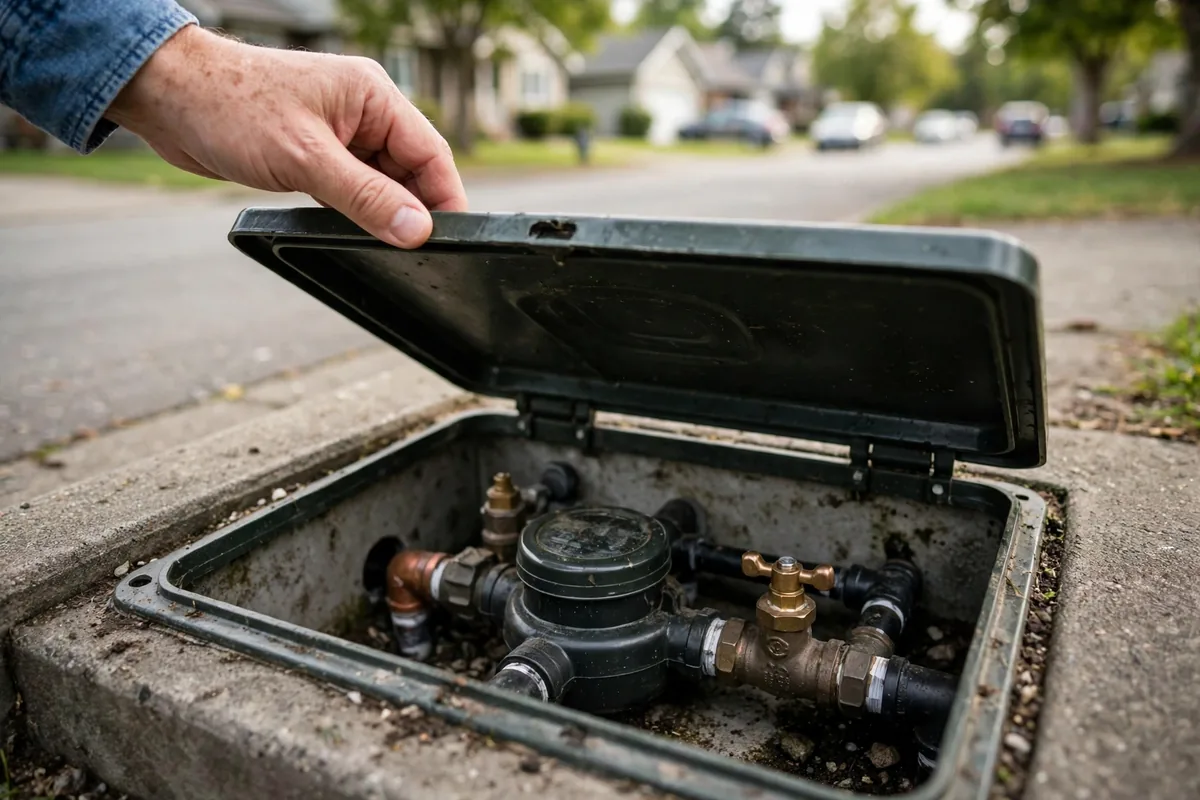
Work the property in a safe order. First, prove the shut-off worked: on a metered supply the dial should sit dead still; on a well, the pump should stay silent with a tap open. Second, walk the buildings — house, well house, barn — and note where water is and where it is heading, from doorways, never wading. Third, rescue what water ruins fastest: documents, photographs, feed, electronics, anything stored on a floor.
Then stop helping. Do not start cutting pipe, do not drain the pressure tank into a bucket brigade, and do not leave a space heater running against a frozen wall while you wait inside. Rural systems have quirks — shared lines, old repairs, valves that control unexpected zones — and the pro's first job is reading the system as it is. Your photographs and your timeline are the most valuable things you can hand over.
What Happens In The First Minutes After A Burst Pipe In Alleyton?
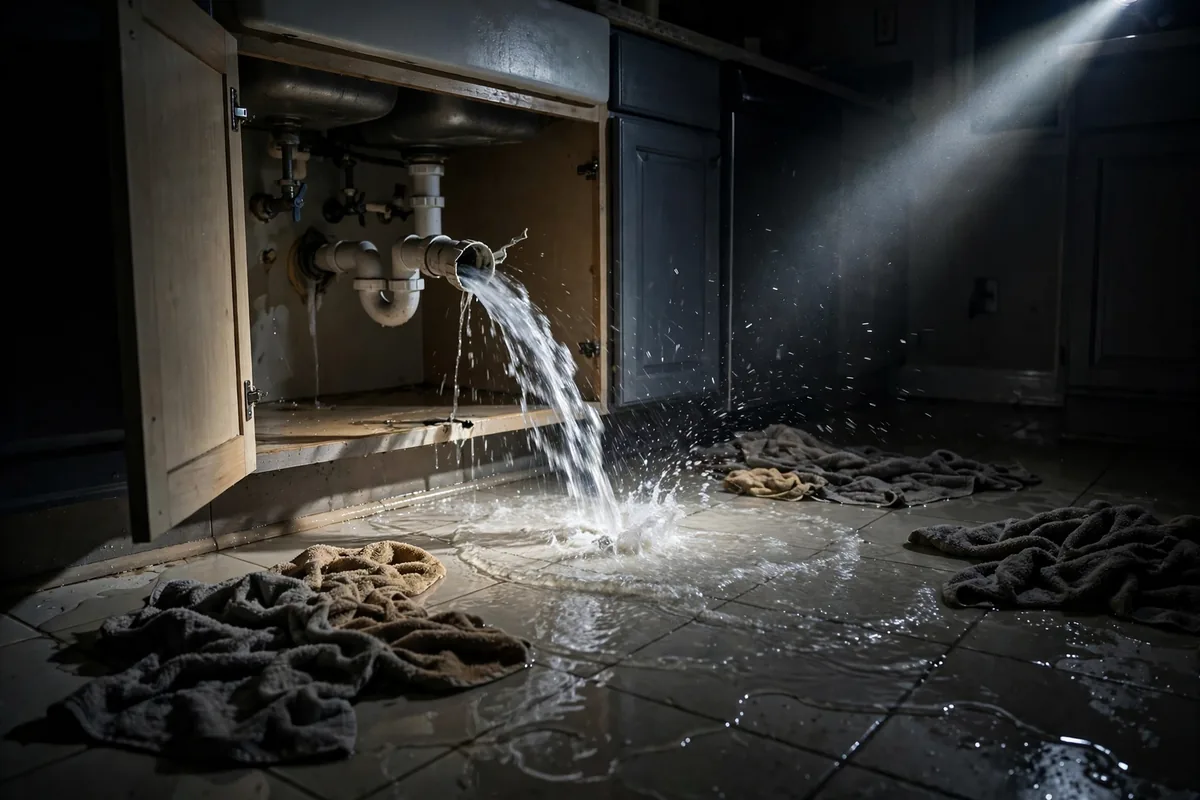
Flow is the emergency, everything else is consequence. A yard line at full pressure can move hundreds of gallons an hour into soil that hides it, and a well pump will happily empty itself through a break all night. So minute one belongs to the shut-off — house valve, meter or pump breaker — and minute two to the electrics in any building the water has reached.
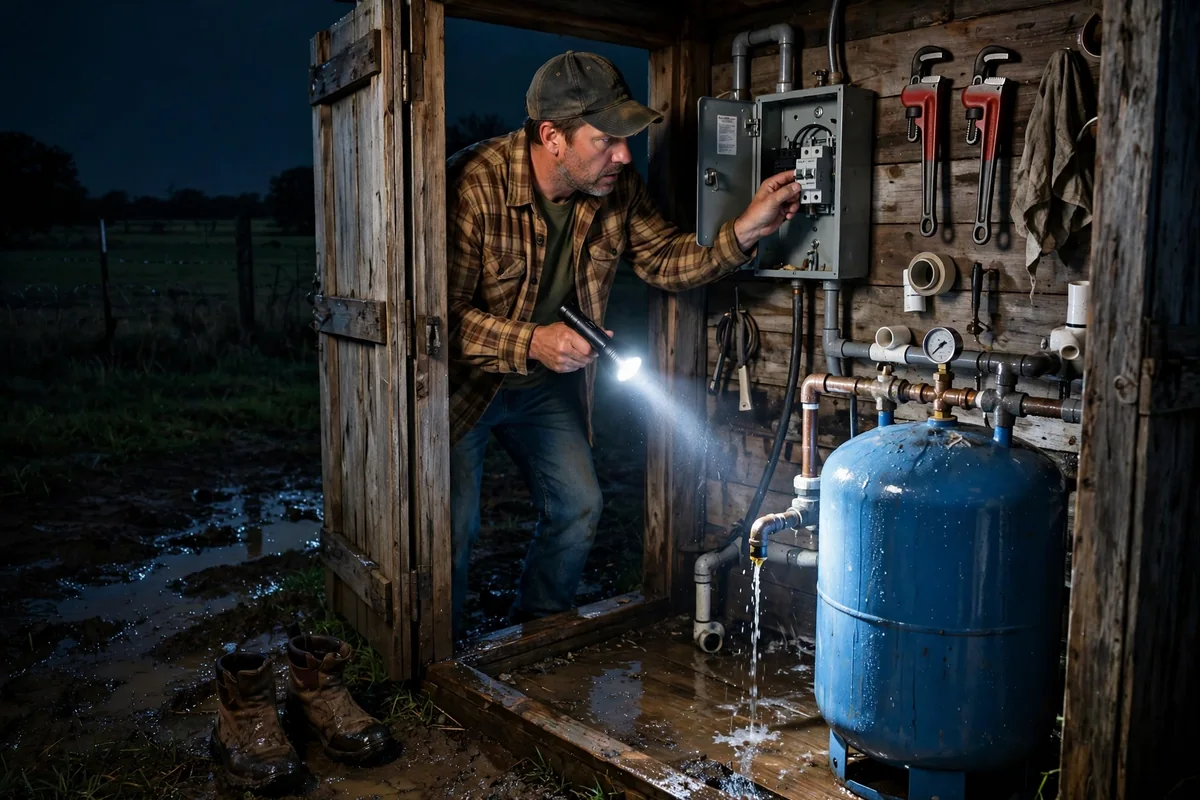
Power deserves its own word on a farm property. Well houses concentrate water and wiring in a few square feet, and raised-floor homes run cables where crawl-space water rises. If a building is wet and its breaker is not safely reachable from dry ground, leave it dark and entered-by-nobody until the pro arrives. Everything in a flooded outbuilding is replaceable except the person who wades in.
How Is A Burst Pipe Repaired During An Emergency Visit?
Find it, stop it, replace it, prove it. Finding is zoned testing, not guesswork: the pro separates house from yard line from well house and tests each until the losing section stands alone. The replacement is always new pipe — the split length, the failed joint, the corroded stretch comes out entirely — bedded properly underground, insulated where it runs exposed, and joined to suit the material either side.
Proof is the pressure test at the end: the system is brought back to full pressure and held, every new joint inspected, the meter or pump watched for the movement that would betray a second failure. Only then do trenches close and water stay on. You finish the visit knowing what failed, what it took, and which parts of an older rural system deserve watching next.
Which Pipe Emergencies Happen Most Often In Alleyton?
They follow the property, not the town: exposed lines, long runs and an older third of the housing stock, under a climate with 29.7 freeze days a year.
Yard Line Breaks Nobody Sees
The signature Alleyton emergency is invisible for hours: a buried line splits, the soil drinks the water, and the only witnesses are a spinning meter or a pump that cycles through the night. By discovery, the trench line is a bog. Fast shut-off and zoned testing turn what could be a excavation saga into one located dig and one replaced stretch.
Well House Freeze Splits
An unheated well house is the coldest plumbing space on the property, and its pipes, tank fittings and spigot lines freeze first in a hard snap. The split often shows at thaw as a flooded well house floor — inches from the pump electrics. Insulation, a sealed door and a heat source on a thermostat prevent most of these; tonight, power safety comes before everything.
Underfloor Lines In Raised Homes
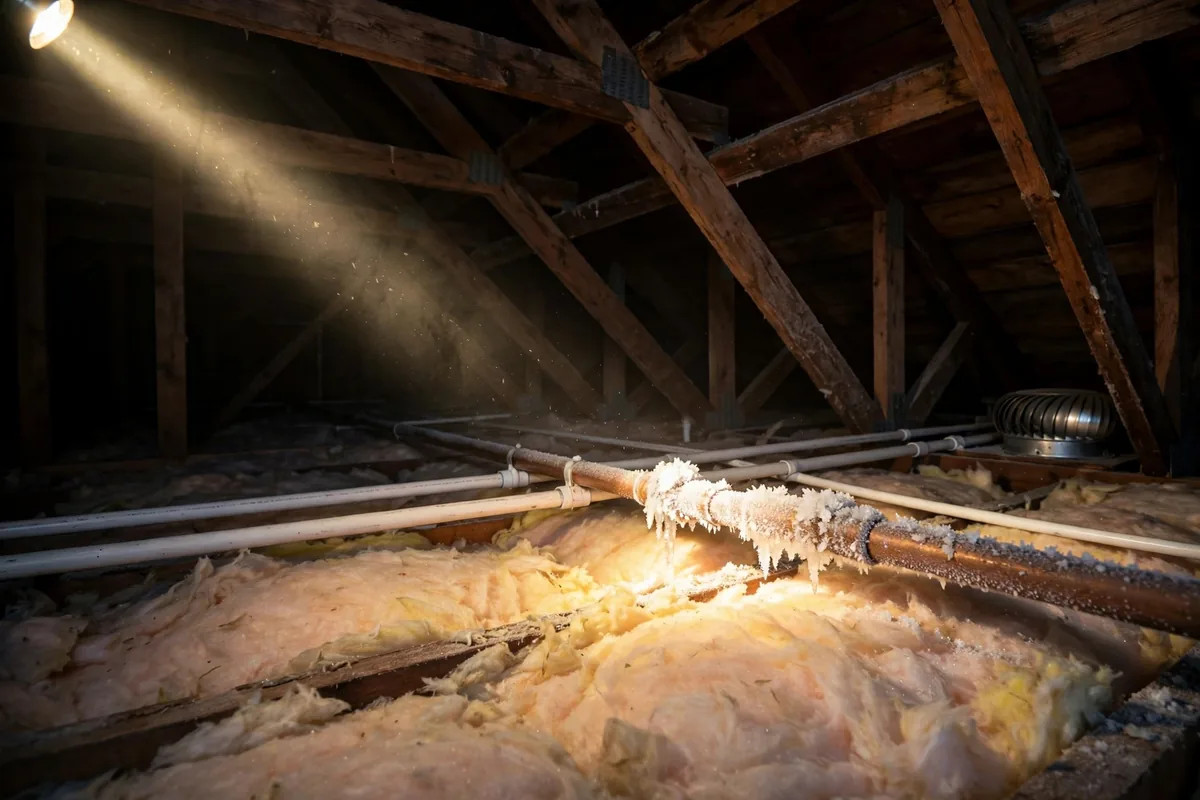
Older Alleyton homes raised on piers run their supply lines in the open air beneath the floor. Wind strips what little warmth the ground gives, ice forms, and the seam opens along the run — dripping into the crawl space where nobody looks until pressure fades or the ground below turns to mud. These are found by ears and meters, fixed by replacement and proper insulation.
Tired Galvanized In The Older Third
About 32.2% of homes in the 78935 ZIP area predate 1980, and their galvanized runs have thinned from inside for forty-plus years. The failure is rarely dramatic — a joint weeps, then goes, usually under the pressure spike of a pump cycle or a cold morning's demand. Sections this age argue for replacement in length, not one more coupling on tired metal.
If the street side is involved, the city water utility and, for road or flooding problems, the county emergency management office come into it — the city controls the main in the street, the county coordinates the wider response, and the pro handles everything from the meter into the house.
The water heater matters in almost every call: it gets isolated and checked, because a burst on the hot side drains the tank through the break, and a heater refilling against an open line can flood a Alleyton home long after the cold line is shut.
The first minutes follow a drill: the main shut-off valve gets closed, the water meter is checked to confirm the flow has stopped, breakers near standing water are left alone, and a moisture meter starts mapping how far the water has already travelled through Alleyton floors and walls.
Finding the split is instrument work, not guesswork: a thermal imaging camera traces the wet path behind drywall, an acoustic leak detection check follows the hiss along the run, and the crawl space, attic and basement all get inspected, because the visible stain is rarely where the pipe actually opened.