Safe steps for the wait, what the pro will do first, and how to protect the claim and the house.
What Should You Do While You Wait For The Pro?
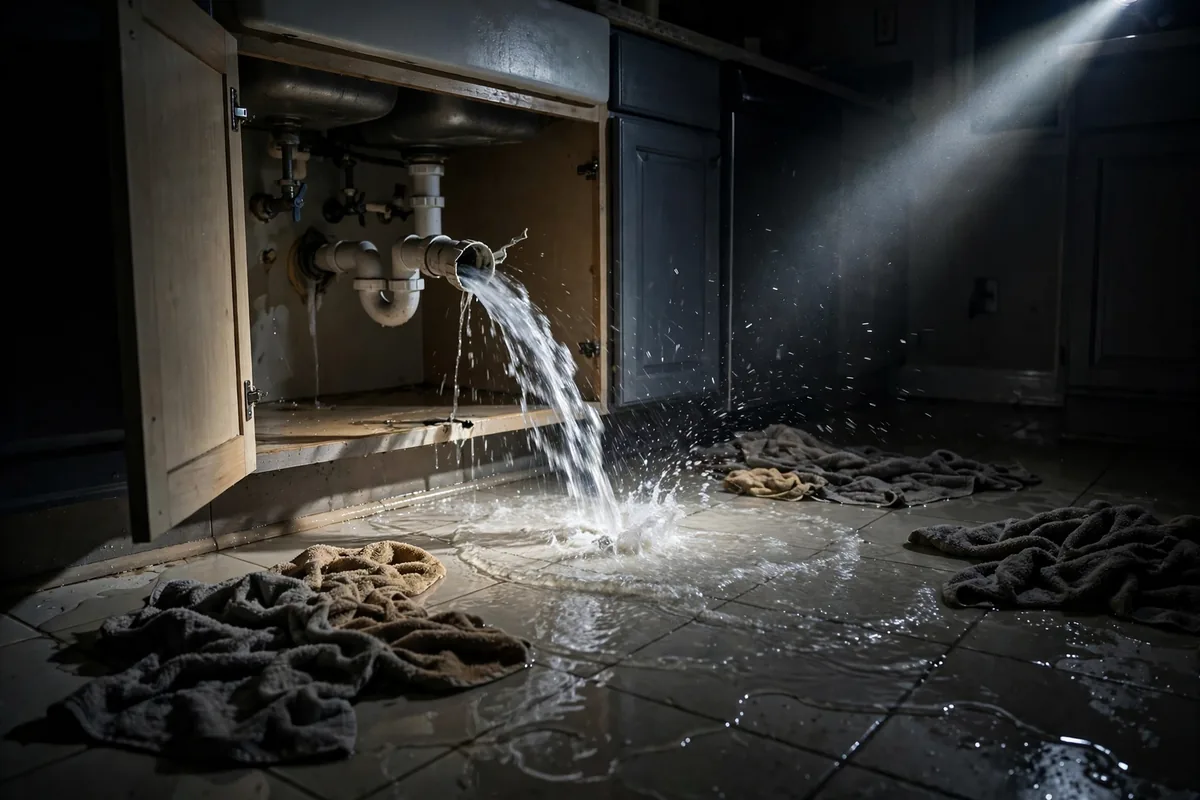
While you wait, do only what is safe. Confirm the main valve is fully closed, then look — from dry ground — at where the water actually is: through a ceiling, up through the floor, or spreading from a wall, because that tells the pro where to start. Stay out of water near outlets, the panel or the water heater, keep children and pets in a dry room, and warn any neighbour below or beside you. Move dry belongings out of rooms the water is heading for and photograph the damage as it develops. Do not poke a hole in a bulging ceiling; the pro will drain it in a controlled way.
What Does The Pro Do In The First Minutes On Site?
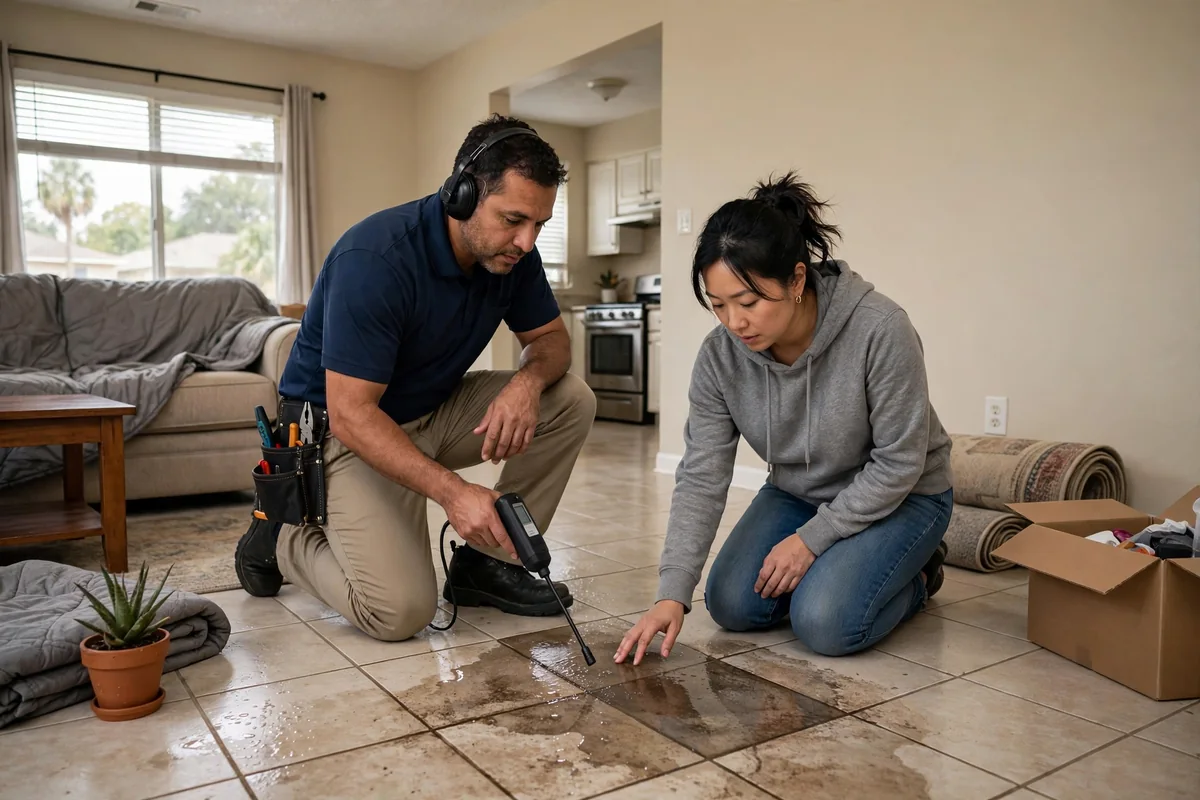
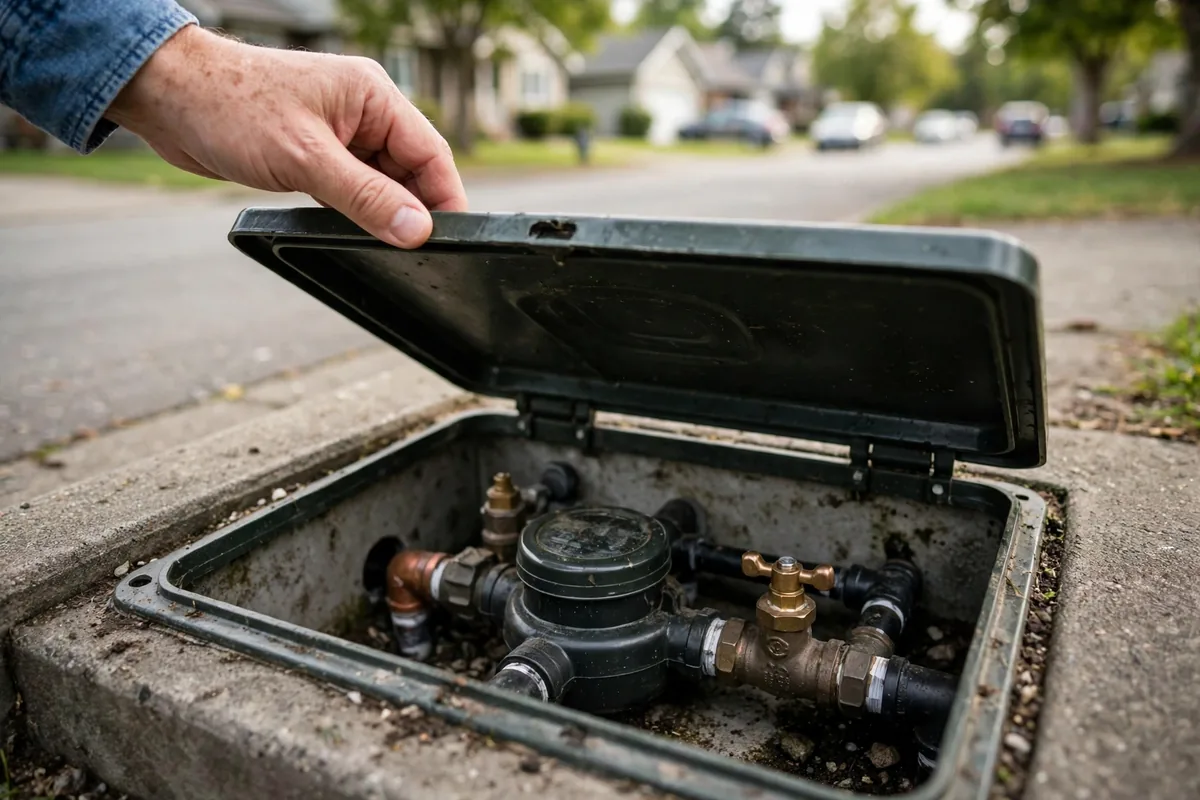
On arrival the pro confirms the shut-off at the meter: if it is still turning, water is still feeding the break, and the meter valve gets closed first. Then the search starts, with listening equipment and pressure tests following the evidence — a warm floor points down to the slab, a ceiling stain points up to the attic, a shared-wall stain points sideways. In Alief's slab subdivisions that first direction decision is most of the battle. Once the break is found, you hear plainly what failed, what the repair involves and what affects the cost, before anything is opened.
How Is The Burst Repaired During An Emergency Visit?
The repair itself is a section replacement, not a surface patch: the damaged length is cut out and new pipe fitted in its place. Under a slab, the pro may reroute the run overhead instead of opening the floor, where the house layout allows it — often the better permanent answer. A clamp or putty can slow a spray while work is set up, but neither is the finished fix. After the new section is in, the line is pressure-tested, neighbouring joints are checked, and water is restored slowly while the repair is watched. Only when the line holds at full pressure is the job treated as done.
Which Burst Pipe Emergencies Happen Most In Alief?
Alief's emergencies follow its layout: under the slab, over the ceiling, and through shared walls.
What Does A Slab Leak Emergency Look Like?
It looks deceptively calm: a warm or damp patch of floor, water wicking up at baseboards, a meter moving in a quiet house. Under the surface the line is pouring into the soil and saturating the slab's base. It is an emergency of accumulation rather than drama — every hour adds to the floor and mould bill.
What Happens When An Attic Line Lets Go?
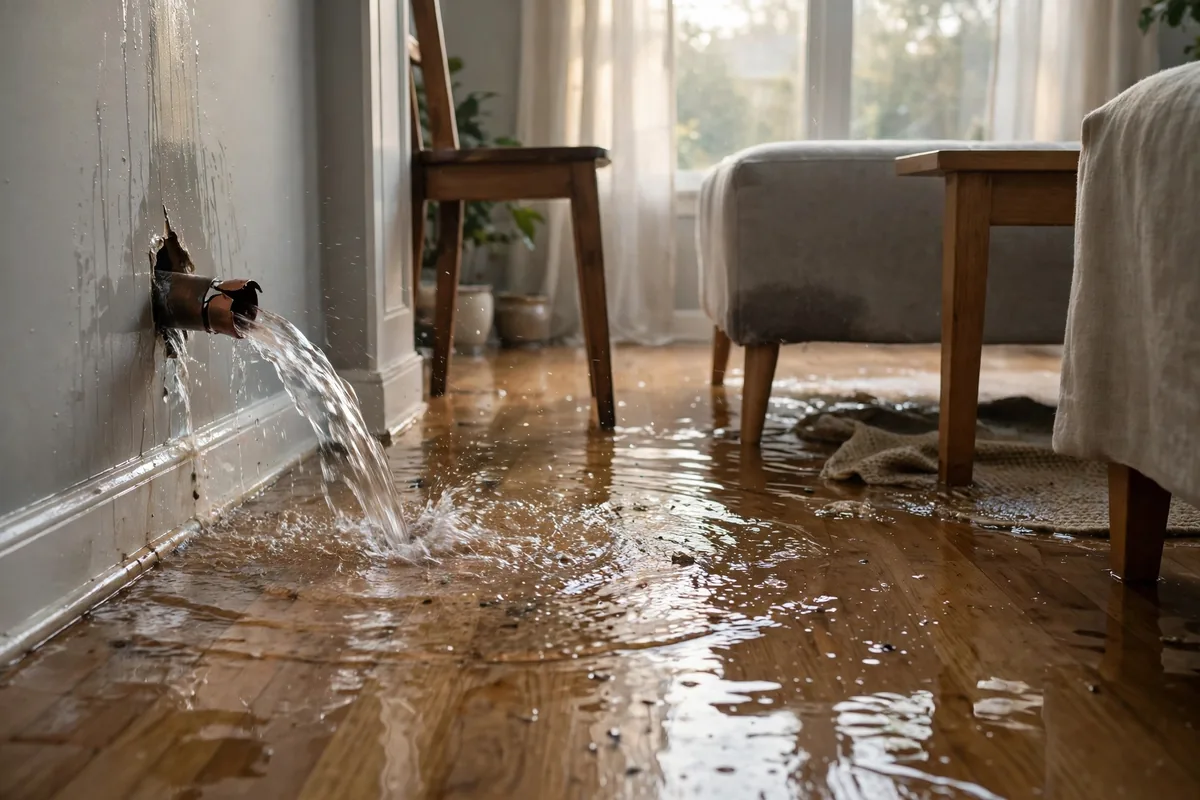
An attic split pours straight through the ceiling below it, taking drywall, insulation and anything under the drip line with it. The first sign is a stain, a dripping light fitting, or the ceiling starting to sag. These are Alief's fastest-moving emergencies, and the February 2021 freeze produced them by the thousand across Houston.
What Happens When A Shared Wall Leaks In A Townhome?
A burst in a shared wall often announces itself in the wrong home: your neighbour's stain is your pipe. Water moves sideways through the wall cavity and down both sides, so both units need checking even when only one has the break. The pro will coordinate access with both households to fix it once, properly.
What Does A Service Line Break Do To The Whole Home?
A service line break cuts pressure to every tap at once and floods the flat yard along the buried run. The supply is shut down at the meter, the failed stretch is dug out and replaced, and pressure is restored only after the new line holds under test — with the meter watched to prove the system is tight again.
The first minutes follow a drill: the main shut-off valve gets closed, the water meter is checked to confirm the flow has stopped, breakers near standing water are left alone, and a moisture meter starts mapping how far the water has already travelled through Alief floors and walls.
Finding the split is instrument work, not guesswork: a thermal imaging camera traces the wet path behind drywall, an acoustic leak detection check follows the hiss along the run, and the crawl space, attic and basement all get inspected, because the visible stain is rarely where the pipe actually opened.
Drying starts the same hour: water extraction pulls the standing water out, structural drying equipment goes in before mould can organise, and any section of drywall or flooring that traps moisture against an exterior wall is opened up to dry.