Safe steps for the wait, what the pro will do first, and how to protect the claim and the house.
What Should You Do While You Wait For The Pro?
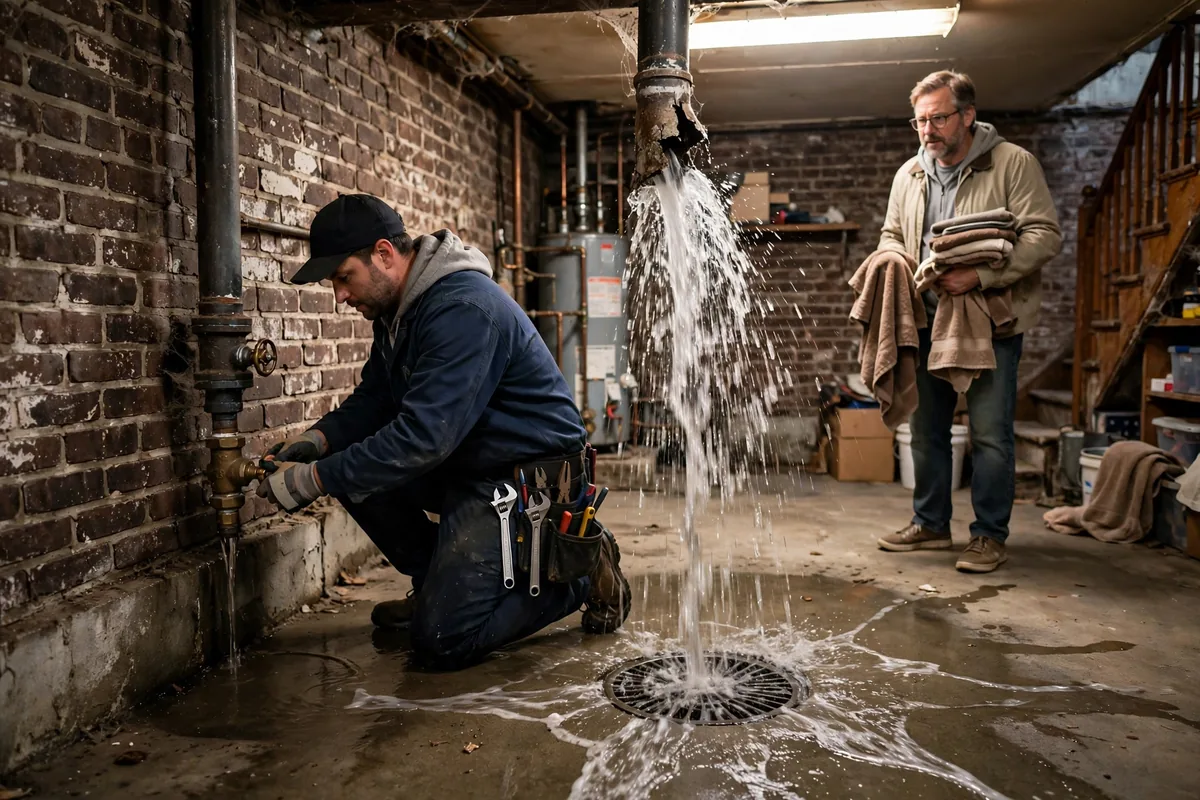
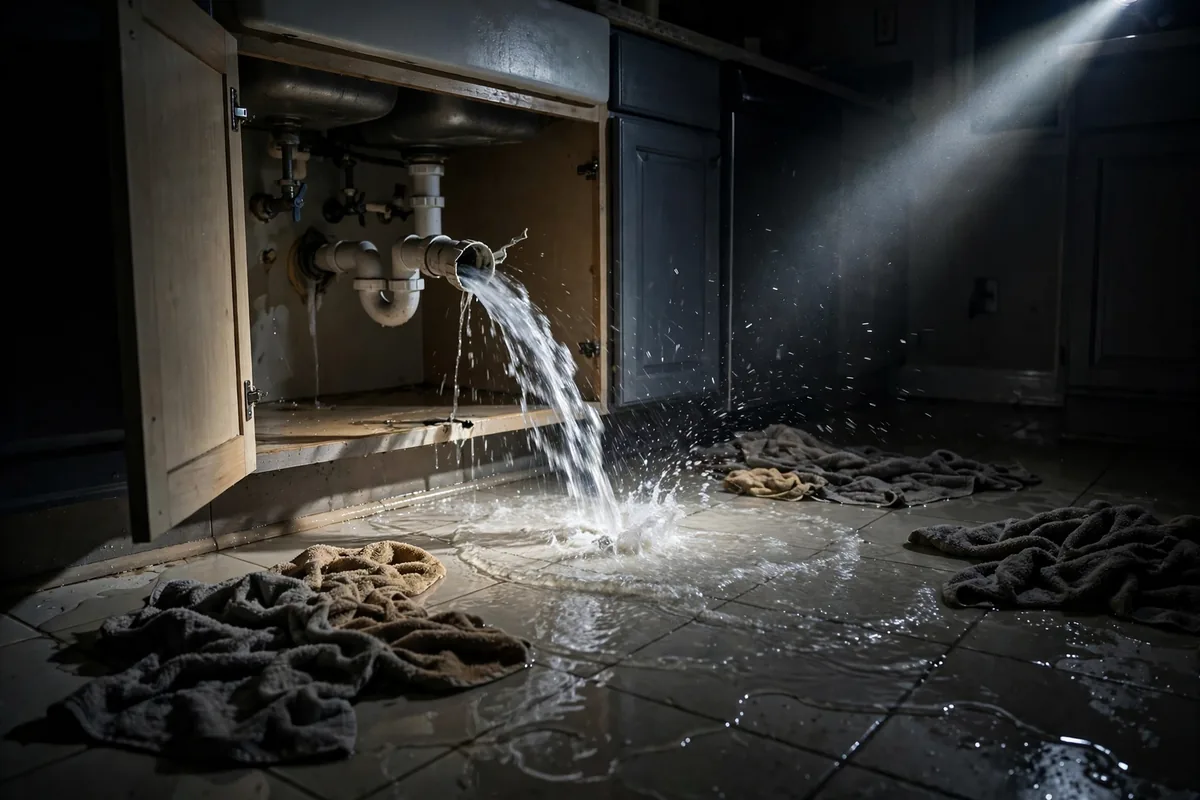
Your tasks while help travels are small and specific. Keep the main valve closed and faucets open so the system drains. Where the floor under your feet is dry, move belongings out of the wet rooms, working from the doorway inward, and put containers under active drips unless the ceiling is bulging — that room is then left alone entirely. Photograph the damage room by room. Settle children and pets somewhere dry, unlock the entry, and keep a flashlight handy if lights are off in the wet area. Anything involving cutting, heating frozen pipe or touching the breaker waits for the pro.
What Does The Pro Do In The First Minutes On Site?
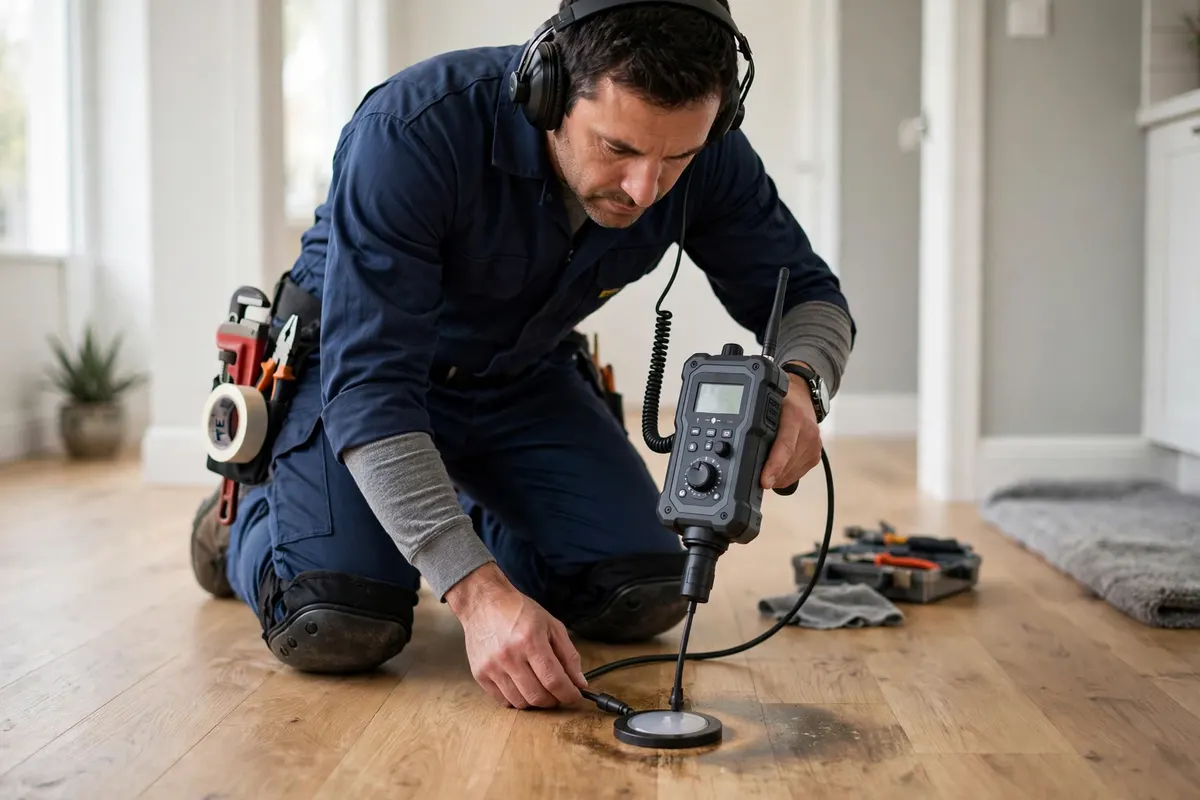
There is a discipline to the first minutes, and it starts with stillness at the meter: no dial movement, no argument about whether water is off. Next comes mapping — a moisture meter swept room by room, the wettest areas first, listening equipment along the pipe runs until the escape point gives itself up. Then a conversation, not a surprise: what burst, what comes out, what goes in, and what affects the price. The saw comes out after that conversation, never before.
How Is The Burst Repaired During An Emergency Visit?
The repair itself swaps old for new. Once the opening is made, the failed stretch is cut clear of both joints and a fresh section is fitted — crimped or pressed on plastic runs, soldered on copper. A pipe repair clamp or epoxy putty may calm a spray while the work is staged, but nothing temporary stays in the wall. Then proof: a pressure test at full load, eyes on every new joint, neighbours checked for the same wear pattern. Supply is restored tap by tap, and the repair is only called finished when the whole line holds quietly at pressure.
Which Burst Pipe Emergencies Happen Most In Belleville?
Ask a local pro to rank the emergencies and the same four come back every time. In Belleville they trace back to the same roots: long freeze seasons and a housing stock built for another era of plumbing.
What Does A Freeze Split Look Like?
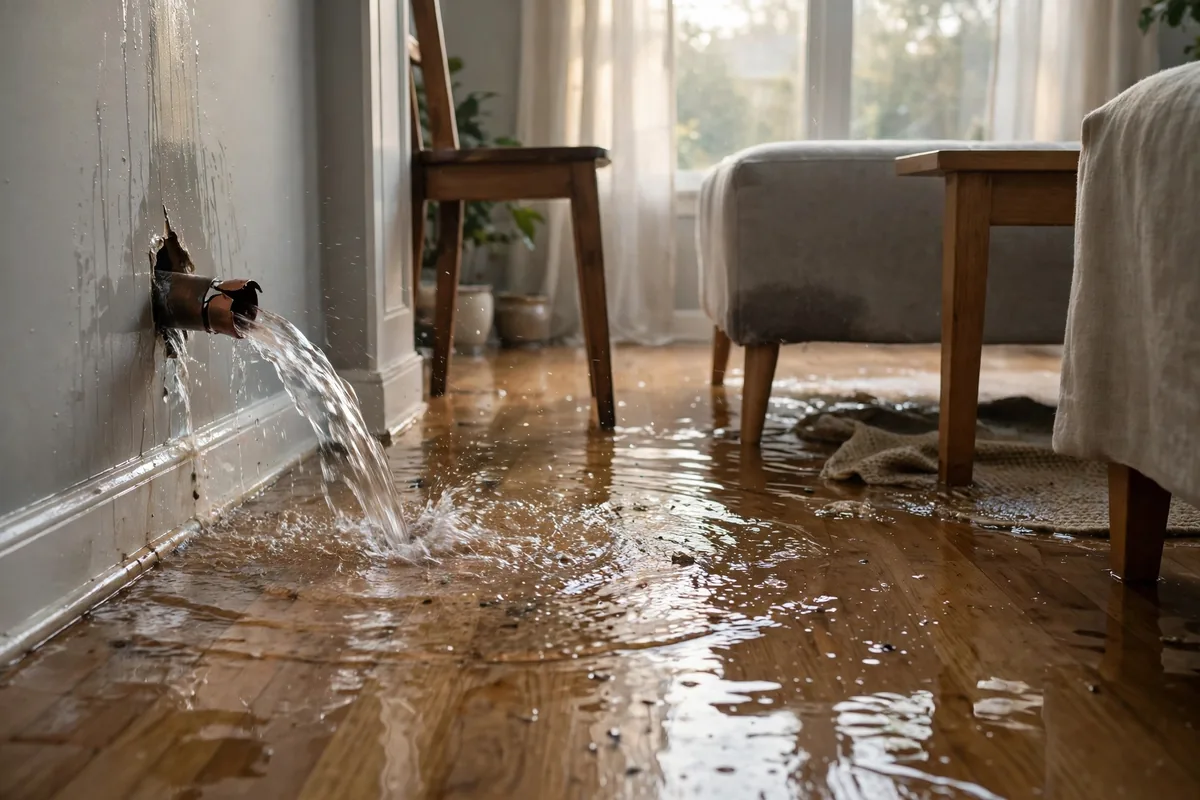
Look for a seam-like opening along the pipe rather than a round hole: expanding ice splits the wall lengthwise. The same ice can cork the damage for hours or days, so the emergency frequently starts at the thaw, with water suddenly pouring from a line that seemed fine at breakfast.
How Does A Corrosion Failure Present?
It usually gives quiet warnings first: a pinhole that weeps, green or rust-coloured staining on the pipe, a damp patch that returns after wiping. The emergency arrives when the thinned wall finally opens under ordinary pressure and the weep becomes a spray with no off switch but the main valve.
What Happens When A Line Bursts Under The Floor?
You will not see this break; you will hear and feel it. Floors turn warm or spongy, water edges out where wall meets floor, and the house hums faintly with running water nobody is using. Because the pipe is buried, detection does the travelling — acoustic leak detection and a moisture meter first, floor opened only above the failure, repair and test after.
What Does A Water Line Break Do To The Whole Home?
One pipe feeds every tap in the house, so when the main line goes, everything goes — pressure everywhere at once, while the break pours water into soil or across the drive. The repair runs outside-in: meter valve closed, excavation at the located break, new section fitted, line tested, then the house drinks again.
The first minutes follow a drill: the main shut-off valve gets closed, the water meter is checked to confirm the flow has stopped, breakers near standing water are left alone, and a moisture meter starts mapping how far the water has already travelled through Belleville floors and walls.
Finding the split is instrument work, not guesswork: a thermal imaging camera traces the wet path behind drywall, an acoustic leak detection check follows the hiss along the run, and the crawl space, attic and basement all get inspected, because the visible stain is rarely where the pipe actually opened.
Drying starts the same hour: water extraction pulls the standing water out, structural drying equipment goes in before mould can organise, and any section of drywall or flooring that traps moisture against an exterior wall is opened up to dry.