Leak Detection
How Pros Find A Hidden Burst Pipe (Acoustic, Thermal, Pressure Tests)
Not sure how leak detection works or what it involves exactly? One free call connects you with a local pro who can arrive in 30–60 minutes. Call now.

Answered 24/7 · Free To Call · No Obligation
Free Call · Answered 24/7 · Local Pros Near You
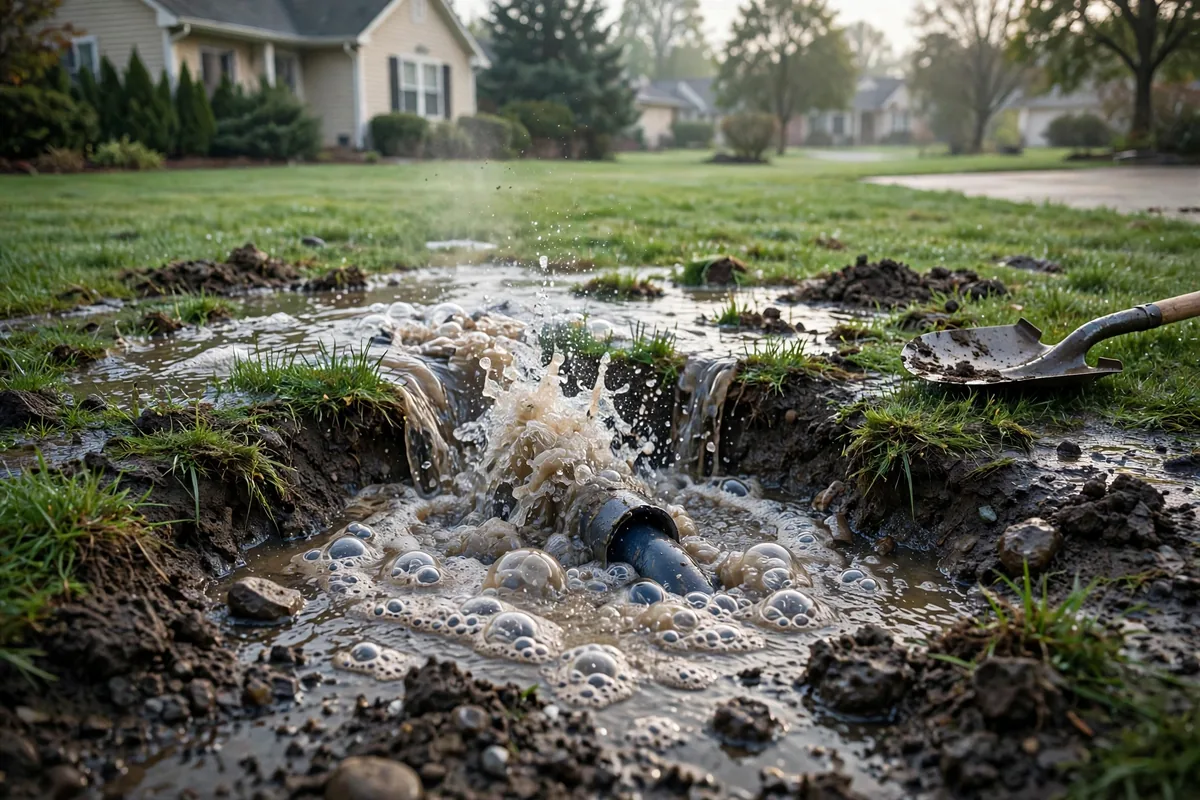
A main water line burst happens on the buried pipe between the street meter and your house. The homeowner's side of the meter is almost always the homeowner's pipe — and the homeowner's repair — while the street side belongs to the city water utility. Signs are a suddenly soggy yard, pressure lost across the whole house, and a meter that never stops; main water line replacement is the fix when the line itself has failed, not just one joint.
The main water line is the one pipe in your home you cannot see, cannot reach, and cannot live without: a single buried run from the street meter to the house. When it bursts, it fails in the ground — quietly undermining a yard, loudly draining your pressure, and raising the one question every homeowner asks first: whose pipe is this, anyway?
For most homes, the dividing point is the water meter (or the property-side shut-off near it). The utility owns and maintains the street main and the line up to the meter; everything from the meter to your house — the run under your yard — is yours to repair and replace. Exact boundaries vary by city, so the utility is the authority for your address, but the meter rule settles most cases.
That is why a burst in the yard is usually a homeowner project while a burst in the street is a utility emergency call. Homeowners in Austin, TX and everywhere else we serve should make two calls for a suspected main line burst: the utility, to rule out their side and sometimes to shut the meter off, and a pro for your side. Neither call is wasted; each rules out half the map.
The classic signs are a patch of yard that stays wet in dry weather, water bubbling or pooling at the surface, a strip of lawn that is suddenly greener than everything around it, and pressure down across the whole house at once. Inside, the meter test speaks plainly: with every fixture off, a meter that keeps moving means water is escaping — and if no indoor leak shows itself, the buried line is the prime suspect.
Sometimes the first sign is financial: a water bill several times its normal size with no change in the household. In Aurora, IL, a main line leak can run for weeks under a frozen or snow-covered yard before the surface betrays it, which is why the meter check belongs in every unexplained-bill investigation.
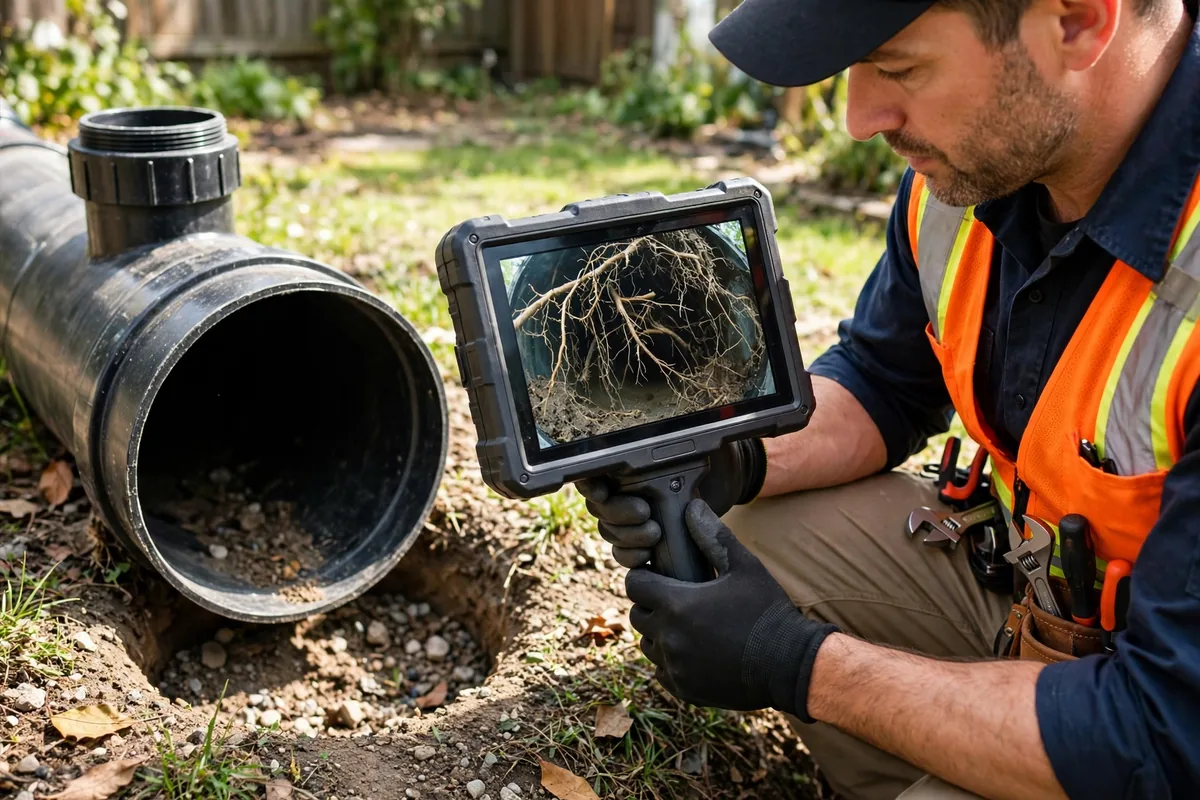
Tree roots do not crush healthy pipe from outside; they infiltrate. A root hair finds a joint or a hairline crack — drawn by the moisture and nutrients leaking there — and thickens year by year inside the pipe, prying the joint wider and cracking the wall further until the line fails under pressure. Clay and older jointed lines are the most vulnerable; the tree is just exploiting an opening that was already there.
A pipe camera inspection is how the pro proves it: the camera travels the line and shows roots, cracks and offsets directly, turning suspicion into a located, photographed fault. In Athens, OH, with mature street trees and 60.5% of homes built before 1980 (US Census Bureau ACS 2024), root findings are a routine part of main line diagnosis — and the reason replacement, not just root cutting, is often the honest fix for a burst line.
Roots are opportunists, not vandals: they find the crack that is already leaking. Fix only the root and the crack invites the next one.
Water Moving Where It Shouldn't?
One free call connects you with a local pro who can arrive in 30–60 minutes and find the burst without tearing the house apart first.
Call (800) 555-0100Shut the water off at the meter-side valve if you can do it safely, or call the utility to shut the meter — a burst main loses enormous volumes and can undermine soil around the line. Keep people and vehicles off the saturated patch of yard, since washed-out soil can settle suddenly. Photograph the scene, note when the bill or pressure first changed, and note the meter reading.
Then line up the repair. A burst main is not a watch-and-wait problem: the escaping water erodes the trench, can reach foundations, and runs your bill up by the hour. If the damage is on your side, a pro can arrive in 30–60 minutes to confirm the location and start the replacement plan.
A single accessible failure in an otherwise sound line can be repaired by excavating that spot and replacing the damaged section. But main lines usually earn full replacement when they burst: the line is one age, one material, and one burial environment from end to end, so a second failure is a matter of time. Main water line replacement runs a new line from meter to house — modern PEX pipe or PVC pipe for the buried run — by open trench, or by trenchless pulling where ground and layout allow. A single-spot repair, by contrast, is a section replacement at the break. Either way, the line is pressure-tested before the surface is restored.
The pro should walk you through which pattern your line shows: isolated damage (a rock point, a single bad joint) versus systemic age (corrosion along the run, root-filled joints). That distinction, backed by the camera footage, is the whole decision. Homeowners across Ohio can compare that logic with the state sources listed below.
Three clues: location, meter behaviour, and the utility's own check. If water surfaces in your yard between meter and house, it is almost certainly your line. If the meter spins with your house valve shut, the loss is between the meter and the house — still your side. The utility can test their side at the meter and will tell you plainly if the break is theirs; a burst in the street or before the meter is theirs, and typically comes with a crew, not a quote.
When in doubt, make both calls and let each party rule out their half. What you should not do is dig on a guess — buried lines share trenches with other services, and excavation is the pro's stage of the job, after the fault is located and the responsibilities are settled.
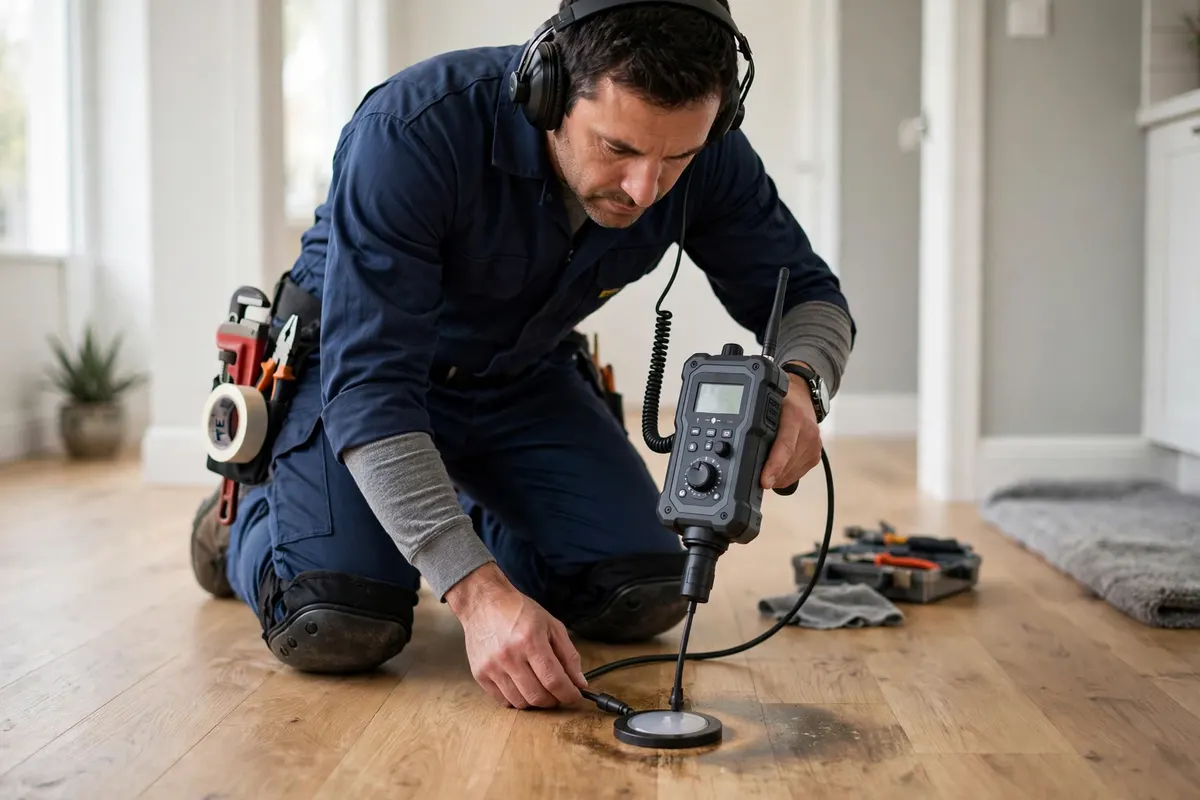
Finding the split is a kit job: an acoustic leak detection check along the run, a thermal imaging camera for the wet path behind drywall, a moisture meter to map how far the water travelled, and a pipe camera inspection where the line runs under the slab.
More straight answers about finding hidden bursts and what happens after you find one.
Still Have Questions? Call Free
A real person answers, day or night, and connects you with a local pro who can check the problem in person.
(800) 555-0100The meter is the usual dividing line: the utility covers the street main and the service line up to the meter; the run from the meter to your house is the homeowner's. Cities vary, and some utilities run programs for their side only. Your utility can confirm the boundary for your address in one call — make it early, because it decides who digs and who pays.
Yes — a burst or badly leaking main runs at full line pressure around the clock, so a month of it can multiply a bill several times over. Many utilities offer a one-time leak adjustment if you document the repair, so keep the invoice and dated photos. The faster the line is shut off and repaired, the smaller that conversation — another reason the meter test matters.
They combine acoustic leak detection — listening for the escape's sound peak along the line's route — with pressure testing and, where roots or pipe condition are in question, a pipe camera inspection. The fault gets located and characterised first; excavation then happens once, at the right spot. Random digging along the route is the most expensive way to search, and good pros avoid it.
Often, yes. Where the route is fairly straight and the ground allows, a new line can be pulled through or alongside the old path with small access pits instead of a full trench, which saves lawns, drives and landscaping from open excavation. Not every soil, route or connection suits it, so the pro assesses after locating the line — but it is a mainstream option worth asking about.
Corrosion of older metal lines, ground movement and shifting soil stressing joints, freeze pressure in shallow northern lines, and pressure spikes from a failing pressure regulator all make the list. Age binds them: a line that has served for decades has usually collected more than one of these stresses. The camera inspection and the excavated section together tell the pro which cause fits your line.
The indoor main shut-off valve stops water entering the house, but a burst between the meter and that valve keeps leaking with the indoor valve closed — the break is upstream of it. For a yard burst, the meter-side shut-off (or the utility closing the meter) is the one that stops the loss. Know both locations before you need them; they solve different problems.
A straightforward residential replacement is often a one-day job once excavation or trenchless work begins, with water restored the same day or the next. Rock, deep lines, long runs, difficult routes under drives, and permit or inspection steps can stretch it. The pro's written plan should separate the plumbing time from surface restoration like lawn and concrete repair.
A long-running leak can: constant water softens and erodes soil, and on expansive clay it keeps one zone swollen while others dry, stressing concrete slab foundations and footings unevenly. Short, quickly repaired leaks rarely cause structural harm. The risk grows with duration, which is why a soggy yard patch or a spinning meter deserves a same-week response rather than a season of watching.
Policies commonly address the sudden water damage a burst causes inside the home, while the buried line's repair itself is often treated differently — sometimes excluded, sometimes helped by specific endorsements. The details live in your own policy wording, and your state department of insurance publishes plain-language guidance. Document everything, call your insurer early, and keep the pro's written findings about where the line failed.
Reviewed By Hamza
Lead Plumbing & Emergency Pipe Repair Specialist
Hamza is a certified plumbing and pipe restoration specialist with extensive field experience diagnosing sub-zero pipe splits, thermal stress fractures, and slab leaks across harsh winter climates. He specializes in non-destructive leak localization, copper-to-PEX conversions, and preventative freeze-proofing to safeguard residential and commercial plumbing systems against catastrophic water loss.
Updated October 30, 2026
Soggy yard, falling pressure, a meter that will not rest? One free call connects you with a local pro who can locate the break, confirm which side of the meter it is on, and price the repair or replacement in writing.
Free Call · Answered 24/7 · Local Pros Near You
Not sure how leak detection works or what it involves exactly? One free call connects you with a local pro who can arrive in 30–60 minutes. Call now.
Questions on what happens when a pipe bursts under your house? One free call connects you with a local pro who can arrive in 30–60 minutes. Call now.