Leak Detection
How Pros Find A Hidden Burst Pipe (Acoustic, Thermal, Pressure Tests)
Not sure how leak detection works or what it involves exactly? One free call connects you with a local pro who can arrive in 30–60 minutes. Call now.

Answered 24/7 · Free To Call · No Obligation
Free Call · Answered 24/7 · Local Pros Near You
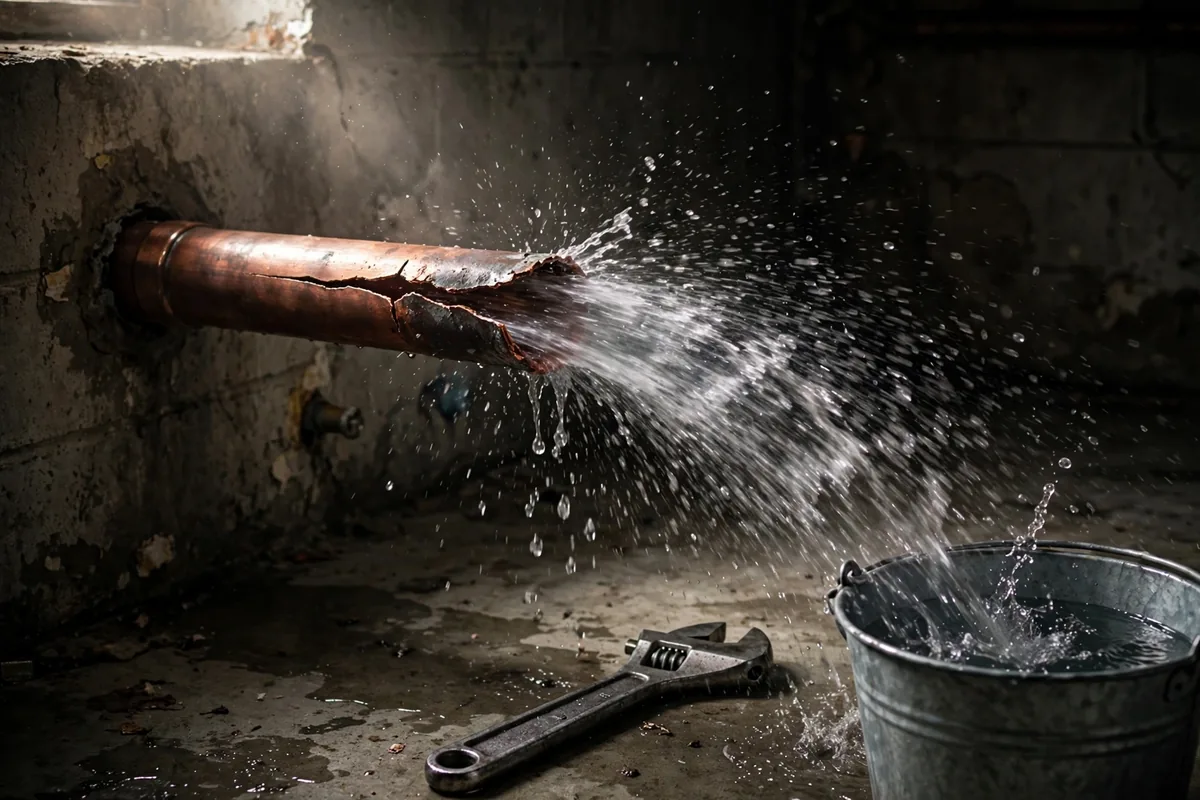
What causes a burst pipe in summer is not cold — it is force and decay. Municipal pressure runs higher when demand patterns shift, worn pressure regulators let that force into the house, water hammer slams valves shut hundreds of times a week, corrosion finishes thinning walls it started years ago, roots invade outdoor lines, and heat expands water in sealed sections. Winter bursts freeze; summer bursts are pushed, hammered and rotted through.
Ask a plumber about burst season and you will hear about January. Ask about the bursts that puzzle homeowners, and summer comes up — pipes that split in July with no freeze anywhere in the story. The mechanisms are different and worth knowing, because the prevention is different too: summer bursts are about force, chemistry and growth, and most of them announce themselves in advance if you know the sounds and signs.
Your home's pressure is whatever the street gives it, moderated by your regulator if you have one. Street pressure fluctuates with neighbourhood demand — and summer demand, with irrigation and cooling, follows daily patterns that can push pressure up in the quiet hours when everyone sleeps and no one is drawing water. A pressure-reducing valve that is aging or stuck then admits more than the pipes were promised. Sustained high pressure does not usually split a healthy pipe overnight; it stresses every weak point at once and shortens every remaining lifespan.
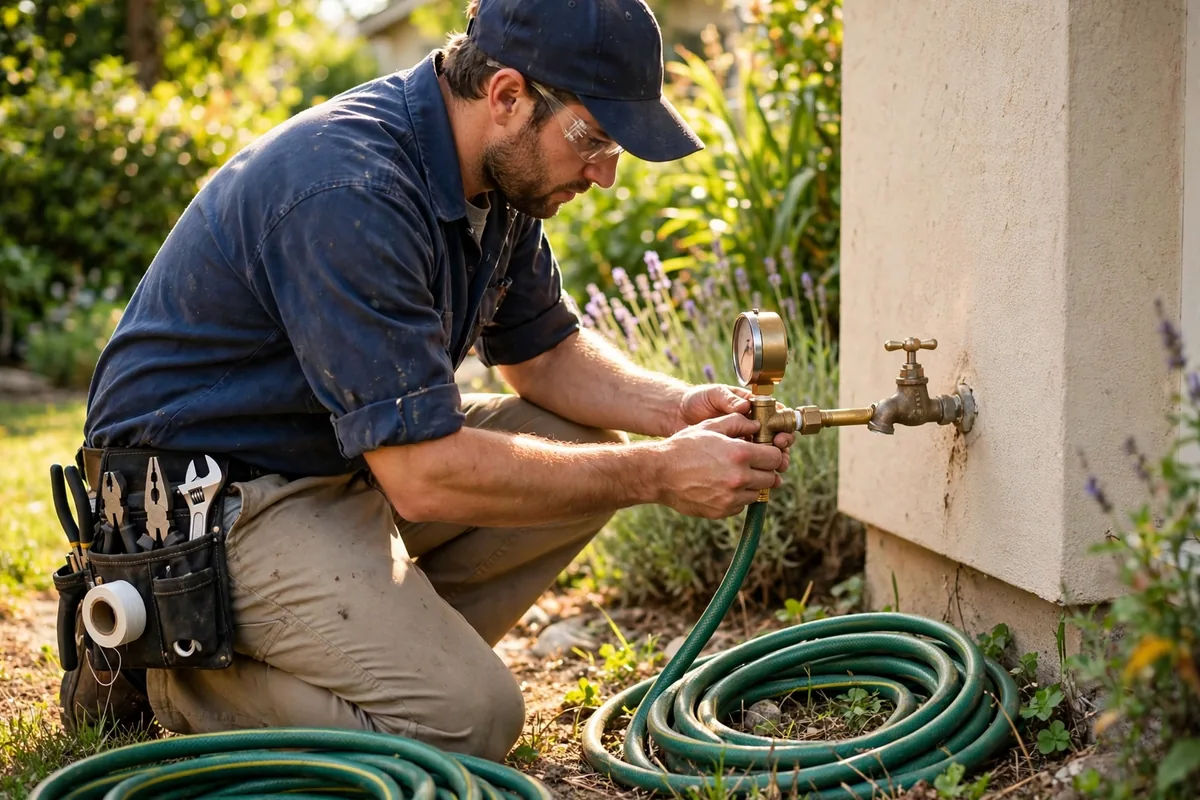
The check is simple: a gauge on the hose bib / outdoor spigot, read in the early morning. Static pressure persistently high is a regulator conversation, had on a calm day for calm money. Homes across Austin, TX — where only 11.9 freeze days a year (NOAA 1991–2020) make winter a minor character — have their pipe failures written mostly by this summer cast instead; it is the defining pipe risk across Texas.
Water hammer is the bang when a fast-closing valve — a washing machine solenoid, a dishwasher, a quick quarter-turn tap — stops moving water dead, and the pressure wave slams back through the line. Once is noise; thousands of repetitions are fatigue, loosening joints and stressing the same elbows and fittings until one gives. Summer raises the count: laundry multiplies, irrigation timers cycle, guests double the household's valve operations.
The remedies are mechanical: water hammer arrestors at the offending appliances, pressure kept in the healthy band, and loose pipes re-secured so they cannot bang themselves against framing. A house that has started to thud is sending a maintenance memo. In Arlington, TX, the fix is inexpensive on a Tuesday and irrelevant at the moment the tired joint finally lets go — which is the entire argument for listening to your pipes.
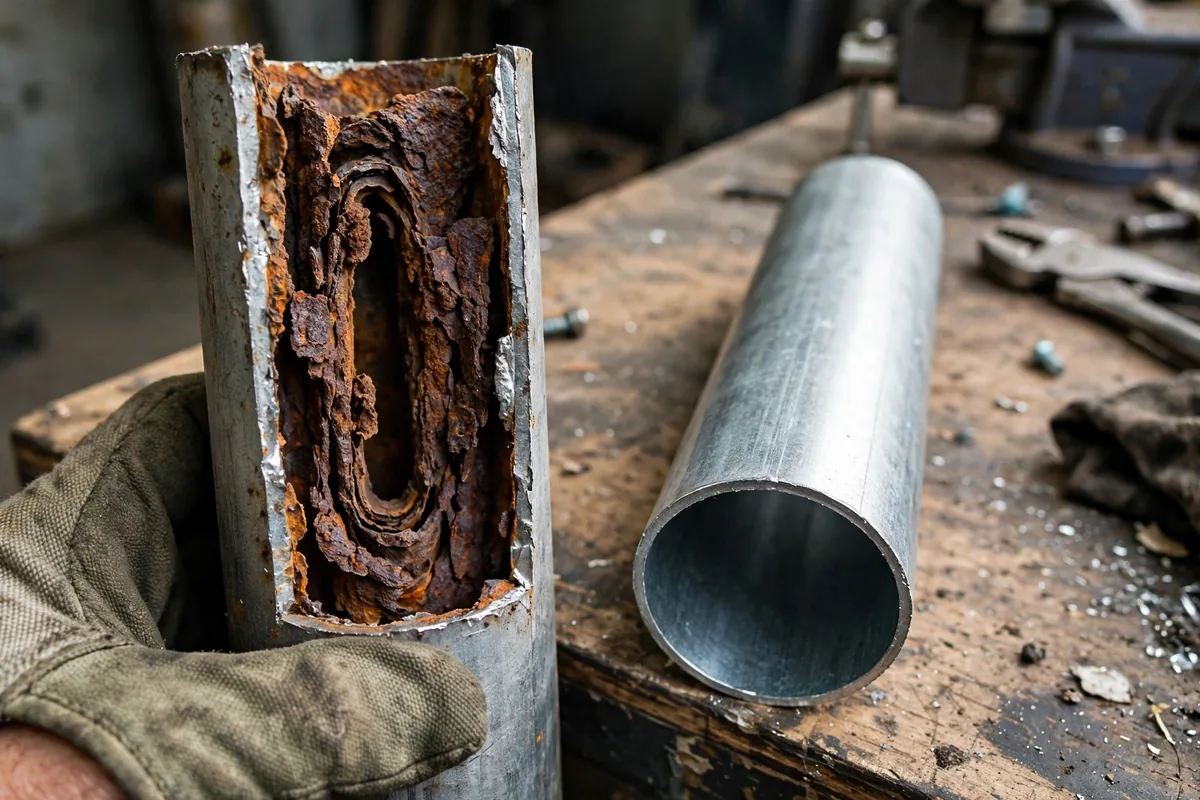
Pipe corrosion does not check the calendar. Galvanized steel pipe scales and thins from the inside for decades; pinhole corrosion in copper pipe blooms where water chemistry attacks it; dissimilar-metal joints corrode at their meeting point. Summer's contribution is flow: higher usage moves more water across the thinned spots and more oxygen through the system, and the wall that was almost through in spring becomes through in August.
The signs are the familiar ones — rust-tinted first draw, falling pressure as scale narrows the bore, the pinhole's faint spray inside a wall. None of them are summer-specific; summer is just when the account often comes due. The older housing stock makes the point nationally: both Illinois and Ohio sit near 63–64% of homes built before 1980 (ACS 2024), so corrosion's audience is enormous in every season.
Water Moving Where It Shouldn't?
One free call connects you with a local pro who can arrive in 30–60 minutes and find the burst without tearing the house apart first.
Call (800) 555-0100Tree roots grow toward water all summer, and a buried supply or drain line with a hairline crack is an invitation written in moisture. Roots enter, thicken, and prise joints apart until the line splits or blocks — the outdoor burst that shows itself as a lush green strip over the pipe run or a meter that creeps with the house quiet. Summer drought adds the soil's own movement: dry ground shrinks and shifts, stressing buried lines at their joints, most of all in clay soils — expansive clay soil and foundation movement / shifting soil are the same force seen from two sides.
Prevention is distance and knowledge: know where your lines run before planting, keep thirsty trees off the run, and treat a soggy patch in a dry lawn as the finding it is. Yard bursts answer to the meter-side main shut-off valve — or the city water utility crew — not the house valve — a detail our shut-off guide covers, and one worth knowing before the lawn tells you.
In the right trap, yes. Water expands as it warms; in a sealed section — between a check valve, a closed main and closed taps — a hot afternoon can raise pressure with nowhere to relieve it. Water heaters carry temperature-and-pressure relief valves precisely because heated water needs somewhere to go, and expansion tanks exist to give whole systems that room. A section isolated by a renovation, a closed valve and a heatwave is the domestic version of the same physics.
This is also the footnote to our shut-off guide's riddle: a full pipe sealed at both ends is a pressure vessel whatever the season. Leave drained-or-open as the safe states; a section you isolate, reopen its tap or drain it. Heat bursts are the rarest on this page — and the most completely preventable, because they are created by a configuration a person chose.
The irrigation timer that cycles zones against a failing regulator. The pressure washer fed through an elderly hose bib. The holiday month with the house sealed and a pinhole spraying into a wall unheard. The guest-room tap slammed a hundred times by visitors. None of these causes a burst by itself; each one spends from the same account of remaining pipe life, at the season when the account is drawn on hardest.
The summer counter-routine is short: read the pressure once, listen for hammer once, walk the meter's leak indicator on a quiet morning, and glance at the basement runs while you are down there anyway. In Athens, TX or Addison, IL, those four checks convert summer from burst season into audit season — which is all any season should ever be.
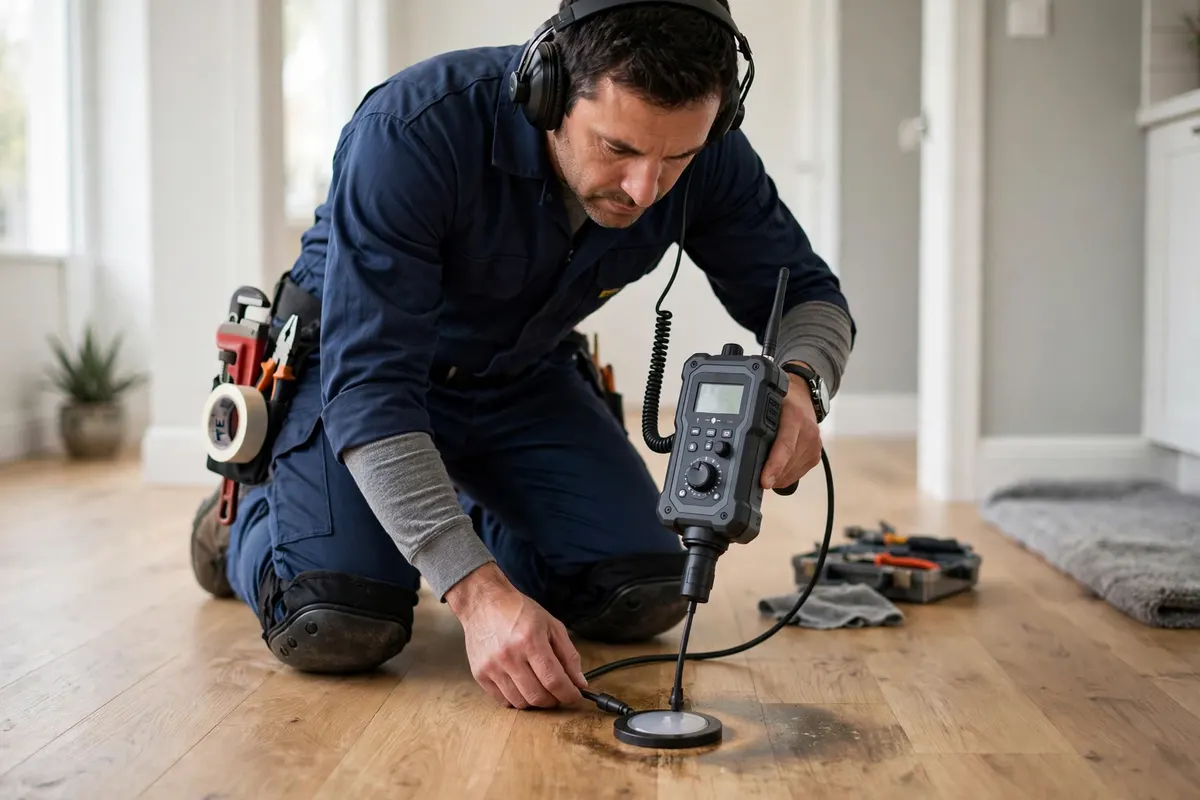
Finding the split is a kit job: an acoustic leak detection check along the run, a thermal imaging camera for the wet path behind drywall, a moisture meter to map how far the water travelled, and a pipe camera inspection where the line runs under the slab.
Apple Springs sees the summer version of this failure most years, and its emergency burst pipe repair in Apple Springs page covers what happens next.
Out in Barnhart, where summer heat bakes shallow lines all season, the emergency burst pipe repair in Barnhart page is the one worth bookmarking before you need it.
More straight answers about finding hidden bursts and what happens after you find one.
Still Have Questions? Call Free
A real person answers, day or night, and connects you with a local pro who can check the problem in person.
(800) 555-0100Residential plumbing is designed for moderate pressure — most guidance puts the healthy static band roughly between 40 and 80 psi, with regulators typically set near the middle. Persistently above that band, every fitting lives under extra stress and appliance valves wear faster. A gauge on an outdoor tap, read at a quiet hour, tells you your number in one minute; if it is high, the conversation is a pressure-reducing valve check, not a pipe replacement.
Its valves can. Washing machine fill valves snap shut, and each snap sends a water hammer wave through the supply lines. Over years, the repeated shock loosens fittings and fatigues the same joints — the machine is rarely the sole cause of a burst, but it is a tireless contributor in houses with high pressure or unsecured pipe runs. Arrestors fitted at the machine's connections absorb the shock at its source.
Two reasons: small failures run undiscovered for days, and unused systems develop their own stresses — pressure creeping up with no draw-off, or a water heater cycling against a sealed system. The discovery lag is the bigger factor: a pinhole that would have been one wet patch becomes a floor. Shutting the water off at the house valve for a long absence — leaving the system full but unsupplied — converts any holiday failure from a flood into a damp patch.
Roots seek moisture through any crack they find. Drains and sewers, with their joints and nutrient flow, are the classic victims; pressurised supply lines resist better because they leak outward — but a supply line with a weeping joint in dry soil advertises itself exactly the same way, and root mass around any buried line stresses it mechanically. The green-strip-over-the-run sign earns investigation whichever line lies beneath it.
Indirectly: an irrigation system multiplies valve operations (hammer), draws hard on the supply (pressure swings), and its own buried lines and backflow assembly are additional failure points exposed to sun and soil movement. A burst in the irrigation line shows as a running meter and a soggy zone; a burst it triggers indoors traces back to the hammer and pressure it added to tired plumbing. Keeping system pressure healthy protects both.
Both handle normal household temperatures within their ratings; the differences are in failure style. Copper's summer enemy is corrosion and hammer fatigue at soldered joints. PEX pipe tolerates movement well but its fittings are its weak points, and prolonged UV exposure degrades the material — a real consideration for lines run in sunlit spaces. Heat alone, within a normal attic temperature range, is less a material problem than a sealed-section pressure problem for either.
Street work stirs the pressure system: mains are drained, refilled and repressurised, and the transients — pressure spikes as air clears and valves reopen — travel into house plumbing, where the weakest joint absorbs them. Sediment stirred up can also foul valve seats and regulators. After nearby main work, a quick meter and pressure check is cheap insurance, and any new noise or tint in the water is worth reporting to the utility as well as noting yourself.
Sudden accidental water damage is generally the insurable event regardless of season; what differs is the story — freeze claims meet questions about heating and precautions, summer claims meet questions about maintenance and known wear. Either way the documentation is the same: photos, the pro's written finding, the cut-out section kept. Your state department of insurance publishes the general guidance for your policy type.
The quiet meter test. On a morning when no one has used water for an hour, look at the water meter leak indicator: still means your system — slab lines, yard lines, every hidden run — is tight; creeping means water is leaving somewhere unseen, in the season when outdoor leaks hide in irrigation noise. One glance, once a month, catches the summer failures while they are still small enough to schedule.
Reviewed By Hamza
Lead Plumbing & Emergency Pipe Repair Specialist
Hamza is a certified plumbing and pipe restoration specialist with extensive field experience diagnosing sub-zero pipe splits, thermal stress fractures, and slab leaks across harsh winter climates. He specializes in non-destructive leak localization, copper-to-PEX conversions, and preventative freeze-proofing to safeguard residential and commercial plumbing systems against catastrophic water loss.
Updated October 30, 2026
Summer thud in the walls, a meter that creeps on quiet mornings, or a lawn patch greener than its neighbours? One free call connects you with a local pro who can arrive in 30–60 minutes and find the cause while it is still small.
Free Call · Answered 24/7 · Local Pros Near You
Not sure how leak detection works or what it involves exactly? One free call connects you with a local pro who can arrive in 30–60 minutes. Call now.
Not sure how pipe leak repair works or what it involves exactly? One free call connects you with a local pro who can arrive in 30–60 minutes. Call now.