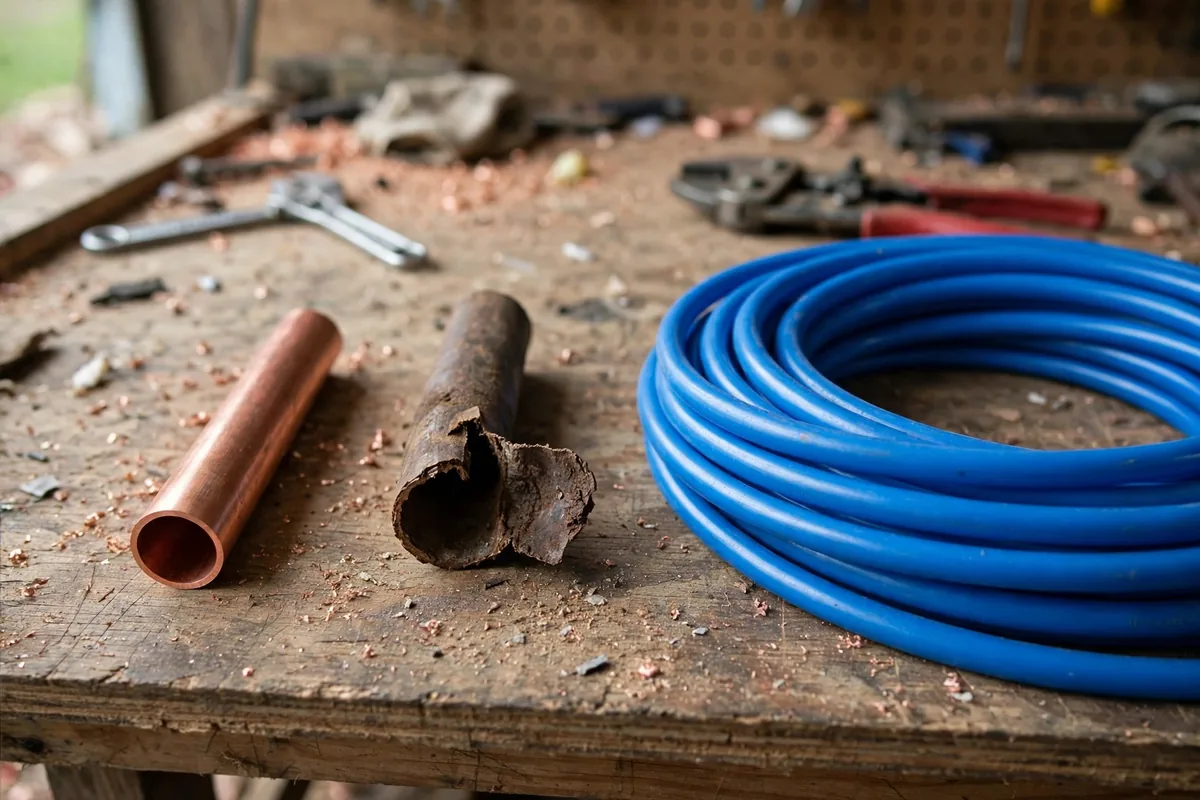
Burst Pipe Replacement
Burst Pipe Replacement Vs Section Repair: How The Call Is Made
Wondering about burst pipe replacement and what to do first of all? One free call connects you with a local pro who can arrive in 30–60 minutes. Call now.

Answered 24/7 · Free To Call · No Obligation
Free Call · Answered 24/7 · Local Pros Near You
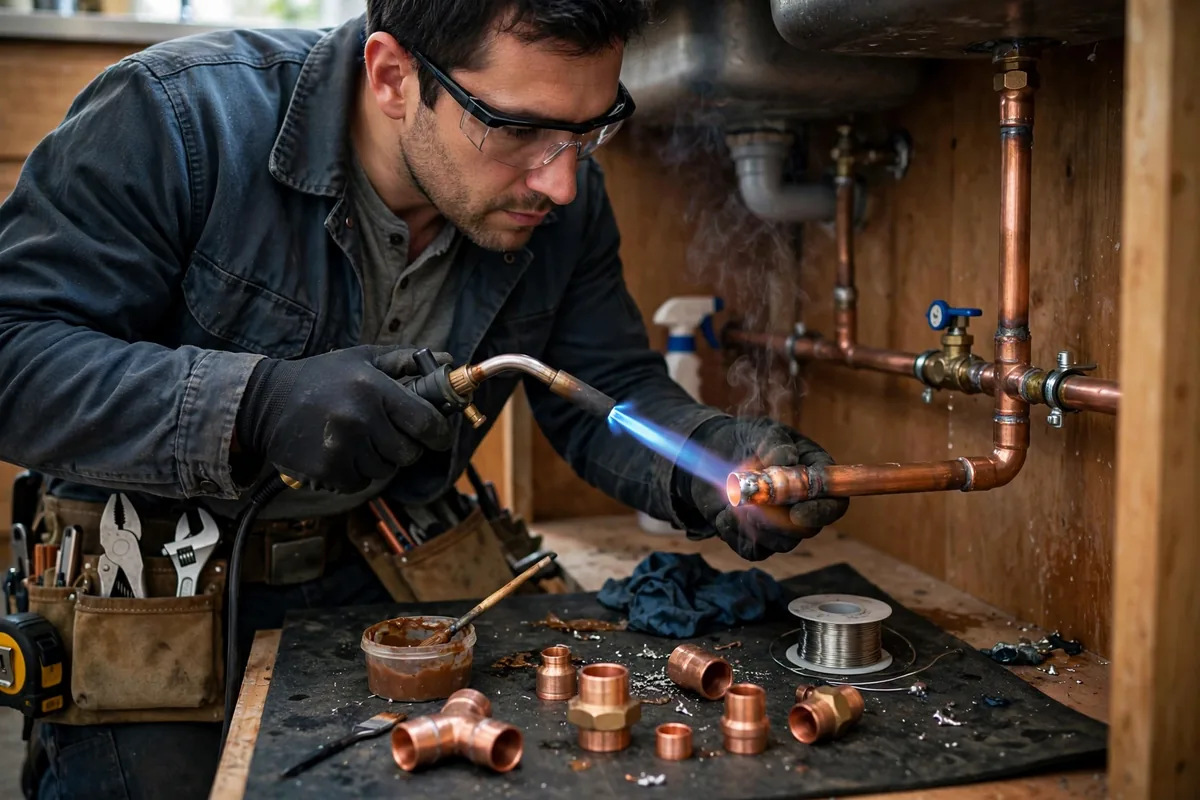
Pros fix a broken pipe by cutting out the damaged section and joining in new pipe — soldered copper, or PEX with crimp or press fittings — then pressure-testing the result. Household patches (tape, epoxy putty, a repair clamp) are temporary by design: they slow a leak for hours or days, but they sit on the outside of a pressurised pipe and cannot restore its strength. Patches buy time; section replacement fixes the problem.
Search "how to fix a broken pipe" in a panic and the internet hands you a shelf of tapes, putties and clamps. Some of that advice is useful — for about a day. The gap between a patch and a repair is the gap between holding water back and restoring the pipe, and understanding it stops a temporary fix from becoming a second flood. Here is what the professional version of the job looks like, and where DIY honestly fits.
The pro repair is section replacement. The water is shut off and the line drained; the damaged length is cut out squarely, a few inches beyond the visible damage, because pipe next to a split is often stressed too. A new section is joined in — copper pipe soldered with fluxed fittings, or PEX pipe connected with crimp, clamp or press fittings — and the line is repressurised slowly and pressure-tested before the wall or floor is closed.
Every element there is a reason patches fall short. Cutting beyond the damage removes weakened pipe, not just the hole. A joined section restores the pipe's full pressure rating. The test proves it. Homeowners watching a repair in Addison, IL or anywhere else should see all three stages; a repair missing the test is a repair on trust.
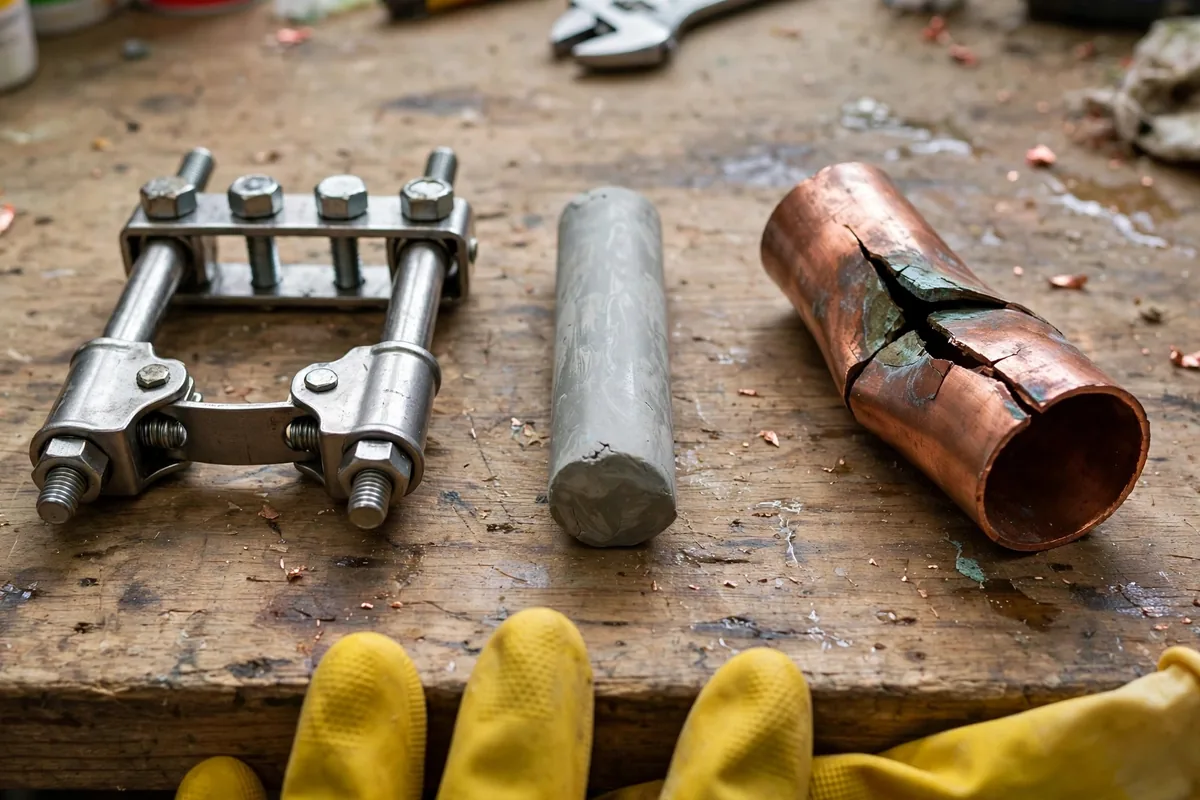
Because household water pressure never sleeps. A patch sits on the pipe's surface and resists that pressure with adhesion alone, while the pipe keeps flexing microscopically with temperature and pressure changes — water hammer alone sends shock waves through lines every day. Epoxy putty hardens into a shell the water works behind; tape stretches and creeps; a pipe repair clamp seals only as well as its rubber gasket sits on a clean, round pipe — and broken pipes are rarely clean or round at the break.
None of that makes patches useless. It makes them temporary by design — their own packaging usually says so. The failure mode is predictable: the patch holds through the weekend, relaxes at 3 a.m. on Tuesday, and the second flood arrives with nobody watching. Treat every patch as a countdown timer with a pro visit scheduled inside it.
A patch negotiates with water pressure. A repair removes the need to negotiate.
The safe DIY list is short and genuinely useful: close the main shut-off valve, open a low tap to drain the line, move belongings out of the water, dry what you can, and photograph the damage. If the break is accessible and you have a repair clamp or putty, applying one after the water is off can slow residual dripping while you wait — as a bucket-grade measure, not a fix.
The unsafe list matters more: no cutting into pressurised pipe, no soldering near joists and insulation without experience and a fire watch, no tightening random fittings hoping the leak stops, and never ignore a break near electrical fittings. In Arlington, TX, slab breaks add one more rule: do not start opening a concrete slab. Locating is a detection job, and the slab forgives nothing.
Water Moving Where It Shouldn't?
One free call connects you with a local pro who can arrive in 30–60 minutes and find the burst without tearing the house apart first.
Call (800) 555-0100Hours to days is the honest range, and it depends on pressure, pipe condition and how well the surface was prepared — which, mid-flood, it rarely is. A clamp on a clean, straight, accessible run might hold a week. Putty on a corroded, irregular break might hold an afternoon. No patch should ever be closed inside a wall or under a floor: an unseen patch failing is worse than the original break, because nobody knows until the ceiling announces it.
If a patch is your bridge, set the far end of the bridge: the pro visit booked, the shut-off valve location known to everyone in the house, and a container under the patch with a check-in routine. Patches fail on their own schedule; supervision is what turns that failure into a nuisance instead of damage.
Skip the patch entirely for: a break under a slab or in a wall you would have to open anyway, a split longer than a pinhole or any break on corroded pipe (the surface will not hold a seal), a failure at a fitting that has blown apart, freeze-bulged pipe, and any break where water has reached electrical fittings. These go straight to shut-off, drain, and a pro call — attempting a patch adds delay to a situation already losing water.
The same applies to a second break near a previous patch. Repeat failure on a galvanized steel pipe or CPVC pipe run is the pipe reporting its overall condition, and the conversation changes from repair to repiping the run. Pros across Texas will tell you the same: the third patch on one line is never the economical one.
A good repair visit reads the whole run, not just the hole: the cut-out section's interior for pipe corrosion or scale, a moisture meter sweep of the surrounding wall and a thermal imaging camera check for water that travelled, the pipe on both sides of the break for thinning or freeze bulges, the nearest fittings, and the home's water pressure — because high water pressure from a failing pressure regulator can be the author of repeat breaks and deserves testing while the system is open.
That wider look is what separates fixing a pipe from fixing the problem. You should come away knowing what failed, why it likely failed, what condition the rest of the run is in, and what — if anything — to plan for next. In Akron, OH, with its deep stock of pre-1980 homes, that conversation is often the most valuable part of the visit.
More straight answers about finding hidden bursts and what happens after you find one.
Still Have Questions? Call Free
A real person answers, day or night, and connects you with a local pro who can check the problem in person.
(800) 555-0100Most plumbing epoxy putties tolerate household hot-water temperatures once cured, but the repair is still temporary, and hot lines cycle temperature constantly, which works the patch loose faster. Follow the product's directions exactly if you use it as a bridge measure — water off, surface dried and roughened, full cure time — and keep the pro visit booked. Never close a putty patch inside a wall.
Push-fit fittings are a genuine joining method, not a surface patch: used on a clean, square-cut, sound pipe section, they form a proper pressure-rated connection and pros use them for permanent section repairs in the right spots. The distinction is the pipe they join — a push-fit connector on corroded or out-of-round pipe inherits the pipe's problems. The joint is only as good as the pipe ends it grips.
Soldering looks simple and punishes beginners in specific ways: joints that look sealed but are starved inside, flux residue left in the line, and — the serious one — fire risk in wall cavities and near insulation. Add draining the line fully (trapped water ruins joints) and the pressure test afterwards, and the gap between watching it done and doing it well is real. Shut-off and drying are the high-value DIY contributions.
Look at the piece that comes out: heavy internal scale, green corrosion staining, pitting, or walls visibly thinned at the cut all say the run is ageing as a system. So does a second weak spot found when the pro inspects both directions. One clean break in bright, sound pipe is an incident; ugly pipe on either side is a pattern, and patterns change the recommendation.
The opening is unavoidable if the pipe is to be repaired — but detection keeps it small and exactly placed, often a hand-sized section of drywall rather than a demolition. The alternative sometimes offered, pipe rerouting through accessible space and abandoning the buried-in-wall run, avoids opening finished areas at the cost of new pipe routing. A pro can price both once the break is located.
Normal shut-off use does not damage sound pipe, but repressurising should be done gradually: open the main valve slowly and let air purge through an open tap, rather than slamming full pressure back into an empty system. The shock of sudden repressurisation — a cousin of water hammer — stresses weak joints, which is one more reason fragile old lines deserve a pro's slow hand after repairs.
At minimum, the damaged length plus a margin into visibly sound pipe on both sides — a split's stress zone extends beyond the opening you can see, and freeze splits can run several inches. Where inspection shows the surrounding run is thinned or corroded, the replaced section grows or the recommendation becomes run replacement. The cut-out piece is your evidence; ask to see it.
A visible temporary patch is exactly the kind of thing inspectors flag, and sellers are generally expected to disclose known leaks and repairs. A proper section replacement with a pressure test behind it is a repair you can document and disclose with confidence. If a sale is anywhere on your horizon, that is one more argument for fixing the pipe rather than bridging it.
As an emergency bridge on an accessible, straight, pressurised run: water off first, pipe surface cleaned, clamp centred over the damage and tightened evenly. It is the sturdiest of the temporary options and a reasonable thing to keep in a home emergency kit alongside the knowledge of where your shut-off valve is. It is still a bridge — its job is to protect the house until the section replacement happens.
Reviewed By Hamza
Lead Plumbing & Emergency Pipe Repair Specialist
Hamza is a certified plumbing and pipe restoration specialist with extensive field experience diagnosing sub-zero pipe splits, thermal stress fractures, and slab leaks across harsh winter climates. He specializes in non-destructive leak localization, copper-to-PEX conversions, and preventative freeze-proofing to safeguard residential and commercial plumbing systems against catastrophic water loss.
Updated October 30, 2026
Patch holding — or not holding — and you need the real repair? One free call connects you with a local pro who can arrive in 30–60 minutes, replace the section properly, and pressure-test it before the wall closes.
Free Call · Answered 24/7 · Local Pros Near You
Wondering about burst pipe replacement and what to do first of all? One free call connects you with a local pro who can arrive in 30–60 minutes. Call now.
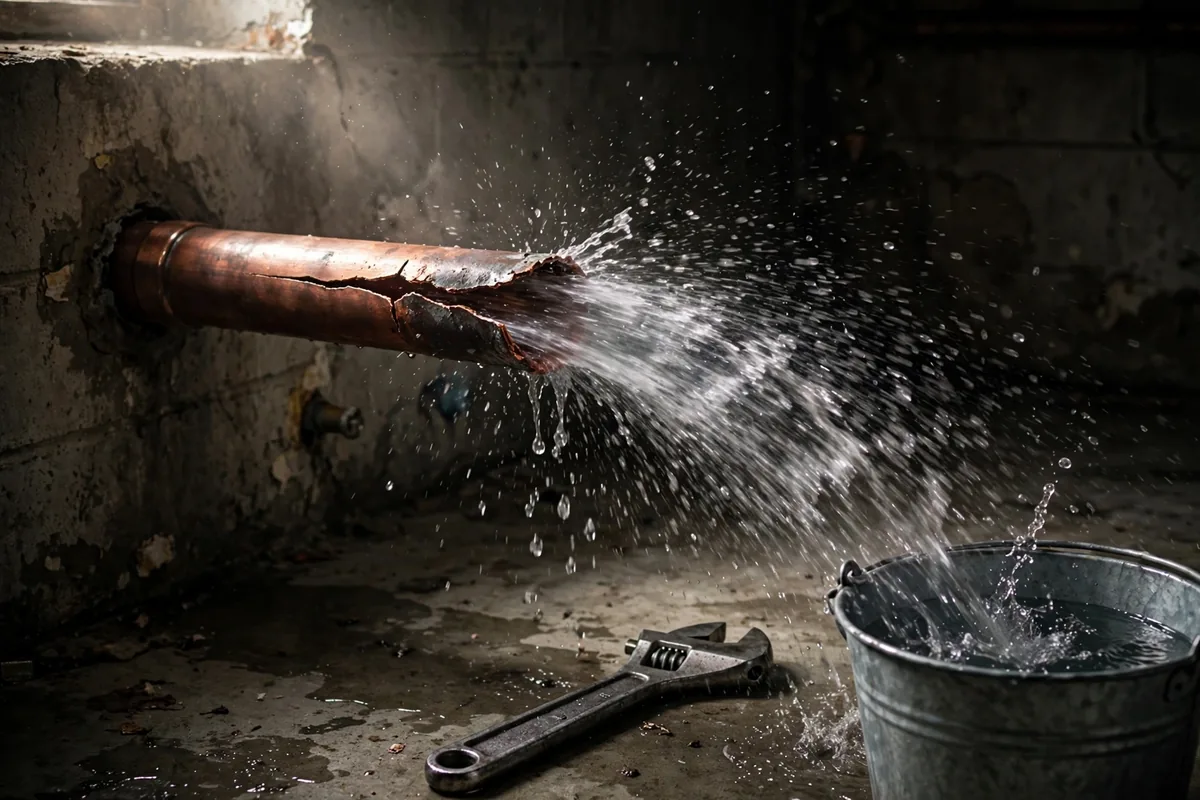
Not sure how pipe leak repair works or what it involves exactly? One free call connects you with a local pro who can arrive in 30–60 minutes. Call now.