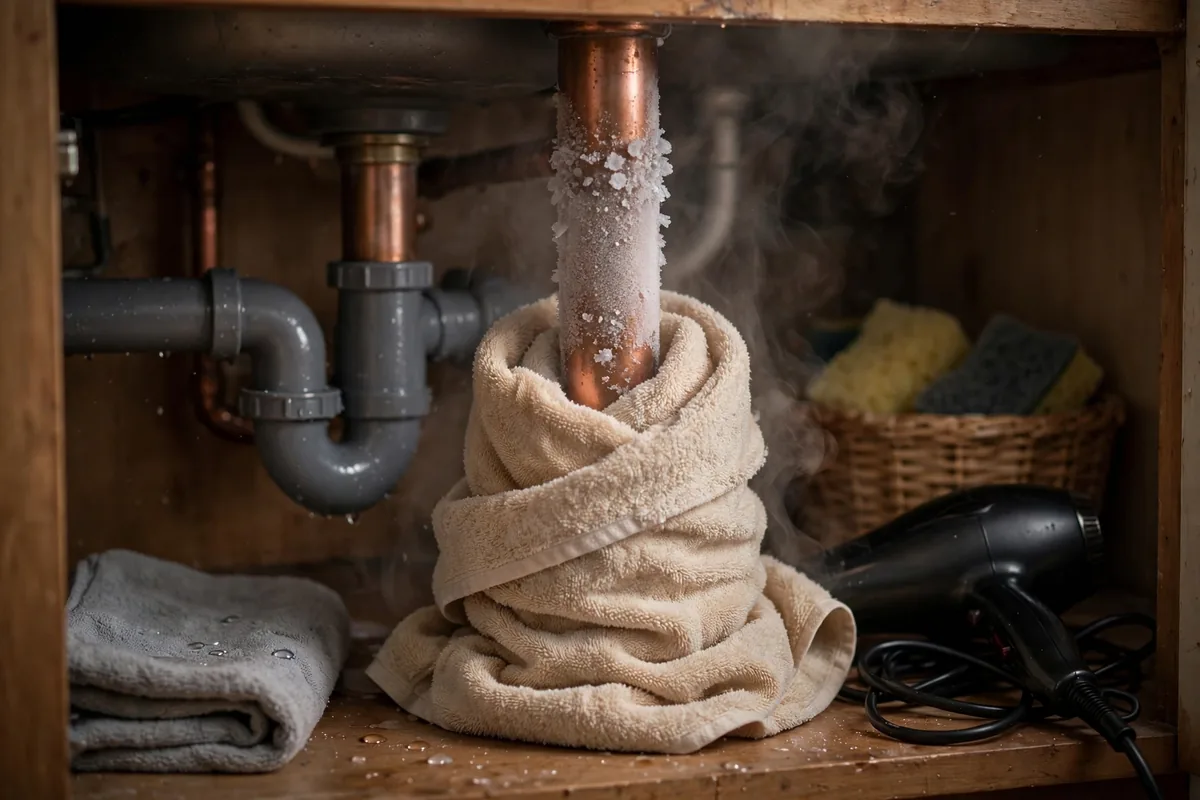
Frozen Pipe Thawing
How To Thaw A Frozen Pipe Safely (And What Never To Use)
Not sure how frozen pipe thawing works or what it involves exactly? One free call connects you with a local pro who can arrive in 30–60 minutes. Call now.

Answered 24/7 · Free To Call · No Obligation
Free Call · Answered 24/7 · Local Pros Near You
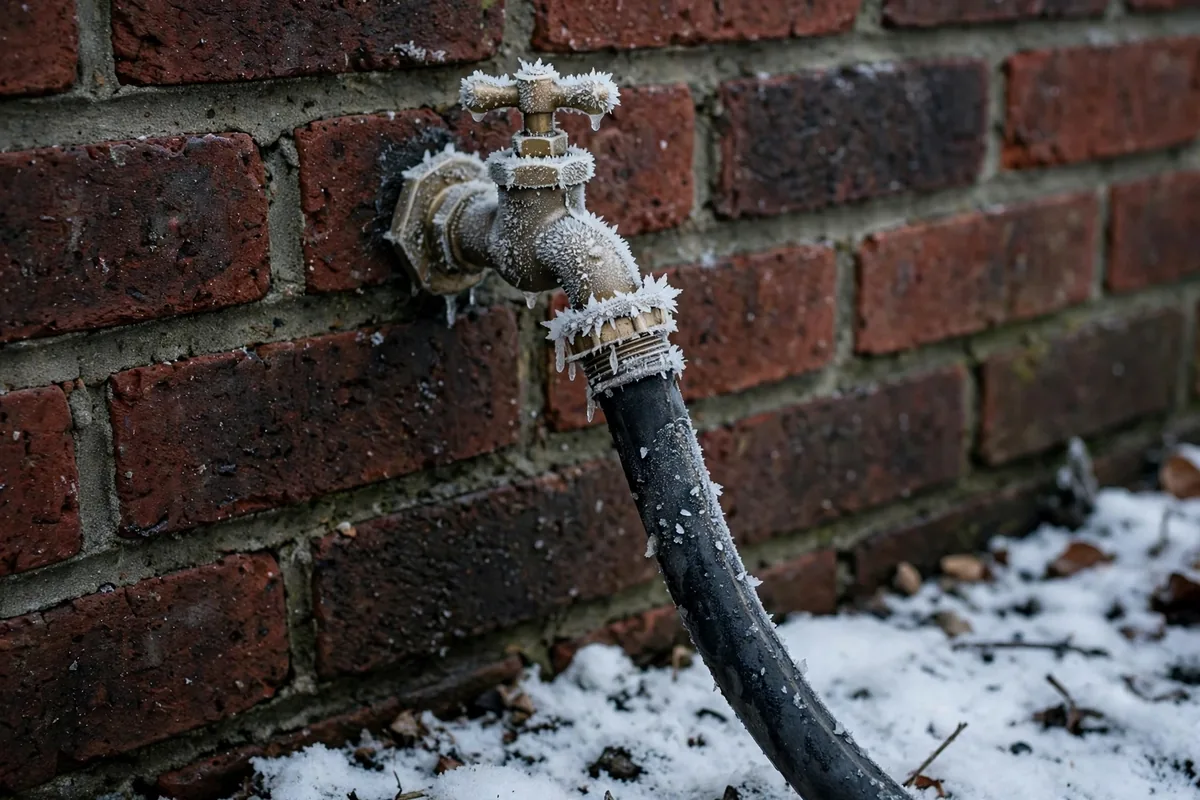
A frost free sillcock burst is winter's most preventable leak — and it hides until spring. The design is clever: the valve seat sits a foot inside the warm house, so the stem should drain dry when shut. Leave a hose connected, though, and the water cannot drain; it freezes in the stem, splits it inside the wall, and the first anyone knows is the flood the day the tap is turned on for the garden.
The hose bib / outdoor spigot is the smallest plumbing fixture on the house and the one that floods basements with the strangest story: nobody did anything wrong in winter at all — the damage was scheduled in October, by a garden hose nobody disconnected. Understanding this fixture takes five minutes and saves the most avoidable burst in the catalogue.
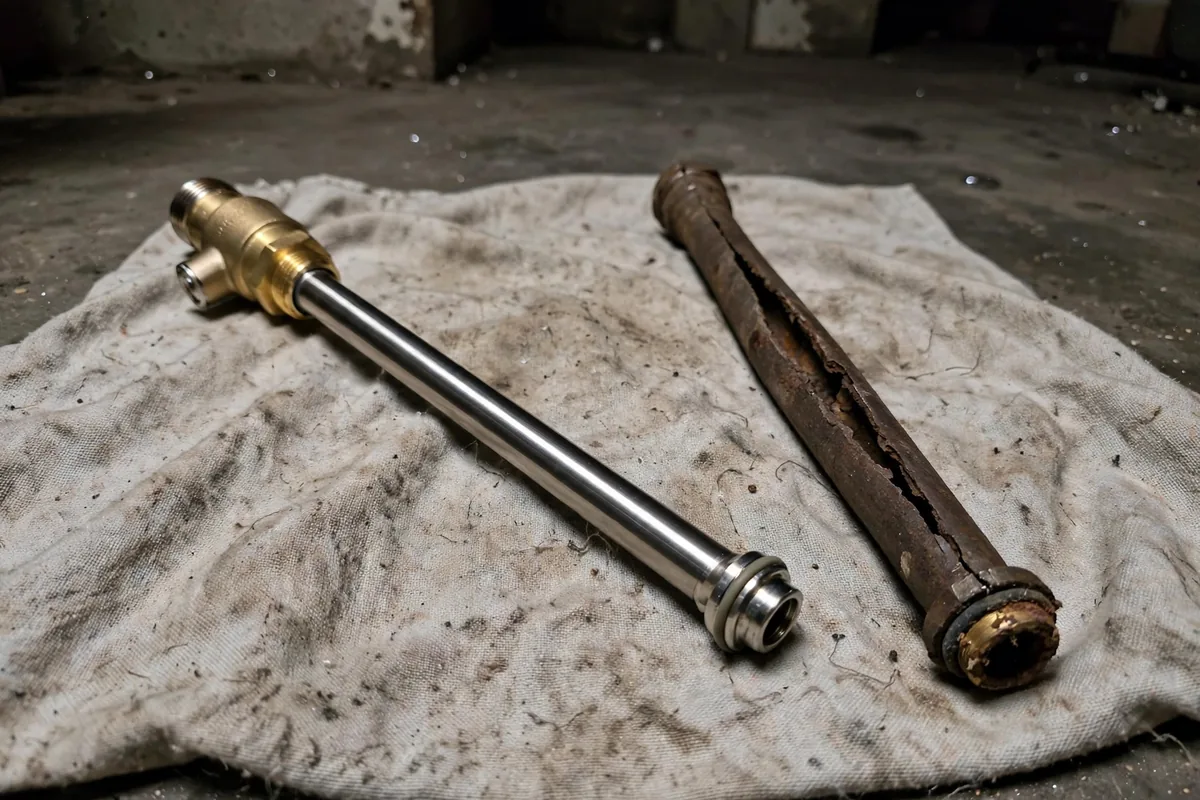
The tap you turn outside is the end of a long stem. The actual valve seat — the washer that stops the water — sits at the stem's far end, 8 to 14 inches inside the wall, in the home's warmth. Turn the tap off and the seat closes indoors; the water standing in the stem then drains out through the open tap by gravity, leaving the exterior section empty. An empty pipe cannot freeze-split. That drainage is the entire trick, and it happens automatically — provided the water has somewhere to go.
Older short-stem taps work differently: their seat is right at the exterior wall, and they rely on an inside shut-off valve and a drain cap for winterising. Both designs are sound. Both are defeated by exactly the same household habit.
A hose left connected — especially one with a spray nozzle closed at its end — seals the tap. The stem cannot drain, because the hose is a plugged exit: the water column sits trapped in the stem and the first feet of hose, exposed to the full cold of the exterior wall. Freezing starts there, ice expands, and the stem splits lengthwise — inside the wall cavity, where no one can see it. The fixture's freeze protection assumed one thing: an open path to drain. The hose quietly removes it.
Spray-nozzle hoses are the worst version, because the closed nozzle makes the seal complete; a hose draining open onto the ground at least lets some water escape. In Bartlett, IL, with 152.6 freeze days a year, a connected hose does not survive the statistics — the only variable is which cold night writes the ending.
Because the split stem only leaks when the tap is used. All winter the indoor valve seat holds; the split sits downstream of it, dry and silent. Then comes the first spring watering: the homeowner opens the tap, water flows — some out of the hose, and the rest out of the split, into the wall cavity and down into the basement or crawl space. The flood is discovered by the person standing outside holding a hose, wondering why the pressure feels wrong, while the basement takes the water.
The diagnostic clue is exactly that: weak flow at the hose combined with the sound of water inside the wall. Shut the tap, check the basement. This spring ritual repeats across Aurora, IL and every cold suburb — a winter burst with a spring announcement, which is why "the pipe burst in April" stories are usually October stories.
The frost-free tap does not fail. It is failed — by the hose that would not let it drain. The cheapest burst prevention in plumbing is a disconnected hose.
Water Moving Where It Shouldn't?
One free call connects you with a local pro who can arrive in 30–60 minutes and find the burst without tearing the house apart first.
Call (800) 555-0100The sillcock is replaced as a unit: water off at the main shut-off valve or the fixture's inside valve, the old stem unscrewed or unsoldered from its copper pipe stub inside, a new frost-free unit of the correct stem length fitted, the joint made by soldering or a press fitting, sealed at the exterior wall, and pitched very slightly downward toward the outside — that pitch is what guarantees drainage. The joint is tested under pressure before the wall or ceiling access closes.
While the access is open, the pro checks what the leak did: wet insulation and framing around the penetration get dried and verified with a moisture meter, because a stem that leaked for several spring uses may have been wetting the wall quietly for a season. If your home has the older short-stem design, the same visit is the moment to price converting it to frost-free — one fitting change that deletes an annual winterising task.
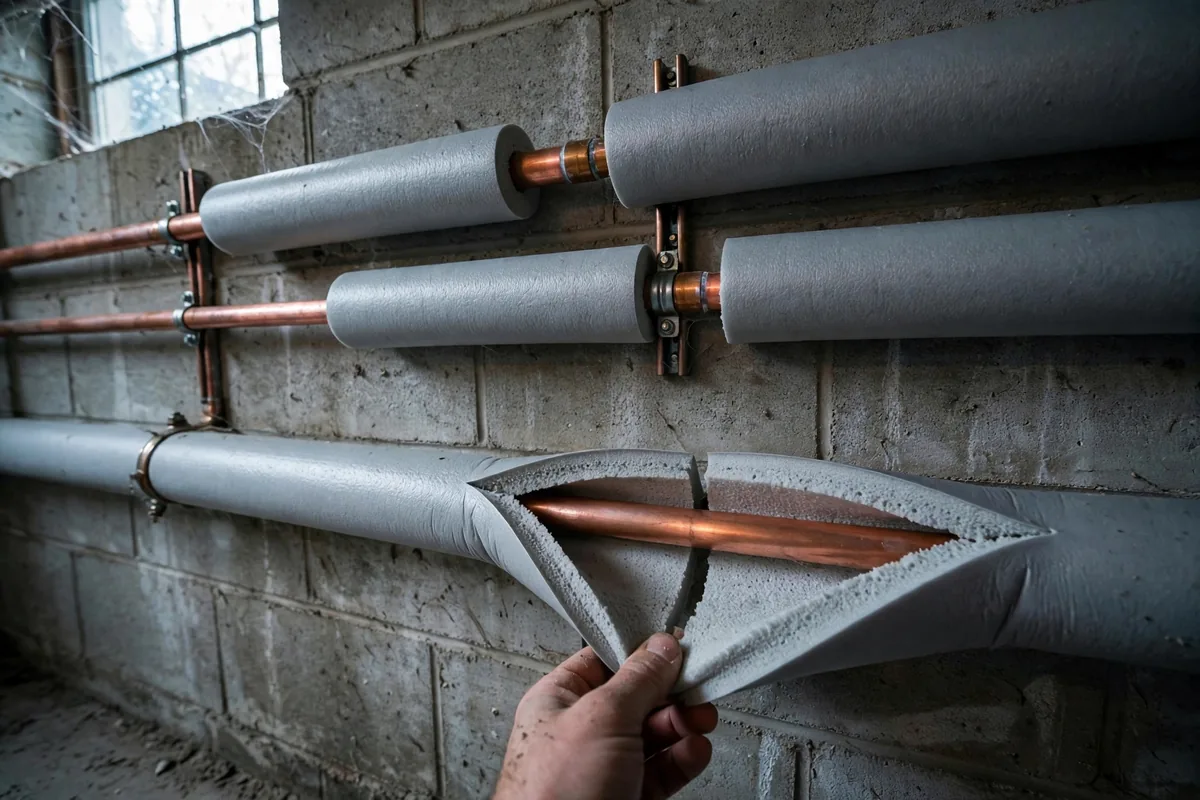
Five minutes, before the first hard freeze: disconnect every hose and let it drain; open the tap briefly to confirm the stem drains (water should dribble out and stop); for older taps, close the inside valve, open the outside tap, and remove the inside drain cap to empty the line; fit pipe insulation or an inexpensive foam cover over the tap for good measure. Then leave the outside tap open on older systems so any residual water has expansion room.
Put it on the same autumn list as the gutters. Across Illinois, plumbers can date the first cold snap by the calls — and the spring sequel by the sillcocks. The routine above removes your house from both lists.
Yes — the pre-frost-free design puts its seat at the cold wall face, so the pipe between the inside shut-off and the tap holds water all winter unless drained through the cap. Houses with these taps need the full manual winterise every year, and their failure mode is faster: the split can occur in the exposed section, often where pipe corrosion has thinned it, and leak the moment the inside valve is opened in spring — or, if the inside valve weeps, all winter.
Neither design excuses the other classic mistake: in Amarillo, TX, where freeze season is real but shorter, the connected-hose split catches homeowners who winterise "most years". The fixture does not grade on effort. Hoses off, every autumn, no exceptions — that is the whole doctrine, and it has never needed a second sentence. A pressure test in spring, watching the water meter with the tap open, confirms the stem survived before the garden gets its first long drink.
Finding the split is a kit job: an acoustic leak detection check along the run, a thermal imaging camera for the wet path behind drywall, a moisture meter to map how far the water travelled, and a pipe camera inspection where the line runs under the slab.
In the bursts-by-location file, garage and outdoor lines fail differently from indoor plumbing: they freeze at the hose bib and along the exposed garage run first, while the heated part of the house stays safe.
More straight answers about finding hidden bursts and what happens after you find one.
Still Have Questions? Call Free
A real person answers, day or night, and connects you with a local pro who can check the problem in person.
(800) 555-0100Look at the stem from inside: a frost-free sillcock's body extends 8–14 inches into the house before it connects to the pipe, and the handle outside often sits on a slightly downward-angled fixture. If the inside connection is right at the wall with a separate shut-off valve nearby, you have the older design. Any pro can confirm in a glance during another visit — and the autumn routine differs, so it is worth knowing which you own.
That is its signature. The valve seat indoors still holds when the tap is closed, so the split downstream leaks only under use. Check the basement or crawl space wall below the tap while someone runs it: damp appearing in time with the tap is the diagnosis. Stop using it, and book the replacement — every use is a wall cavity watering, and the fixture will not improve with time.
Draining the hose helps — an open, drained hose lets the stem drain too in mild cold — but it is not the protection the design intends. A nozzle left closed, a hose loop holding water, or a deep freeze can still trap enough water in the stem to split it. The design's promise assumes disconnection. Thirty seconds in October is the full price of the promise; pay that rather than negotiating with it.
No — the cover slows heat loss at the fixture and is a good second layer, especially for older taps, but it does not drain anything and cannot protect a water-filled stem through sustained deep cold. Think of the cover as insulation for an already-drained tap. The sequence is: disconnect (and drain for older taps) first, cover second, confidence third.
The sillcock split is the first suspect if the wet spot sits below an outdoor tap and appears when the tap is used. Water exits the stem's split, runs down inside the wall and emerges at the basement's wall base or through the penetration. Test it: dry day, tap on, watch the wall. If it matches, the tap stays off until replaced — and the wall cavity needs drying, not just the floor mopped.
Slightly downward toward the outside, so the stem drains completely when the tap closes. A stem pitched back toward the house holds a pocket of water at its low point — recreating the freeze risk inside a brand-new fixture. Pros check the pitch as part of fitting; if you ever watch an installation, that small angle is the detail that separates a fitting from a system.
A split stem is a replaced fixture: the stem is the pressure boundary, and solder or sealant on a lengthwise freeze split is not a repair anyone should warranty. Worn washers and packing, by contrast, are serviceable. The good news is the replacement is one of plumbing's tidier jobs — a single unit, one joint — and the new one resets the clock entirely, provided the hoses come off next autumn.
Same physics, same doctrine: any exterior line that can be isolated should be drained before hard freezes, and above-ground backflow assemblies need their maker-specified winterising. Lines you cannot drain or isolate are candidates for heat tape and insulation, checked each autumn. The spring pressure test — meter watched, system opened slowly — catches whatever winter still managed to do.
For this fixture, yes — it is a single-cause failure. The design already handles the cold; only trapped water defeats it, and the hose is what traps it. That is a rare gift in home maintenance: a burst category with a 100% behavioural prevention. The autumn disconnect, joined to draining older taps via their inside valves, removes the sillcock from your home's burst list permanently.
Reviewed By Hamza
Lead Plumbing & Emergency Pipe Repair Specialist
Hamza is a certified plumbing and pipe restoration specialist with extensive field experience diagnosing sub-zero pipe splits, thermal stress fractures, and slab leaks across harsh winter climates. He specializes in non-destructive leak localization, copper-to-PEX conversions, and preventative freeze-proofing to safeguard residential and commercial plumbing systems against catastrophic water loss.
Updated October 30, 2026
Spring tap turned on and water is going somewhere other than the garden? One free call connects you with a local pro who can replace the sillcock, check the wall cavity, and set you up with the autumn routine that ends the story.
Free Call · Answered 24/7 · Local Pros Near You
Not sure how frozen pipe thawing works or what it involves exactly? One free call connects you with a local pro who can arrive in 30–60 minutes. Call now.
Not sure how pipe insulation works or what it involves exactly? One free call connects you with a local pro who can arrive in 30–60 minutes. Call now.